Operation Y and Shurik’s Other Adventures (1965)

Or, to give it its original Russian title, Operatsiya Y I Drugie Priklyuchenia Shurik.

And, before you get intimidated by that rather ponderous title, a little carrot that I will dangle: this is a movie that’s recommended for those times when you’re feeling drained and overworked and your brain needs time off. It happens to me every now and then, when trying to relax by watching a film is not enough; the film too has to be something that I don’t need to think about: a film that I can just sit back and enjoy. This is that film.

Operation Y (which is how I will refer to it; the entire title is just too long) is about the eponymous Shurik (Aleksandr Demyanenko), a young college student at a polytechnic institute. In his spare time, Shurik works at a construction site; otherwise he’s a nerdy, earnest student, so focused on his studies that he mostly cannot see beyond his books…

Continue reading →

L’armata Brancaleone (1966)

Which is literally translated as The Army of Brancaleone, though this Italian film, directed by Mario Monicelli, was marketed to the English-speaking world as For Love and Gold.

Can one list, as a favourite, somebody whose work you’ve only encountered a few times? Is it necessary to view all (or most) of an actor’s films in order to be able to label them a ‘favourite’?

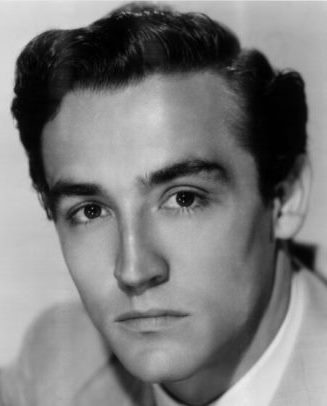
I think not. I hope not, because Vittorio Gassman is one I count among my favourites, even though I’ve watched probably not even ten of his films. And, given that today is Gassman’s birth centenary (he was born in Genoa on September 1, 1922), I decided it was a good day to show some Gassman love.

Continue reading →

Lukochuri (1958)

This film has been on my watchlist for a long time—many people, over the years, have recommended it to me as a good Bengali comedy—so when, on my ‘double roles’ post someone mentioned it, I decided it was high time I watched Lukochuri (‘Stealth’). I was a little sceptical; Kishore Kumar tends to go over the top when doing comedy, to the extent that I find him positively irritating in films like Half Ticket, Jhumroo, Naughty Boy, etc. But a Bengali film, I thought, might have a more sophisticated sense of humour? One could only hope.

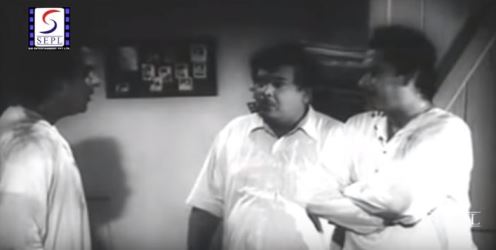
The story starts in Jabalpur, where Kumar Chaudhury ‘Buddhoo’ (Kishore Kumar) is getting ready to leave for Bombay. Buddhoo works for a company which has transferred him to Bombay, and Buddhoo is bidding farewell to his father (Moni Chatterjee) and his Pishima (?), his father’s sister, who lives with them.

Continue reading →

Auntie Mame (1958)

“Life is a banquet and most poor suckers are starving to death!” says the eponymous Auntie Mame (Rosalind Russell) on more than one occasion in this delightful film about an eccentric woman who is obliged to look after her orphaned nephew. Mame Dennis, indeed, is not one of the ‘poor suckers’ she so derides; this is a woman who lives life to the full (and a little beyond), grabbing happiness with both hands and not giving a damn, mostly, for what the world thinks.

Continue reading →

La Grande Vadrouille (1966)

Which literally translates as ‘The Great Ramble’, but the English title of this hilarious French film is Don’t Look Now—We’re Being Shot At.

And, that English title is explained within the first couple of minutes of the film itself. This is in the middle of World War II, somewhere over Germany.  An RAF plane, part of an operation to bomb this area, is flying along, commanded by Sir Reginald (Terry-Thomas), along with his co-pilots Pete Cunningham (Claudio Brook) and Alan MacIntosh (Mike Marshall). The operation is code-named Tea for Two, after the Irving Caesar/Vincent Youmans song.

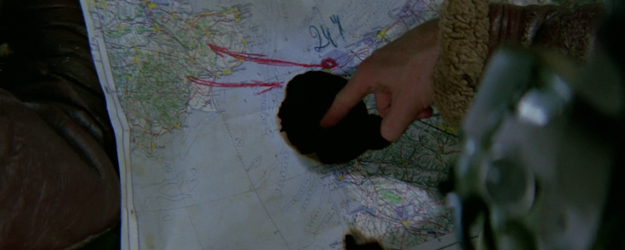
The plane encounters some heavy anti-aircraft fire and sustains some damages. The worst damage of all seems to be to their map, which has a great big hole burnt through the middle of it, as a result of which Sir Reginald & Co. lose their way…

Continue reading →

Teen Bahuraaniyaan (1968)

I had read a review of this film on a blog years ago, but besides the fact that it starred Prithviraj Kapoor as the father-in-law of three women, I remembered nothing of what I’d read. Then, some weeks back, when Shashikala passed away, a couple of people remembered her role, as a popular film star, in this film. I was tempted to watch it.

The teen bahuraniyaan (the three daughters-in-law) live in one rambling house along with their husbands, their children, and their father-in-law Dinanath (Prithviraj Kapoor)a retired school teacher. The patriarch’s three sons, from eldest to youngest, are Shankar (Agha), Ram (Ramesh Deo) and Kanhaiya (Rajendranath). Appropriately enough, their wives, respectively, are Parvati (Sowkar Janki), Sita (Kanchana) and Radha (Jayanthi). Sita’s sister Mala (Vaishali), who’s come to town to do college, also lives with them.

Continue reading →

Doctor in the House (1954)

Today is the birth centenary of British actor Dirk Bogarde, which is why I’m revisiting a film that was a favourite of mine in my teens.

Dirk Bogarde, born Derek Bogaerde (his father was of Flemish ancestry, and Derek ‘Pip’ was born in Birmingham) served in the British Army, mostly as an intelligence officer, during World War II. The war took him to Europe (where he was one of the first Allied officers to arrive at the German concentration camp of Bergen-Belsen, a traumatic experience which he recalled, even years later, with horror and pain). In the wake of the war, Bogaerde (who had already begun working in theatre before the war) went back to acting, this time to cinema, where he took on the screen name by which he became famous. He signed a contract with the Rank Organisation, and it was in the Rank film Esther Waters (1948) that he got his first credited role.

Bogarde’s stint with Rank lasted till the 60s, after which he went on to work in a very varied set of films, moving on from the primarily matinee-idol, stereotypical leading man role he played in Rank’s films. This included several highly acclaimed and/or award-winning roles in films like King and Country, The Servant, Accident, The Fixer, and A Death in Venice. Bogarde’s homosexuality, which he never tried to hide, probably came in the way of his being a big hit in Hollywood, although back home in Britain he was very popular.

Continue reading →

Shaarey Chuattar (1953)

Bengali cinema is one of the few regional language cinema industries for which it’s relatively easy to find subtitled copies. Even when the film in question is an old one.

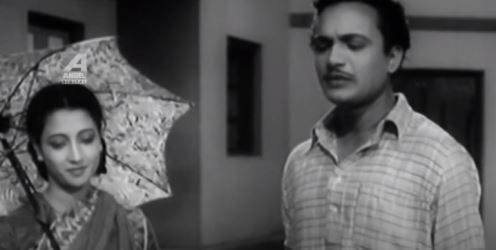
Over the years, several Bengali readers have recommended Shaarey Chuattar to me. I had been under the impression that I should watch this film for the Uttam Kumar-Suchitra Sen pairing (it was the their first film together, the first of many films in which they were co-stars). But, now that I’ve seen it, I can safely say that this is a film you should watch not for these two, but for the film itself. True, Suchitra Sen and Uttam Kumar provide some eye candy and are a likable romantic couple, but the romance in Shaarey Chuattar is not the main thing.

Continue reading →

Polosatyy Reys (1961)

Or, in English, Striped Trip. Also known in English as A Lively Voyage.

I happened to watch this film in a roundabout way. I’d started off watching a completely different film (although—like A Lively Voyage—also Russian): Andrei Rublev, an ‘essential film’, a classic about the 15th century iconist. After half an hour of watching that, I decided it was too much. Perhaps I was just not in the right mood; perhaps the combination of disconnected episodes, a bad print, and the fact that I have been under a lot of stress lately—perhaps all of that contributed. I junked Andrei Rublev and looked around for other films among my bookmarks. I found this one, recommended by a blog reader, who had also very kindly sent me a link to a subtitled version.

A Lively Voyage begins tamely enough. Shuleykin (Evgeniy Leonov) finds himself in a tropical port at the other end of the world, and desperate to get back home to Odessa. He’s so desperate that he will take on any work on any ship heading for Russia—as long as he can come home. Fortunately, he has found an agent (Nikolay Volkov) who assures Shuleykin that he can get Shuleykin a job on a ship.

Continue reading →

Do Dooni Chaar (1968)

Mention Shakespeare and Hindi cinema, and most eyes light up. Vishal Bhardwaj’s tragedy trilogy—Omkara, Maqbool, and Haider—come immediately to mind for those who cannot think back further than the 1990s, if that. Those who belong to a certain generation (my own) will probably remember fondly the delightful comedy, Angoor, based on A Comedy of Errors.

Fewer, perhaps, will know that Hindi cinema’s tryst with Shakespeare is much older than Angoor. In 1928, a Hamlet adaptation called Khoon-e-Nahak was released; the same play was adapted for screen again in 1935, this time as Khoon ka Khoon, starring Sohrab Modi in the title role opposite Naseem Banu as Ophelia. In 1941, The Merchant of Venice was adapted as a film named Zaalim Saudagar. And in 1954, Kishore Sahu produced, directed and acted in Hamlet, an interesting and unusual film for Hindi audiences since it was a fairly faithful enactment of the play—down to the costumes, the names, etc.

Along with Hamlet (which seems to win hands down when it comes to popularity among Hindi film makers), another popular play for adaptation seems to be A Comedy of Errors. In 1969, it had been made (though with many departures from the original plot, and with no twin servants) as Gustakhi Maaf, with Tanuja in the double role, opposite Sanjeev Kumar. It’s interesting to note that while Sanjeev Kumar would go on to act in another adaptation of the play (Angoor), Tanuja had already acted in yet another version. Do Dooni Chaar, released in 1968 and quite clearly the inspiration for Angoor.

Continue reading →