It Came From Outer Space (1953)

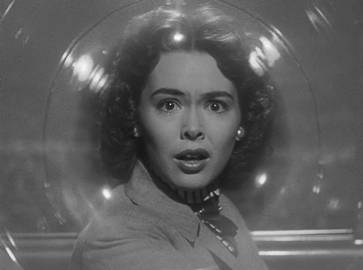
Today is the birth centenary of one of science fiction’s greatest writers, Ray Bradbury. Bradbury, born August 22, 1920 in Waukegan, Illinois (USA) was a hugely prolific writer, specializing in science fiction though he also wrote in other genres, especially horror and mystery. Dubbed by The New York Times as “the writer most responsible for bringing modern science fiction into the literary mainstream”, Bradbury wrote 27 novels and over 600 short stories, and inspired countless writers (including some blatant plagiarists!)

I knew that there have been many, many screen adaptations of Bradbury’s stories (I have seen several), and I wanted to review one of these to commemorate his hundredth birthday. Possibly the most famous film based on a Bradbury book is the screen adaptation of his landmark dystopian novel, Fahrenheit 451; but that film I had already reviewed. And, going through Bradbury’s filmography on IMDB, I found that most screen adaptations of his works have been either TV series (which I don’t review) or have been made in the years since 1970—which falls outside the ambit of this blog.

But this film, released in 1953, fits my blog. And, instead of being based on a Bradbury novel, it was as close as it gets: the screenplay for It Came From Outer Space was written by Bradbury.

Continue reading

Suvarna Sundari (1958)

If you’ve been reading this blog for a while, you probably know that I cannot resist good music; so much so that there are plenty of films I’ve watched just because they happened to have one song which I like a lot. Many of these films have turned out to be complete duds, not at all worthy of the wonderful song which drew me to it—but I do not, in this case, subscribe to the ‘once burnt, twice shy’ philosophy. I go on doing it, often with painful results.

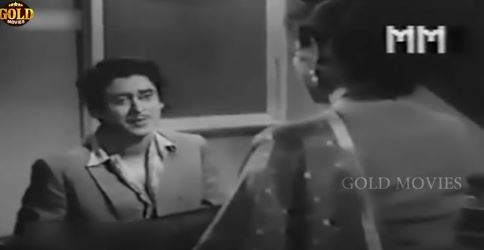
Suvarna Sundari, which I watched for Kuhu kuhu bole koyaliya, will however remain one of the exceptions. A stellar song, but also a very entertaining film.

The story begins in a gurukul, where Prince Jayant of Malwa (Akkineni Nageshwara Rao, ‘ANR’) is about to graduate and go back to Malwa to be declared crown prince. At the prospect of Jayant’s departure, his guru’s daughter (?) gets all het up and confesses her love for him. Jayant, being a good and upright man who knows his guru’s daughter is out of bounds for him, sternly refuses…

Continue reading

To Each His Own (1946)

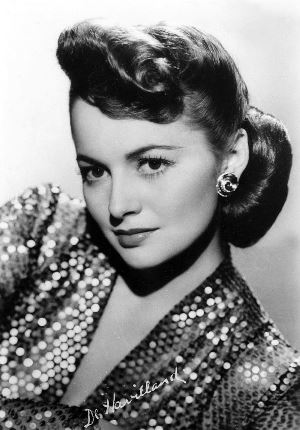
RIP, Olivia de Havilland.

If there’s one person whom I regarded as the last of the great stars of the glory days of Hollywood, it’s the beautiful and very talented Olivia de Havilland. I’ve watched several of de Havilland’s films, and have invariably found her very watchable—she brought a dignity and grace to her roles that made her stand out. Plus, she was a very good (and very versatile) actress, seemingly effortlessly playing standard ‘damsel in distress’ roles (especially in the eight films she did with Errol Flynn), as well as much more nuanced characters, like the immortal Melanie of Gone With the Wind, the mentally tormented Virginia Cunningham of The Snake Pit, and the naïve, gullible Catherine Sloper, the eponymous heiress of The Heiress.

Over a career spanning five decades, Olivia de Havilland won two Oscars (for The Heiress and To Each His Own), and was nominated for many other awards, including various national medals and awards by France, the US and the UK.

Although she had her share of controversy (especially regarding her supposedly strained relationship with her sister, actress Joan Fontaine), de Havilland was in some ways a pioneer too. It was because of her refusal to go on playing ‘sweet young thing’ roles that she ended up suing Warner Bros. —and winning, a landmark decision which led to the law now known by her name. She also went on to be the first female president of the jury at the Cannes Film Festival.

Continue reading

Noor Mahal (1965)

Or, Ten Reasons Why You Should Watch Jagdeep’s Funniest Film

First, though, a word by way of tribute. Jagdeep, who passed away last week (on July 8th), may not have scaled the heights other comedians, such as Johnny Walker or Mehmood, did, but he had a much longer innings than most. He seems to have debuted in Madhubala (1950) as a child artiste, and worked in close to 400 films, right up to 2017’s Masti Nahin Sasti.

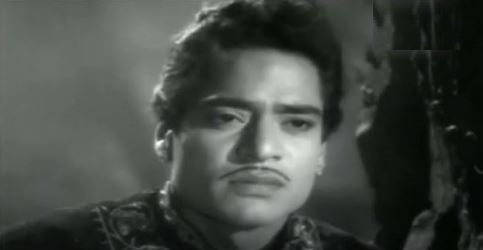
And, interestingly enough, somewhere between his years as a child actor (in Footpath, Do Bigha Zameen, etc) and his heyday as a comedian, Jagdeep acted as leading man in several films… including Noor Mahal, of Mere mehboob na jaa, aaj ki raat na jaa fame.

Continue reading

The King and I (1956)

Happy hundredth birthday, Yul Brynner!

Yes, one of my favourite actors was born on this day a hundred years ago.  Named Yuli Borisovich Bryner, ‘Yul’ Brynner was born in Vladivostok on July 11, 1920 and ended up moving first to Harbin (in China) and then to Paris, along with his mother and his sister Vera after their father abandoned them. Yul’s musical and dramatic abilities came to the fore in Paris, where he became a guitarist and later a trapeze and theatre artiste. In 1941, having travelled to America, he debuted on stage in Twelfth Night. That was the start of Yul Brynner’s career in the US, debuting onscreen eight years later in Port of New York (1949).

Yul Brynner’s decidedly exotic features meant that he, like contemporary Omar Sharif, ended up playing several different nationalities in films. Russian, of course; German; Mexican; Japanese…

… and Thai.

In what proved to be his only Oscar-winning role in a career spanning almost three decades, Yul Brynner played a historical figure: the Thai ruler King Mongkut.

Continue reading

Satluj de Kande (1964)

One of my constant gripes is that it’s so difficult to get hold of good old regional Indian films with subtitles. For someone like me, fluent only in English and Hindustani and with no other regional language to fall back upon, the field is that much more restricted.

I few years ago, with much initial hesitation, I decided to take the plunge and watch a Punjabi film. Since my husband is Punjabi and several of his family members do converse in the language, I figured I’d learnt enough to be able to grasp what was happening. The rest, I thought, I’d ask my husband to translate.

Nanak Naam Jahaaz Hai, to my surprise, wasn’t hard to follow. Satluj de Kande (a film I was keen on watching because it had won the National Film Award), on the other hand, took some effort to follow.

More on that later. For now, what it’s about.

The story is set on the bank of the Satluj River, where the Bhakra Nangal Dam is being built. Ram Prakash Malhotra (Balraj Sahni) is a dam engineer and when the story opens, he’s irate. Ishwar Das (?), a contractor, has been proved to have been dishonest, and Malhotra is furious. Ishwar Das makes a big show of being very contrite, but Malhotra isn’t pacified.

Continue reading

Dil Ne Phir Yaad Kiya (1966)

It took me five days to watch this film: I couldn’t bear to watch more than fifteen minutes of it at a time, and I couldn’t do more than two sessions in a day.

That’s what Dil Ne Phir Yaad Kiya is like. Despite starring Dharmendra, Nutan, and Rehman. Despite being picturized in some very pretty locales. And despite having a couple of not-too-bad songs. By the time this travesty of a film ended, I was wanting to tear my hair out. I thought I wouldn’t review it, but then decided this did need to be reviewed, so that other potential viewers could be warned.

This is going to be a shortish review, since I can’t bring myself to explain every fiddly little detail along the way in what is a convoluted (but pointlessly convoluted) plot.

Ashok (Dharmendra) and Amjad (Rehman) are best friends. They live in the same pokey little flat (for which they haven’t paid the rent in a long time), they work in the same toy store, and they spend all their free time telling each other about their respective girlfriends. Ashok’s sweetheart is Ashu (Nutan), who lives back in the village and is constantly being plagued by Ashok’s nasty stepbrother Bhagat (Jeevan)…

Continue reading

Saqi (1952)

I still remember my first glimpse of Premnath in a different persona than the fat, balding, beetle-browed villain of so many ‘70s films.

This was in the mid-80s. My sister and I (I was then not even in my teens) were watching Chitrahaar, and Thandi hawaayein lehraake aayein came on. It was proceeding fine, with Nalini Jaywant flitting across the screen, when suddenly a strikingly handsome man, tall and broad-shouldered, sprang up by her side, danced with her, and then disappeared. Who was that? We asked each other, and couldn’t supply an answer. We turned to our father, our source of information for all things old Hindi cinema. Papa said that Naujawan starred Premnath. Who Premnath, we asked in disbelief. That paunchy and somewhat repellant man in Johnny Mera Naam?

It took a watching (incomplete, sadly, because the electricity went) of the 1951 film Sagaai to convince us that yes, Premnath was indeed quite a hottie in his heyday.

If you think so too (or if you haven’t seen Premnath in the early 50s, when he was paid more than Raj Kapoor and several other leading actors), you should watch Saqi.

Continue reading

Dragonwyck (1946)

A poor and impressionable young woman arrives at a grand mansion and is blown away by its magnificence—and by the attractive man who is master of the manor. Except that the manor (and the man himself) may have secrets to hide…

Dragonwyck begins at the Wells farm in Connecticut. The Wells are stolid peasant stock: hard-working, sensible, god-fearing. One of their two daughters, Miranda (Gene Tierney) is somewhat less stolid than her parents—especially her father Ephraim (Walter Huston)—would like her to be. At the start of the film, Miranda comes racing into the farmhouse, bearing a letter for her mother Abigail (Anne Revere). The fine envelope and the grand address from which it’s come—Dragonwyck—are enough to convince Miranda that this is a letter of some worth.

Continue reading

Door Gagan ki Chhaaon Mein (1964)

Just ten days ago, this blog celebrated the birth centenary of an actor who pretty much came to exemplify the ‘Hindi film villain’ of the 50s and 60s: the inimitable Pran. Today, it’s time to celebrate the birth centenary of another actor who carved such a niche for himself that his name became nearly synonymous with a particular kind of role. Iftekhar, who brought so much dignity and intelligence to his usual role of police officer or lawyer—or army officer, or doctor…

Continue reading