Noor Mahal (1965)

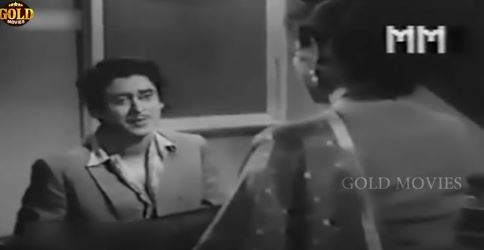
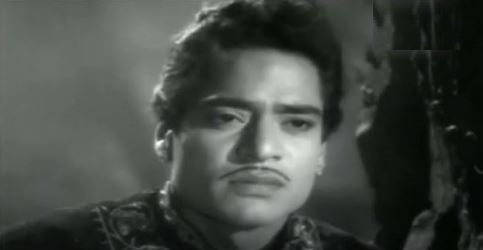
Or, Ten Reasons Why You Should Watch Jagdeep’s Funniest Film

First, though, a word by way of tribute. Jagdeep, who passed away last week (on July 8th), may not have scaled the heights other comedians, such as Johnny Walker or Mehmood, did, but he had a much longer innings than most. He seems to have debuted in Madhubala (1950) as a child artiste, and worked in close to 400 films, right up to 2017’s Masti Nahin Sasti.

And, interestingly enough, somewhere between his years as a child actor (in Footpath, Do Bigha Zameen, etc) and his heyday as a comedian, Jagdeep acted as leading man in several films… including Noor Mahal, of Mere mehboob na jaa, aaj ki raat na jaa fame.

Continue reading

The King and I (1956)

Happy hundredth birthday, Yul Brynner!

Yes, one of my favourite actors was born on this day a hundred years ago.  Named Yuli Borisovich Bryner, ‘Yul’ Brynner was born in Vladivostok on July 11, 1920 and ended up moving first to Harbin (in China) and then to Paris, along with his mother and his sister Vera after their father abandoned them. Yul’s musical and dramatic abilities came to the fore in Paris, where he became a guitarist and later a trapeze and theatre artiste. In 1941, having travelled to America, he debuted on stage in Twelfth Night. That was the start of Yul Brynner’s career in the US, debuting onscreen eight years later in Port of New York (1949).

Yul Brynner’s decidedly exotic features meant that he, like contemporary Omar Sharif, ended up playing several different nationalities in films. Russian, of course; German; Mexican; Japanese…

… and Thai.

In what proved to be his only Oscar-winning role in a career spanning almost three decades, Yul Brynner played a historical figure: the Thai ruler King Mongkut.

Continue reading

Satluj de Kande (1964)

One of my constant gripes is that it’s so difficult to get hold of good old regional Indian films with subtitles. For someone like me, fluent only in English and Hindustani and with no other regional language to fall back upon, the field is that much more restricted.

I few years ago, with much initial hesitation, I decided to take the plunge and watch a Punjabi film. Since my husband is Punjabi and several of his family members do converse in the language, I figured I’d learnt enough to be able to grasp what was happening. The rest, I thought, I’d ask my husband to translate.

Nanak Naam Jahaaz Hai, to my surprise, wasn’t hard to follow. Satluj de Kande (a film I was keen on watching because it had won the National Film Award), on the other hand, took some effort to follow.

More on that later. For now, what it’s about.

The story is set on the bank of the Satluj River, where the Bhakra Nangal Dam is being built. Ram Prakash Malhotra (Balraj Sahni) is a dam engineer and when the story opens, he’s irate. Ishwar Das (?), a contractor, has been proved to have been dishonest, and Malhotra is furious. Ishwar Das makes a big show of being very contrite, but Malhotra isn’t pacified.

Continue reading

Dil Ne Phir Yaad Kiya (1966)

It took me five days to watch this film: I couldn’t bear to watch more than fifteen minutes of it at a time, and I couldn’t do more than two sessions in a day.

That’s what Dil Ne Phir Yaad Kiya is like. Despite starring Dharmendra, Nutan, and Rehman. Despite being picturized in some very pretty locales. And despite having a couple of not-too-bad songs. By the time this travesty of a film ended, I was wanting to tear my hair out. I thought I wouldn’t review it, but then decided this did need to be reviewed, so that other potential viewers could be warned.

This is going to be a shortish review, since I can’t bring myself to explain every fiddly little detail along the way in what is a convoluted (but pointlessly convoluted) plot.

Ashok (Dharmendra) and Amjad (Rehman) are best friends. They live in the same pokey little flat (for which they haven’t paid the rent in a long time), they work in the same toy store, and they spend all their free time telling each other about their respective girlfriends. Ashok’s sweetheart is Ashu (Nutan), who lives back in the village and is constantly being plagued by Ashok’s nasty stepbrother Bhagat (Jeevan)…

Continue reading

Saqi (1952)

I still remember my first glimpse of Premnath in a different persona than the fat, balding, beetle-browed villain of so many ‘70s films.

This was in the mid-80s. My sister and I (I was then not even in my teens) were watching Chitrahaar, and Thandi hawaayein lehraake aayein came on. It was proceeding fine, with Nalini Jaywant flitting across the screen, when suddenly a strikingly handsome man, tall and broad-shouldered, sprang up by her side, danced with her, and then disappeared. Who was that? We asked each other, and couldn’t supply an answer. We turned to our father, our source of information for all things old Hindi cinema. Papa said that Naujawan starred Premnath. Who Premnath, we asked in disbelief. That paunchy and somewhat repellant man in Johnny Mera Naam?

It took a watching (incomplete, sadly, because the electricity went) of the 1951 film Sagaai to convince us that yes, Premnath was indeed quite a hottie in his heyday.

If you think so too (or if you haven’t seen Premnath in the early 50s, when he was paid more than Raj Kapoor and several other leading actors), you should watch Saqi.

Continue reading

Dragonwyck (1946)

A poor and impressionable young woman arrives at a grand mansion and is blown away by its magnificence—and by the attractive man who is master of the manor. Except that the manor (and the man himself) may have secrets to hide…

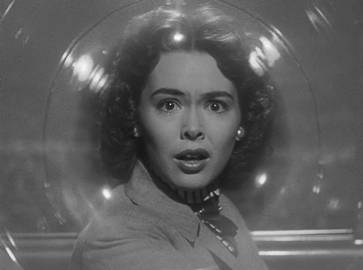
Dragonwyck begins at the Wells farm in Connecticut. The Wells are stolid peasant stock: hard-working, sensible, god-fearing. One of their two daughters, Miranda (Gene Tierney) is somewhat less stolid than her parents—especially her father Ephraim (Walter Huston)—would like her to be. At the start of the film, Miranda comes racing into the farmhouse, bearing a letter for her mother Abigail (Anne Revere). The fine envelope and the grand address from which it’s come—Dragonwyck—are enough to convince Miranda that this is a letter of some worth.

Continue reading

Door Gagan ki Chhaaon Mein (1964)

Just ten days ago, this blog celebrated the birth centenary of an actor who pretty much came to exemplify the ‘Hindi film villain’ of the 50s and 60s: the inimitable Pran. Today, it’s time to celebrate the birth centenary of another actor who carved such a niche for himself that his name became nearly synonymous with a particular kind of role. Iftekhar, who brought so much dignity and intelligence to his usual role of police officer or lawyer—or army officer, or doctor…

Continue reading

Harry Black and the Tiger (1958)

February 1920 was a very important month for Hindi cinema, though of course the fledgling cinema industry in India back then didn’t know it. But that month, a century ago, marked the births of three major actors (and one not so major, but by no means a non-entity). One was Pran, born on February 12th. Another was Iftekhar, born on February 22nd (a birthday shared with Kamal Kapoor). And between Pran and Iftekhar, born on February 16th, a man who was not just actor, but also writer, director and producer: IS Johar.

Continue reading

Khandaan (1942)

If Hindi cinema has ever had an iconic onscreen villain—not a villain in one film, but in film after film—it has got to be Pran. There have been other actors, from Wasti to Ajit, Ranjeet to Madan Puri, who have played memorable villains in films: but none, in my opinion, was quite able to sustain it and make it so much his forte that his own name became a synonym for villainy (it’s common knowledge that for many years, Indian parents refused to name baby boys Pran because of Pran).

In film after film, from period dramas like Halaku to comedies like a Half Ticket, from weep fests like Do Badan to supernatural stuff like Madhumati—Pran was in them all. With aplomb, he carried off every shade of villainy, whether it was the lisping and ruthless truck driver Mohan of Kashmir ki Kali or the tuneless dacoit-cum-gentleman of Munimji. He even did the occasional unusual role (as a doctor in Aah, and as a kotha frequenter in a cameo in Devdas), until, in the late 1960s, he began to play some sympathetic characters as well. From the cynical Malang Chacha of Upkaar, to Dev Anand’s long-lost brother in Johny Mera Naam, to his role in Zanjeer: Pran proved that he wasn’t just a great villain, he was a great actor, period.

Today would have been Pran’s hundredth birthday: he was born on February 12, 1920 in Delhi. And, to mark the occasion of his hundredth centenary, I thought I’d review a Pran film with a difference. Not Pran as the villain, but Pran as the hero. A young, gangly Pran, probably not even twenty-two years old yet, plays opposite a girlish Noorjehan in one of the first Hindi films to get a lot of pre-release publicity: Khandaan.

Continue reading

Spartacus (1960)

RIP, Kirk Douglas.

One of the last living legends of Hollywood has gone. Kirk Douglas passed away on February 5th, at the age of 103. A ripe old age, and a life that seems to have been as heroic as the characters he portrayed onscreen. Kirk Douglas grew up in a Jewish ghetto as the son of immigrants from what is now Belarus; his athleticism (he became a professional wrestler at an early age) was what eventually helped him pay for an education and go on to win a scholarship at the American Academy of Dramatic Arts. Douglas’s acting career (on stage, at the time) was interrupted by the outbreak of World War II, and he, having enlisted in the US Navy, did not return to theatre until ceasefire in 1945.

The post-war period also resulted in a breakthrough into cinema for Douglas, leading him to his first role, in The Strange Love of Martha Ivers (1946). From this point onwards, there was no looking back: over the next 60 years, he acted in many films, some of them landmarks in the history of cinema, like Lust for Life, Spartacus, and Paths of Glory. Besides his impressive acting career, Douglas was also involved in various humanitarian causes, donating funds for causes as diverse as a children’s hospital and a television and motion picture fund.

As tribute, therefore, to Kirk Douglas, my review of one of his most famous films, a sword-and-sandals epic about a rebellious (real life) slave.

Continue reading