RIP, Connie Francis, the voice of my teenage years.
Continue readingTag Archives: film review
Baaz (1953)
Today, July 9, 2025, marks the 100th birth anniversary of one of Hindi cinema’s best-known film directors. Born in Mysore on this day in 1925 as Vasant Kumar Shivshankar Padukone, Guru Dutt studied in Calcutta before joining Uday Shankar’s India Culture Centre (in Almora, present-day Uttarakhand) to train in dance. By the time he turned 19, he had moved to Pune, where he began working as a choreographer for Prabhat Studios. By the time Prabhat Studios folded up (in the early 1950s), Guru Dutt had formed a close friendship with Dev Anand, because of whom he received his first break as a director: in 1951, he directed Navketan’s Baazi, starring Dev Anand, Geeta Bali and Kalpana Karthik in a noir thriller that was to become a defining film for Navketan: edgy, stylish, dark, very urban.
Guru Dutt is today revered more for the hard-hitting, cynical cinema he made: films like Pyaasa, Sahib Bibi aur Ghulam and Kaagaz ke Phool hold up the mirror to a world that is selfish, cruel and opportunistic. These are bitter films, films that plumb the depths of human nature; films that—despite following most of the standard tropes of commercial Hindi cinema (a romance between the lead couple; a fair number of songs; a comic character invariably played by Johnny Walker)—were quite different from other Hindi films.
These, too, are the films for which Guru Dutt is mostly remembered today. Is that because over the decades, people have seen how the tragedy and turmoil of Guru Dutt’s personal life was probably reflected in films like these? Is there a voyeuristic tendency to try and spot the man behind the director?
But Guru Dutt also made other films, on other subjects. This one, for instance, an adventure/patriotic film set on the high seas, with Geeta Bali starring as the eponymous ‘Baaz’ (falcon), a woman who becomes a pirate to free her land of a colonial tyrant.
Continue readingUdan Khatola (1955)
Does Udan Khatola hold some sort of record for largest number of love/lust triangles?
Here’s a rough count:
There’s the unnamed aviator, the pardesi (played by Dilip Kumar) who is in love with the local peshwa’s daughter Soni. Who, in turn, loves him back.
Continue readingBeyond This Place (1959)
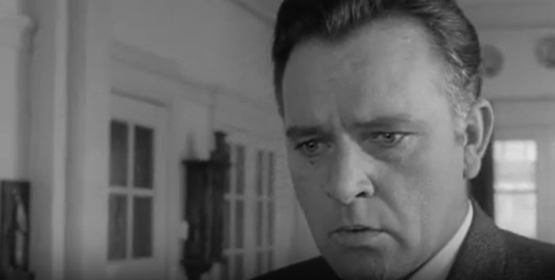
Given that I reviewed Raj Khosla’s 1958 film Kaala Paani—based on AJ Cronin’s novel Beyond This Place—last month, I thought it appropriate to also watch and review an English-language adaptation of the same book. And, as always happens when I do something of the sort, to compare the two, see what they do with the same source material. Here, I must point out that that I haven’t read Cronin’s novel, so I cannot say how much Beyond This Place (directed by Jack Cardiff and with a screenplay by Ken Taylor) resembled Cronin’s book.
But, to begin at the beginning.
As the credits roll, we see a man, Patrick Mathry (Bernard Lee) and a boy, Patrick’s son Paul (Vincent Winter) running through the woods, laughing and obviously happy in each other’s company.
Continue readingKaala Paani (1958)
Today is the 100th birth anniversary of one of my favourite Hindi film directors, the suspense-specialist Raj Khosla (I hasten to add: I am well aware that that’s a generalization, since Khosla made a lot of films, too, that had nothing to do with the thriller/suspense genre: Mera Gaon Mera Desh, for example; Chirag, Main Tulsi Tere Aangan Ki, Do Badan, etc). But it is Khosla’s prowess with this particular genre that I especially admire, a skill and talent he showcased in classics of the genre such as Woh Kaun Thi? ((1964), Mera Saaya (1966), CID (1956) and Kaala Paani (1958). In each of these films, he managed to combine the classic elements of the Hindi masala film—a romance, a comedic side track, lots of fabulous songs—while making sure that the suspense remained (mostly) taut, the mystery a solid one.
To commemorate Khosla’s birth centenary, I wanted to review one of his suspense films. Several of these (CID, Mera Saaya, Ek Musaafir ek Haseena, Woh Kaun Thi?) I have already reviewed; I was torn between some of the others: Solva Saal, Kaala Paani, and Anita, all of which I have seen at some time or the other. I decided, eventually, that it was time to rewatch Kaala Paani, a film that I’ve watched several times, but too far back to have reviewed it on this blog.
The story begins on a night in Bombay, with a woman (Mumtaz Begum) hurrying through the streets to the home of a family friend, Mr Kapoor (?). She is in great distress, and confides in Kapoor: Karan has discovered the truth. What this truth is we discover when Kapoor hurries to Karan’s home to find Karan (Dev Anand) sitting, looking bereft. He has found out (how, we aren’t told) that his father Shankar Lal has, for the past fifteen years, been incarcerated in Hyderabad jail for the murder of a tawaif named Mala. Not, as Karan has been led to believe all these years, dead.
Continue readingTen Little Indians (1965)
I was reminded of this film the other day, because I was lecturing at a Delhi college on historical detective fiction, and ended up mentioning And Then There Were None/Ten Little Indians (no, it’s not historical detective fiction, but I wanted to check how many people in the audience had read this book). The novel, first published in 1939, is Agatha Christie’s most popular book (also, the world’s top-selling mystery book), and one which Christie described as being the most difficult one to write. It has been adapted to screen multiple times, in different languages (in Hindi, as Gumnaam, which sadly did not credit Christie even though the film was very obviously based on the book).
I have reviewed—many years ago—an earlier film adaptation, And Then There Were None (1945), directed by René Clair, and I’ve reviewed Gumnaam too, but decided it was high time I watched a later version. This one, directed by George Pollock.
Ten Little Indians gets off to a flying start, the credits rolling as eight guests arrive by train at a snowy, deserted-looking railway station. They proceed, first by horse-drawn carts and then by cable car, up to a grand (but forbidding-looking) mansion situated high up on a rocky, lonely mountain. There, they are met by a couple of servants: Grohmann (Mario Adorf) and his wife (Marianne Hoppe).
The Grohmanns show the guests to their rooms. None of these guests have ever met each other, though from the curious looks some of them bestow on the others, it’s obvious they’re at least interested. The American Hugh Lombard (Hugh O’Brian) and the host’s newly-appointed secretary, Ann Clyde (Shirley Eaton) seem, for instance, to like what they see.
Continue readingPoint and Line (1958)
In the original Japanese, Ten to Sen. The English title is also often translated as Points and Lines, which was how I originally saw it being referred to.
In a cinema that—at least to the outside eye—seems to be dominated by the works of directors like Akira Kurosawa and Yasujiro Ozu, films that are rather more ‘pure entertainment’ tend to get overlooked. The amusing yet insightful little look at childhood, Ohayo (1959), for example; or this classic noir, a police procedural that revolves around trains: their schedules, their stations, their networks… and how they (along with a ferry and various aeroplane routes) might have been instrumental in helping a murderer pull off a crime.
The story begins on a bleak and deserted seashore, where two dead bodies have been found. The cops from the Fukuoka Police Department have come to investigate, and seem to have reached a consensus that this is a case of a double suicide: everything points to it. A man and a woman, her head sweetly pillowed on his arm, lying stretched out beside each other. The police doctor comes to the conclusion that they’ve died of cyanide poisoning.
Continue readingMela (1948)
I have never really wanted to watch this film, the main reason behind that being a long-ago comment by my father, saying that it was a ‘serious’ film. Which meant, basically, that you shouldn’t expect a happy ending. Whatever may happen before that—starry-eyed romance, good songs, even some humour—is all the light-heartedness you could hope for. When tragedy came, it would pile up.
Mela (which I ended up watching mostly for the songs, and partly because I like both Dilip Kumar as well as Nargis) gets off to a bad start, because it begins with gloom and doom. Mohan (Dilip Kumar), old and sad-looking, is released from prison after what seems to be a long, long time in jail. He goes out into the wide world, and walking along, comes across someone singing Yeh zindagi ke mele, while—in the background—crowds of happy, laughing people throng a fair, whirling about on carousels, milling about stalls, enjoying themselves.
Continue readingKabuliwala (1957)
This is a film I’ve been meaning to watch for a long time now—ever since someone told me that the 1961 Balraj Sahni Kabuliwala (in Hindi) wasn’t a patch on the Bengali version, directed by Tapan Sinha and starring Chhabi Biswas as the eponymous Afghan. I was reminded of it again last year when, for Tapan Sinha’s birth centenary celebrations, Anu (from Conversations over Chai) wrote this wonderful review of the film.
Then, some time back, I began reading 100 Indian Stories (edited by AJ Thomas, published by Aleph Book Company, 2025)—and one of the very first stories in the collection was Rabindranath Tagore’s classic The Kabuliwala.
I figured it was about time I watched Tapan Sinha’s take on the story.
The story begins with scenes (no dialogue, only somewhat sonorous singing in what seems to be Pashto) in rural Afghanistan. Peaks loom high above the valley, a train of camels moves rhythmically along a narrow mountain, and we see Rahmat (Chhabi Biswas) hard at work, but taking out time now and then to play with his little daughter, whom he’s obviously deeply devoted to.
Continue readingCharley’s Aunt (1941)
Two young men in Victorian England, eager to propose to their respective girlfriends, fix up a lunch date with the ladies, expecting that the aunt of one of the young men will oblige as a chaperone for the girls. However, the aunt, who has just arrived in England from Brazil, is called away elsewhere and sends a wire pleading her inability to come. Desperate, the young men seek a substitute as chaperone—and pick a friend of theirs, who then ends up spending the day juggling costumes, personas, and more.
That is the gist of Charley’s Aunt, a three-act play written by Brandon Thomas and first performed onstage in 1892. It’s a play I’d heard about often enough, but only got around to reading a couple of years back—and once I’d read it, I wanted to watch at least one cinematic adaptation of it (and yes, there are plenty of adaptations, including silent films as well as films in various languages, ranging from English to German to Arabic, the last-named in a couple of Egyptian versions of the film). Luckily enough, the best-known English adaptation of Charley’s Aunt, starring American comic actor Jack Benny in the lead role, is available even on YouTube (here).
Continue reading