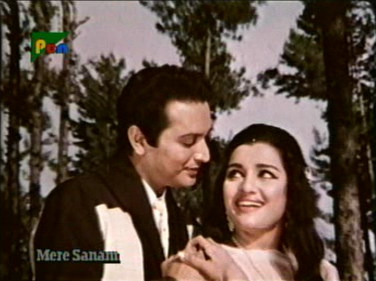
Nasir Hussain may have made his Tumsa Nahin Dekha story into four separate – and equally successful – films, but did that induce others to be original? On the contrary. Narinder Bedi, at least, probably seemed to think that what worked for Nasir Hussain might well work for him. Therefore, Mere Sanam, which has a storyline similar in many ways to Tumsa Nahin Dekha. (Both films also have fantastic music by OP Nayyar, by the way).
Tag Archives: film review
Tumsa Nahin Dekha (1957)
If Rajkumar is the trademark ‘Shammi Kapoor at his peak’ film, then Tumsa Nahin Dekha is an equally – if not more – important film, because this is the one that made Shammi Kapoor into the icon he was by the mid-60s. Till Nasir Hussain got Shammi Kapoor to shave off his moustache and act as the devil-may-care hero of this film, Shammi was (as my father puts it), “Just another actor with a thin moustache and the usual roles. Nothing exceptional.” Tumsa Nahin Dekha gave him the opportunity to transform from the half-hearted, unexceptional sort-of-hero into a Shammi Kapoor who became almost an institution in himself.
Rajkumar (1964)
My blog has featured Shammi Kapoor now and then – with reviews of some of his films, in my list of classic Hindi cinema’s handsomest men (which he topped, by a very long margin), and in various lists of songs.
Yesterday morning, when I woke up and logged on to the Internet, the first news headline I saw was that Shammi Kapoor had passed away. I have never been so affected by the passing away of one of the many stars of the past who have died in the recent past… but the news of Shammi Kapoor’s death brought tears to my eyes. I have a lump in my throat even as I type this.
I had not really intended to write this review now. I am in the midst of a blog project in which each post links to the previous and the next posts in some way or the other. But I could not ignore the passing of my favourite actor. I would never forgive myself for that. So, while this post does have a connection to the last (Humayun was a ‘raja-rani’ – ‘king-and-queen’ – film; so is Rajkumar), it is, first and foremost, a tribute to the brightest, most joyous and most entertaining star of the 60s. A sun that will never set.
Humayun (1945)
One of the main characters in Prince of Foxes was a man who actually existed in history: Cesare Borgia (1475 (?) – 1507 AD). This post is about a film that features one of Cesare Borgia’s contemporaries, a man born halfway across the world, seven or eight years after Cesare Borgia was born. A man as ambitious as Borgia, and a man who had as marked an impact on the history of India as Cesare Borgia did on Italy. This was Babur, the founder of the Mughal dynasty – without which we wouldn’t have had the Taj Mahal, Fatehpur Sikri, murgh musallam, and who knows how many Hindi films.
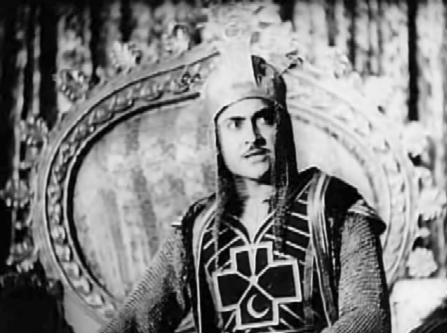
Humayun is (as the name suggests) more about Babur’s son and successor Humayun (who, coincidentally, was born almost exactly a year after Cesare Borgia died – Borgia died on March 12, 1507; Humayun was born on March 7, 1508). But the film begins with Babur (Shah Nawaz) invading India, so Babur does play quite an important role in the scheme of things.
Prince of Foxes (1949)
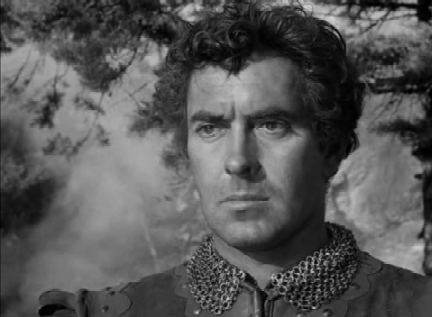
The last film I reviewed, Kohinoor, was part swashbuckler, part romance and part political intrigue. So is Prince of Foxes (though this has none of the comedy that makes Kohinoor such an endearing film). Interestingly, though, that isn’t the only thing common between these two films. They also have one scene in common. It’s a fairly critical scene in the film, where the hero has been imprisoned and is dragged forward, chained and beaten, in an assembly presided over by the villain – who sentences the hero to death. A bystander, one with ample reason to resent the hero, steps forward and disputes the death sentence – simply because it’ll bring the hero’s life to a blessed, quick end. Why not prolong his agony instead? This bystander proposes a gruesome way to do it (the same way in both Kohinoor and Prince of Foxes), and offers to do it. With the exact same results in both films.
I did not supply the details in Kohinoor, and I won’t let the cat out of the bag here. Suffice to say: if you like swashbuckling historicals, this is one Hollywood film you should put on your list.
Kohinoor (1960)
Der Tiger von Eschnapur and Das Indische Grabmal were, as Anu called them, ‘raja-rani’ (‘king-and-queen’) films, no matter how warped they may have been as examples of that genre. In line with my last post, therefore, here’s another film: also raja-rani, also set in the India of maharajas, evil plotters wanting to make a grab at a throne that’s not legitimately theirs, and a pretty lady at the heart of it all. Kohinoor, however, is a blessedly long way from Fritz Lang’s Indian epic. This film’s a rollicking farce mostly all through, with plenty of good songs, a great cast, and some superb comedy sequences.
Metropolis (1927)
As Samir pointed out in a comment on my last post, Pyaasa was one of the films (in fact, the only Hindi film) to find a place on Time Magazine’s all-time 100 best films list. That’s something Pyaasa shares in common with this film. Metropolis, a silent film made in Germany thirty years before Pyaasa, is also on the list. It was directed by Fritz Lang, who co-wrote the screenplay along with his wife Thea von Harbou. The result is a film like none other.
Bees Saal Baad (1962)
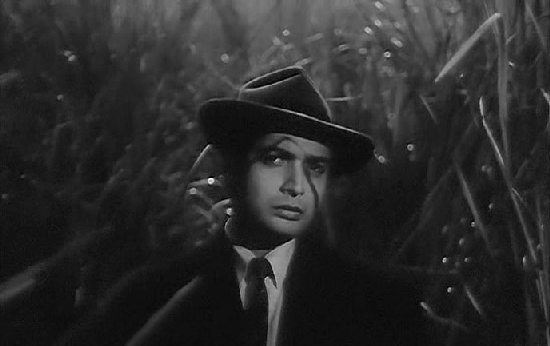
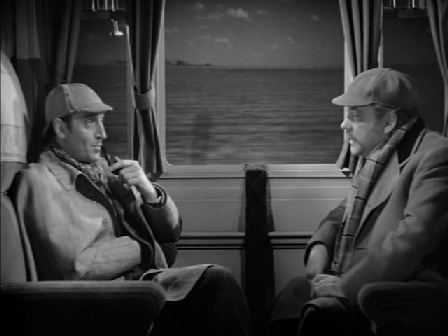
Several people who read my last post – which, as I’d mentioned, was an adaptation of a suspense novel, and in turn was remade in another language – guessed what this post would be all about. You were all kind enough to not let the cat out of the bag, but I guess you all got it right. The Hound of the Baskervilles, made in 1939 with Basil Rathbone as Sherlock Holmes, was remade in Hindi 23 years later, as Biswajit’s first Hindi film, Bees Saal Baad.
The Hound of the Baskervilles (1939)
My last two posts were related in a way common in cinema: the first was a review of a film based on a book, and that was followed by a review of a film that was a remake – in another language – of that film. So here’s the first of another duo of reviews, along the same lines. This film too was based on a book, and engendered in its turn a remake. And, to further keep up the link with the previous post, this one is suspense too.
Gumnaam (1965)
For anybody who’s been following my idea of ‘linked posts’ – each post connected to the one before, and to the one after – this probably comes as no surprise. And Then There Were None was based on Agatha Christie’s highly popular novel and play; Gumnaam is, in turn, an adaptation of And Then There Were None. Not a completely faithful adaptation, but a vastly entertaining one, as you’ll see if you scroll through the comments on my And Then There Were None post: most of my readers, even if they’ve not seen the Hollywood film, have had something to say about Gumnaam.