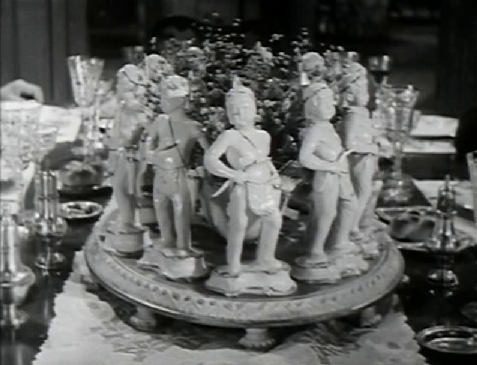
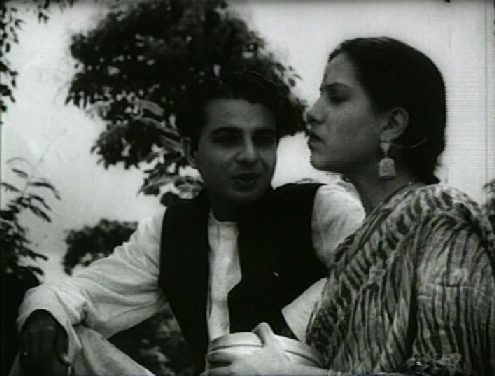
Since The Train was, all said and done (though I’m not convinced about it) a suspense film, I decided to stick to that genre for this post as well. And Then There Were None is a classic suspense film, based on Agatha Christie’s book of the same name. Christie’s book (originally titled Ten Little Niggers) is supposed to be the best-selling book of all time – 100 million copies sold to date, and with several cinematic adaptations as well.
Tag Archives: film review
The Train (1970)
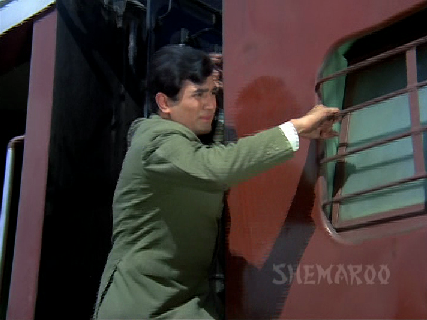
While, in the world of Hindi films, songs are often sung on trains, alas – trains too are occasionally dangerous places to be in. And I’m not simply talking about a train in which a heartbroken and lonely hero or heroine is travelling [such trains invariably have frightful accidents in which the hero(ine) is about the only person left alive and whole, though he/she has lost his/her memory, leading to interesting complications].
North-West Frontier (1959)
While I was writing the review of Ek Saal last week, I was reminded of this film. And that for what might seem an obscure reason to some: I S Johar was the man who suggested the story idea for Ek Saal, and he – now as actor, not writer – plays one of the important characters in this superb adventure film.
Ek Saal (1957)
Did the producer and director Devendra Goel specialise in film names that incorporated numbers? Have a look at this (admittedly select) filmography: Ek Saal, Ek Phool Do Maali, Ek Mahal ho Sapnon ka, Do Musafir, Dus Lakh… Was he, perhaps, doing a countdown to what he hoped would be some blockbuster magnum opus that would put Mughal-e-Azam or Mother India firmly and permanently in the shade?
I don’t know, but this I can say: of all the Devendra Goel films I’ve seen (six), this is by far the best. It’s coherent, interesting, romantic – and it stars a wonderful lead couple: Ashok Kumar and Madhubala.
I Remember Mama (1948)
The Times of India ran an interesting little article yesterday (I tried searching for it online, but sorry – can’t find it), as part of its run-up to Mother’s Day. It was a little piece about a mother who found herself reduced to a pair of hands – “can you open this?”, “can you fix this?” and so on – often completely ignored unless her children needed something done. She was feeling a bit blue, when a friend, who knew what she was going through, gifted her a book on the cathedrals of Europe – with a little note. On how cathedrals aren’t built in a day, they take years of very hard work, and nobody knows, years later, who made them. That, said the note (and the article) is how it is with mothers.
So, on Mother’s Day, a tribute to mums across the world. But, most especially, a tribute to my mum, whom I simply adore, and who is the sweetest, kindest, most gentle person I know. I love you, Mama.
Abe-Hayat (1955)
I’ve been very busy the last couple of days, and the busy-ness doesn’t look like it’ll come to an end soon. My husband, therefore (and what a model of husbandly devotion!) offered to write the review of Abe-Hayat for me. This, mind you, without having seen the film, just on the basis of a very sketchy gist I’d narrated of the first half while we were on our evening walk. Tarun said he’d do a 3-sentence review:
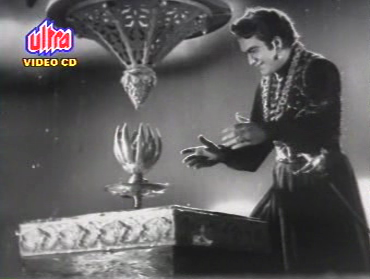
Once there was an evil jaadugar named Saamri. There was a prince, and a princess. The prince killed Saamri, and then he and the princess lived happily ever after.
How to Steal a Million (1966)
Ever noticed how many old films were set in Paris? The Last Time I saw Paris, Gigi, An American in Paris and countless others celebrated the French capital’s reputation as one of the world’s most romantic cities. Interestingly, too, a lot of films that weren’t primarily romances were also set in Paris. Ninotchka, A Shot in the Dark, Charade – and this one, like Charade, an Audrey Hepburn starrer that’s a fantastic cocktail of comedy, romance, and most importantly, very clever crime.
Rattan (1944)
In an interview, while reminiscing about his first few years in the Hindi cinema industry, Naushad mentioned how, after he had moved to Bombay and become a music director, his parents arranged his wedding. “We have told your future in-laws that you are a tailor,” his mother said. “If we’d said you were into music, you’d never have gotten married!” The irony of the whole thing was, recalled Naushad, that at the wedding, the band that came along was playing all the latest hits – all of which happened to be from Naushad’s first big score.
Which, as you’ve probably guessed by now, was from this film. Naushad came to Bombay from Lucknow in 1937, and though he did get some work over the next few years, it was not until Rattan that he got a chance to compose the sort of music that catapulted him to the top.
Jahanara (1964)
Hindi cinema’s fascination for the Mughals is – well, fascinating. Even before independence, we were busy churning out semi-historicals such as Humayun (1945) and Shahjehan (1946); then, in the 50s and 60s, there followed a spate of rather more big-budget extravaganzas, complete with big names, vast armies, glittering palaces and superb music: Mughal-e-Azam, Taj Mahal and Anarkali (Note: As a character, Anarkali seemed to be especially popular. Besides the Bina Rai-Pradeep Kumar version, there were Tamil, Telugu and Malayalam versions of her story; even a Pakistani version starring Noor Jehan. And that list neither includes the two versions made in 1928, nor a 1935 film starring Ruby Myers. Note that Mughal-e-Azam is also about Anarkali).
Teesri Kasam (1966)
One reason I’m glad I began this blog is that, because of it, I’ve met (although in most cases only in cyberspace) a lot of other people who are as enthusiastic about cinema as I am. Through these friends, I’ve been introduced to ‘new’ old films, to songs and directors and actors and styles of cinema that I hadn’t known before. Occasionally, too, my friends have been able to persuade me to give up a prejudice and watch a film I had no great expectations from. This is one of them.
At least four fellow bloggers/readers/friends – Yves, Bawa, Harvey and Pacifist – had been advising me, for a while now, to watch Teesri Kasam. I was assured that Raj Kapoor wasn’t at all Chaplinesque (something I dread in RK’s films) here, and that the film itself was excellent. I’d been trying to get hold of Teesri Kasam too, but the DVD rental company I subscribe to never seemed to have it in stock. Finally, last Sunday, I watched the film on Youtube. And yes, it is a wonderful film. Sensitive, lyrical, quiet, and easy to like.