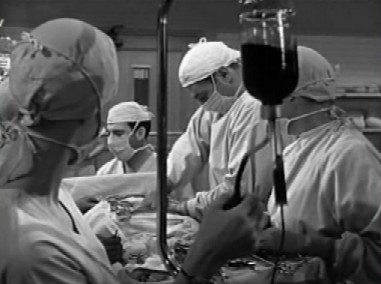
The List of Adrian Messenger (1963)

YouTube suggested this film to me, and when I looked up a synopsis, it sounded fairly interesting. A man asks a favour of a friend who is ex-MI5: here is a list, of ten men, living in various parts of Great Britain, nothing seemingly to tie them together, no similar occupation, no similar background, nothing. But find them , ask each of them if all is well, whether they’re still living at the addresses given in the list.

The important word here being ‘living’. Because, when the friend—Anthony Gethryn (George C Scott) sets about tracking down the men, it doesn’t take him along to find out that most of the men on the list are already dead, killed in accidents over the past five years. They couldn’t really be accidents, could they?

Very interesting. Rather like And Then There Were None (which, by the way, is referred to more than once in the course of The List of Adrian Messenger). I decided this was a film I had to watch.

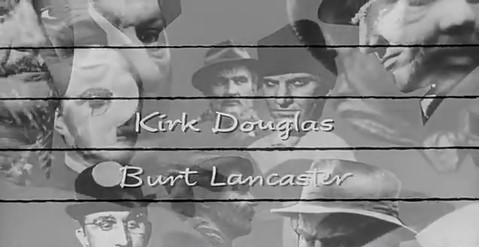
When the credits began to roll, I sat up, because suddenly here were familiar names, one after another. Tony Curtis. Robert Mitchum. Burt Lancaster. Kirk Douglas. Frank Sinatra. Why on earth hadn’t I heard of this film before, I wondered. Tony Curtis, Kirk Douglas and Robert Mitchum, especially, are among my favourites, and even if I haven’t seen all their films, I am mostly at least aware of many of the films they worked in. And one that seemed like such a casting coup? How come I hadn’t known about this?
Continue reading

From Here to Eternity (1953)

1941.

Private Robert E. Lee Prewitt (Montgomery Clift) arrives at a military base in Hawaii and presents himself before the commanding officer, Captain Dana Holmes (Philip Ober). The captain is a boxing enthusiast, and he’s licking his lips at the thought of having added one of the army’s best boxers to his clutch: Prewitt is a famous middle-weight, isn’t he. No sir, Prewitt says. He was; he doesn’t fight now. Not after that incident—Holmes obviously knows what Prewitt’s alluding to, but we get to know only later, when Prewitt meets and falls in love with a prostitute named Lorene (Donna Reed).

Continue reading

Ocean’s Eleven (1960)

Sabrina Mathew’s latest post is an interesting one that compares the two (1968 and 1999) versions of The Thomas Crown Affair. A couple of things from Sabrina’s review struck me: “The remake is keenly aware that the original got away with a lame robbery only because Steve McQueen planned it. So the remake fixes the problem with a daring art heist…”. And, ”The film is not just content with redoing the heist bit; it also wants to fix the romance by giving it a happy ending.” That reminded me of another film, again with two versions, for which I could quote Sabrina verbatim. Ocean’s Eleven, both the 1960 and 2001 versions, are also about robberies. And in this case too, the remake features a much sleeker robbery than the original—and a happier end.

Continue reading

Not As A Stranger (1955)

I have no compunctions about admitting that when it comes to cinema, frivolity is right up my street. Comedy (even slapstick), romance, war, noir, Western, musical, sword and sandals: all is grist to my mill. Happy endings, the vanquished villain, the long fadeout on the kiss between the beautiful heroine and her handsome hero, and I’m happy too.
Which is why I was surprised at my own reaction to Not as a Stranger. It isn’t frivolous, not by a long shot; the heroine and the hero are ill matched; and the hero (maybe protagonist would be a better word) isn’t even a particularly nice character. Despite all of that, I still liked it—a lot.

A still from Not As A Stranger

Continue reading

High Society (1956)

When I was a kid in the late 80’s, All India Radio used to air a series of Western music programmes, most of which consisted of songs from the 50’s and 60’s. There was one programme—I’ve forgotten what it was called—which focused on music from the movies: Oklahoma!, My Fair Lady, Fiddler on the Roof, The Sound of Music—and High Society. I was singing along to Who wants to be a millionaire long before I realised that yes, I did want to be one.

But, without further ado: this is a film with a title that’s pretty self-explanatory. High society in Newport centres round exquisite Tracy Samantha Lord (Grace Kelly), who’s getting ready to marry distinctly stuffy social climber George Kittredge (John Lund).

George and Tracy

Continue reading