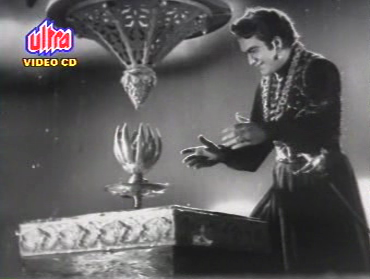
Baaz (1953)

Today, July 9, 2025, marks the 100th birth anniversary of one of Hindi cinema’s best-known film directors. Born in Mysore on this day in 1925 as Vasant Kumar Shivshankar Padukone, Guru Dutt studied in Calcutta before joining Uday Shankar’s India Culture Centre (in Almora, present-day Uttarakhand) to train in dance. By the time he turned 19, he had moved to Pune, where he began working as a choreographer for Prabhat Studios. By the time Prabhat Studios folded up (in the early 1950s), Guru Dutt had formed a close friendship with Dev Anand, because of whom he received his first break as a director: in 1951, he directed Navketan’s Baazi, starring Dev Anand, Geeta Bali and Kalpana Karthik in a noir thriller that was to become a defining film for Navketan: edgy, stylish, dark, very urban.

Guru Dutt is today revered more for the hard-hitting, cynical cinema he made: films like Pyaasa, Sahib Bibi aur Ghulam and Kaagaz ke Phool hold up the mirror to a world that is selfish, cruel and opportunistic. These are bitter films, films that plumb the depths of human nature; films that—despite following most of the standard tropes of commercial Hindi cinema (a romance between the lead couple; a fair number of songs; a comic character invariably played by Johnny Walker)—were quite different from other Hindi films.

These, too, are the films for which Guru Dutt is mostly remembered today. Is that because over the decades, people have seen how the tragedy and turmoil of Guru Dutt’s personal life was probably reflected in films like these? Is there a voyeuristic tendency to try and spot the man behind the director?

But Guru Dutt also made other films, on other subjects. This one, for instance, an adventure/patriotic film set on the high seas, with Geeta Bali starring as the eponymous ‘Baaz’ (falcon), a woman who becomes a pirate to free her land of a colonial tyrant.

Continue reading

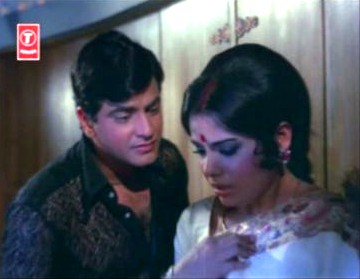
Sharmeelee (1971)

Happy 75th birthday, Shashi Kapoor!

Yes, the youngest of the three Kapoor brothers was born on March 18, 1938, in Kolkata. He is one of my favourite actors, and one of the very few whom I like also in his 70s avatar—that charm didn’t desert him with time. But. To return to the time period this blog specializes in: looking through the films I’ve reviewed till now, I realized there are only a handful of Shashi Kapoor films here. Prem Patra (another favourite), Pyaar Kiye Jaa, Pyaar ka Mausam, The Householder, Benazir.

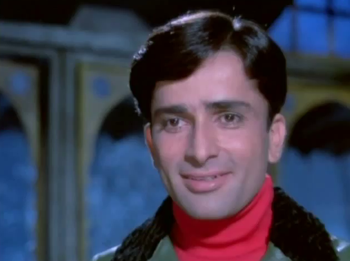
So, this calls for another review, another Shashi Kapoor favourite of mine. Sharmeelee, which, though it was released in 1971, has enough of the feel of the 60s—in fashions, music, crew and cast involved—for me to include it in my list. Most of all, it has Shashi Kapoor at his absolutely irresistible best.

Shashi Kapoor in Sharmeelee

Continue reading

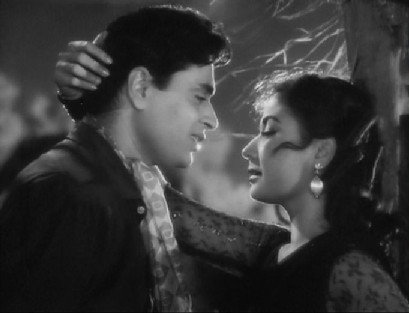
Teen Deviyaan (1965)

This post is two weeks late. Late, because it’s a tribute to the actress Kalpana, who passed away on January 4 this year. I didn’t get to know about her death till the 8th, and then – though I did want to do a tribute post – I couldn’t think of a film I hadn’t reviewed, and liked well enough to want to review. (Two of my favourite films – Professor and Pyaar Kiye Jaa – starred Kalpana, but I’ve already reviewed them. And other Kalpana films I’ve seen include Naughty Boy and Saheli – both of which I found almost impossible to sit through). Last weekend, in desperation, I watched Teesra Kaun, thinking I’d review that; but that was a disappointment too. So, finally: an old classic.  Not a great film, but very pretty. And a good Kalpana showcase.


Continue reading

Abe-Hayat (1955)

I’ve been very busy the last couple of days, and the busy-ness doesn’t look like it’ll come to an end soon. My husband, therefore (and what a model of husbandly devotion!) offered to write the review of Abe-Hayat for me. This, mind you, without having seen the film, just on the basis of a very sketchy gist I’d narrated of the first half while we were on our evening walk. Tarun said he’d do a 3-sentence review:
Once there was an evil jaadugar named Saamri. There was a prince, and a princess. The prince killed Saamri, and then he and the princess lived happily ever after.

Continue reading

Ek Nari Ek Brahmachari (1971)

Though I usually restrict this blog to films up to about 1970, I occasionally make exceptions for films that have a 60’s feel to them—Fiddler on the Roof, for instance. And this one, which despite the bell bottoms, the unbelievably gaudy outfits of the supporting cast and the horrendous decor, has a definitely 60’s feel about it. Another reason (and one which I’m not ashamed to admit is probably the main reason) that I’ve decided to make an exception for Ek Nari Ek Brahmachari is that it stars the lovely and vivacious Mumtaz, one of my very favourite actresses.

Continue reading

Akeli Mat Jaiyo (1963)

Akeli Mat Jaiyo (‘Don’t Go Alone’—specifically addressed to a female) is, if nothing else, very aptly titled. Because if you gallivant where you’re not supposed to, you run the risk of being pursued by a moron whose best friend is a ventriloquist’s dummy. You may end up betrothed to somebody whose family includes a father with a loony sense of humour. Worst of all, you may have to stake your all on saving the ‘life’ of that ventriloquist’s dummy. So yes, akeli mat jaiyo. No way.

Continue reading

Haqeeqat (1964)

With most films, by the time I see The End come up on the screen, I’ve more or less decided what I’m going to write about it, till which point I’m going to reveal the plot, and so on. With Haqeeqat, I’m still a little dazed. This is one of Bollywood’s earliest—and most realistic—war films, set against a backdrop of what was then the almost inaccessible region of Ladakh. It’s a blend of war and melodrama, propaganda and patriotism… and I’m not sure exactly what can be considered the main story of the film, since it actually consists of a number of stories woven into each other.

Balraj Sahni in Haqeeqat

Continue reading