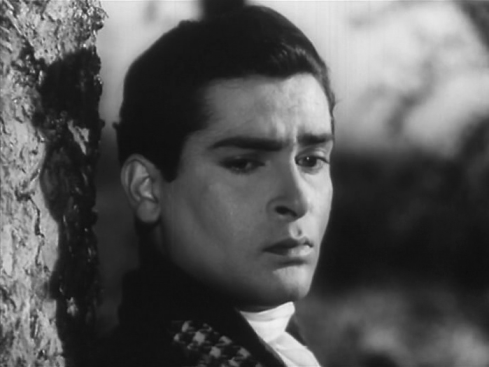
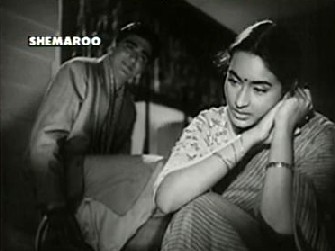
Johny Mera Naam (1970)

One day in August, I checked my blog roll and discovered that not one, but two, of my favourite bloggers had posted reviews of films based (even if only in spirit) on The Arabian Nights. Anu had reviewed Ali Baba aur 40 Chor, and Ira (aka Bollyviewer) had reviewed The Thief of Baghdad. Coincidence? Planned? If the latter, then why hadn’t I, the third of the three soul sisters, been included in the plan?
It turned out to have been sheer coincidence, but Anu, Ira and I decided it would be a good idea to actually do a themed set of posts. And what better theme than the one Ira suggested: long-lost siblings, such a favourite trope in Hindi cinema.

So here goes. Head over to Anu’s blog to read her review of the delightful Yaadon ki Baaraat (singularly appropriate, considering the link between Anu and me) and to Ira’s blog to read her take on another extremely popular (and superb!) lost-and-found-siblings film, Seeta aur Geeta. And here, of course, is mine: a review of a film which just manages to make the cut for my blog when it comes to time period. A classic story of long-separated brothers who grow up, unknown to each other, on opposite sides of the law.
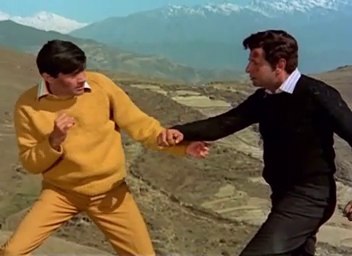
Dev Anand and Pran in Johny Mera Naam Continue reading

Saajan (1969)

The other day, a fellow blogger, mentioning her distaste for Manoj Kumar’s films said that while she has “nothing against the man himself”, she really hates his films. I know what she meant (at least I think I do): I hate that insufferably xenophobic “all that is Indian is good, all that is Western is bad” philosophy espoused by films like Upkaar or, even worse, Purab aur Pachhim.
But I tend to shove that lot of films to the boundaries of my recollection of Manoj Kumar’s films. For me, his best films are the outright entertainers, the romances and suspense thrillers he worked in. Especially the suspense thrillers: Woh Kaun Thi?, Anita, Gumnaam—and this one.

Manoj Kumar and Asha Parekh in Saajan Continue reading

Dil Deke Dekho (1959)

Dil Deke Dekho isn’t quite the perfect film I’d like to make it out to be.
(a) The story isn’t exactly original (Nasir Hussain had already used it in Tumsa Nahin Dekha. He also went on to use it in Jab Pyaar Kisi se Hota Hai and Phir Wohi Dil Laaya Hoon, but that can’t be laid at the doorstep of Dil Deke Dekho).
(b) The plot is too complicated, relies too heavily on convenient coincidences, and has some unbelievable – and often unclear – motives.
(c) The lead actress, Asha Parekh (just 16 years old), though pretty as a picture, isn’t a terribly good actress at this stage of her career.

On the other hand: the film stars Shammi Kapoor.

Continue reading

Sujata (1959)

Another film from one of my favourite directors, and with two of my favourite stars as well. Like many of Bimal Roy’s other productions—Parakh, Usne Kaha Tha, Bandini, Kabuliwala, Do Bigha ZameenSujata is about people like you and me, not outright villains (I like to think I’m not one!!), but not saints either (yes, well, I have to admit I’m not one of those, either). People who’re shades of grey, not black and white. And, like most of Bimal Roy’s other films, this one too focuses on the underdog: in this case, an ‘untouchable’ girl.

Nutan and Sunil Dutt in Sujata

Continue reading

Shaadi (1962)

Shaadi isn’t one of the better films I’ve seen in recent times. In fact, it had some definitely irritating moments, and it called for more suspension of disbelief than is generally expected in Hindi films. On the other hand, it had quite a cast: Saira Banu, Manoj Kumar, Dharmendra, Indrani Mukherjee, Balraj Sahni, Om Prakash, Manorama, and others. Even more interestingly, it was Saira Banu’s second film and one of Dharmendra’s first few films. Overall bearable, especially since I didn’t have anything better to do.

Saira Banu in Shaadi

Continue reading

Neela Akash (1965)

When I see Dharmendra, Mala Sinha, Madan Puri, Mehmood and Shashikala as part of the cast, I’m inclined to sit back with a happy smile and look forward to the movie. I expect to be entertained, not subjected to a string of disconnected scenes that make me want to weep with frustration. But yes, after Baharein Phir Bhi Aayengi (also Dharmendra and Mala Sinha—I’m losing my faith in these two), Neela Akash was another disappointment.

The film begins with the graduation of Neela (Mala Sinha), the eldest of the three offspring of Karamchand (Raj Mehra) and his wife (Sulochana Latkar). Karamchand is the type of father nobody should be subjected to: he’s bossy, selfish, prone to gambling (and worse, losing) at the races, and a drunk. Fortunately, a good-at-heart goon called Abdul Chacha (Madan Puri) hauls him home every night.

Abdul Chacha fetches Karamchand home

Continue reading