A story published in Open Road Review

Open Road Review (ORR) is a brand new literary magazine in India. They’ll be publishing an online issue every three months, in three categories: short fiction, creative nonfiction, and poetry. For the first issue of ORR, its editor, Kulpreet Yadav, invited me to contribute. One look at the guidelines (“literary work that is elegant and subtle… takes the reader to a deeper level”), and I knew Muzaffar Jang, much as I love him, wouldn’t do. What was needed here was something in a very different style.

So here is what I submitted. It’s a story called Maplewood, set in a fictitious colonial bungalow (named Maplewood), where an old widow, transplanted into the middle of the sleepy backwaters of the country, passes her days. It’s a story that came deep from within my heart – not because I myself have felt what the narrator of Maplewood must feel, but I can imagine it. And I can imagine what my reaction would be if I were to find myself in her place.

Do read, and let me know what you think.


The Agony and the Ecstasy (1965)

One of the good things about growing up in a family that loved reading was that even as a child, I was surrounded by books—novels, of course; and treatises on everything from Wordsworth’s poetry (thanks to my mother) to gardening and homoeopathy (thanks to my father). Those books, big tomes that were all words and no pictures, were of no interest to a 6-year old who wasn’t too deeply into literature.

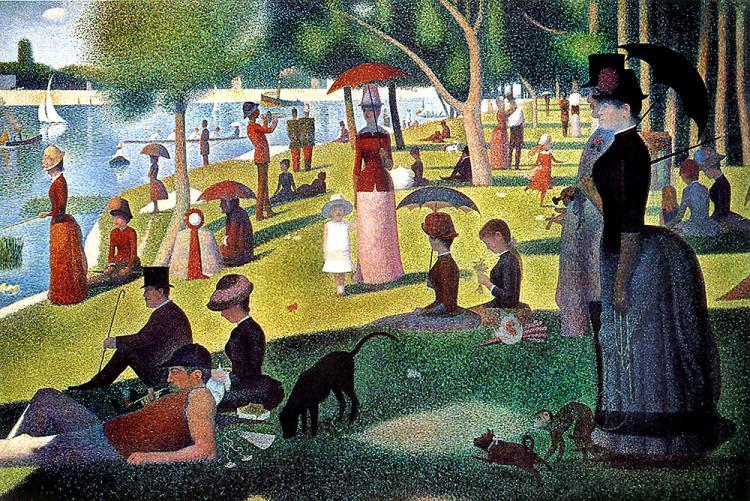
My favourite book from my parents’ vast collection was a large Readers’ Digest coffee table book called Family Treasury of Great Painters and Great Paintings. This one was a fascinating book. You didn’t need to be able to read much to be able to enjoy it, because it was full of the most amazing paintings. That was where I first saw The Music Lesson, La Grande Jatte, The Arnolfini Wedding, Sunflowers… and The Creation of Man. I don’t even need to open that book now to see what The Creation of Man looked like, spread across the top half of two pages. It took my breath away.

Continue reading

Celebrating World Heritage Day: Ten Songs

Today, April 18th, is World Heritage Day. A day to thank God, our ancestors, civilisation—for the richness that surrounds us. Whether it’s in the form of a unique ecosystem, or a beautiful old building. Or a language, a cuisine, a medicinal system. It’s all heritage, and it’s all precious. All remarkably, frighteningly fragile.

The United Nations Educational, Scientific and Cultural Organisation (UNESCO) has, as one of its wings, the World Heritage Centre. This is responsible for selecting (based on very strict criteria), preserving and promoting the UNESCO World Heritage Sites: natural and cultural heritage believed to be of ‘outstanding value to humanity’. India has a total of 28 World Heritage Sites, with a further 32 nominated and therefore on the ‘Tentative List’.

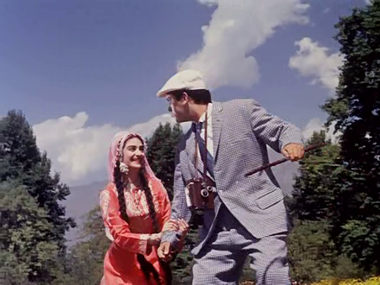
So: to celebrate. Ten songs, from Hindi films of the 50s and 60s (the only exception being Johny Mera Naam, 1970), which are picturised, either in part or totally, against a backdrop of a UNESCO World Heritage Site—or at least a tentative one. These are all from films I’ve seen. Enjoy!

Continue reading

Charulata (1964)

… and some random comparisons with Sahib Bibi aur Ghulam.

This Satyajit Ray film had been lying in my to-watch pile for a long time. Then, I learnt a few days back that the Indian government had finally decided to award a Dadasaheb Phalke to Soumitra Chatterjee for his contribution to Indian cinema. Better late than never, I guess (even though a number of people have said that it’s too late). The announcement, however, did give me a solid reason to watch Charulata (aka The Lonely Wife). And I ended up wanting to hit myself for not having seen this masterpiece earlier.

Continue reading

Reporter Raju (1962)

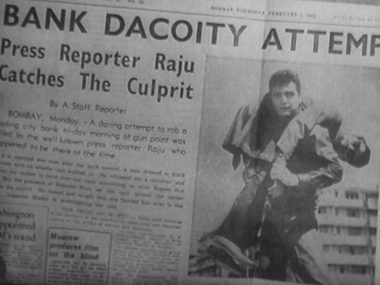
A couple of months ago, I got a call from Seventymm (the video rental service I’d subscribed to), letting me know that they were shutting down rentals and becoming retail-only. Since I’d paid up in advance for a year’s subscription, I had Rs 800 worth of unused vouchers—which, they said, I could use to pick products from the store. I ordered seven DVDs. They (or, rather, the five Seventymm were able to deliver—the rest went out of stock) arrived last week. Reporter Raju was one of them.

Also, last week, I finished a writing assignment for which the research involved watching a diverse set of films. A lot of them, though, had one thing in common: a newspaper office and/or a reporter as an important character. This one was on the to-watch list, but didn’t arrive in time for me to see it before submitting my article. Just as well, actually, because despite the name, it doesn’t exactly show the reporter doing much any newspaper work. Unless beating up goons is part of the job description.

Continue reading

Crime and the Hindi film song: Ten examples

I attended an interesting Conference on Crime Fiction at St Stephen’s College, Delhi University, last month (for more on that, click here). During a couple of the less-engrossing sessions, I found my mind wandering a bit – but not too far: only to crime in cinema. And from there, to songs about crime.

Also, over the past several months, I’ve been wracking my brains over what post to dedicate to friend, blog reader, fellow-blogger and participant in the Classic Bollywood Quiz, Raja. For the other prize winners, deciding a post was fairly easy: some had requested particular posts in the past; some had voiced interests in a way that made me fairly sure of what they’d like. But Raja? I was flummoxed.

Then I remembered that Raja, besides sharing my love for old Hindi cinema (and its songs), also has a fantastic sense of humour. And a strong sense of justice, of what’s right and what’s not. This post, therefore, is dedicated to you, Raja. I hope you enjoy it.

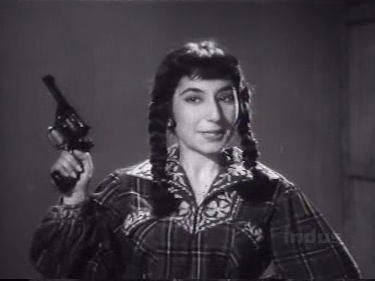
Here it is, then: a list of ten film songs – as always, mostly from pre-70s films that I’ve seen – that talk about crime. To leave no room for doubt, they’re all actions that are illegal under the Indian Penal Code (or Acts of Parliament). And yes – no crimes are repetitions.

Continue reading

Harvey (1950)

No prizes for guessing whom this prize post is dedicated to.

(For those who’re not in the know: I hosted a Classic Bollywood Quiz last year on this blog, and the prizes for that—one for each participant—was a post dedicated to that participant. My friend and fellow blogger Harvey got the Quick Worker Award for the quiz—he had to perforce submit his answers within a couple of days of the quiz being posted, and still managed to get 7 out of 10 right. Impressive).

So: the all-important question. Why am I dedicating this post (about a sweet man whose best friend is an invisible giant rabbit) to Harvey? No, not because I think my pal is nuts. But because Harvey was the one who recommended Harvey to me, and because I found this such an unusual film. And with such an endearing moral to it. Thank you, Harvey. That warmed my soul.

Continue reading

Azaad (1955)

After all the unhappiness over the past week or so – first Ravi’s death, and then Joy Mukherji’s – you’d think the last film I’d want to see would be one that starred the ultimate tragedy couple: Dilip Kumar and Meena Kumari.

But, thanks to Anu, who assured me that Azaad was loads of fun, I decided I should try watching this one. And yes, Anu: I loved it. Loved Meena Kumari’s pretty peppiness. Loved Dilip Kumar at his swashbuckling, handsome, thoroughly attractive self. Loved the smoke rings (almost perfect circles) that Pran blew. Loved Sai and Subbulaxmi’s awesome dancing. Loved C Ramachandra’s fantastic music.

Continue reading

Ten of my favourite Joy Mukherji songs

Because my Ravi tribute was swiftly turning into a Joy Mukherji tribute – and because I thought Joy merited a tribute all his own – I decided to do a Joy Mukherji post. My intention had originally been to review a Joy Mukherji film – until I realised that I’d already reviewed all my favourite Joy starrers.

Joy Mukherji (Feb 24, 1939-Mar 9, 2012) was the son of Shashadhar Mukherji, one of the founders of Filmalaya. Filmalaya, therefore, was the company which launched Joy in the 1960 film Love in Simla (which also marked the debut of Sadhana). Of all the aspiring young actors who tried to emulate the vastly successful Shammi Kapoor in the 60s, the tall and handsome Joy Mukherji was probably the best at projecting some of the effervescence, the joie de vivre, and the sheer attractiveness that made up Shammi’s onscreen persona. Where Shammi danced up a storm with Aaja aaja main hoon pyaar tera, Joy was joy personified with Duniya paagal hai. While Shammi oozed romance with Ae gulbadan ae gulbadan, Joy was tender in O mere shaahekhubaan, seductive in Aa jaa re aa zara aa.

You will be missed, Joy. Sorely.


Continue reading