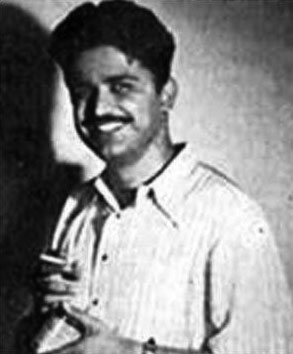
Pendekar Bujang Lapok (1959)

This blog reminds me sometimes of a sort of railway platform—the type from the Sunil Dutt-Nalini Jaywant starrer, where a bunch of people end up spending several days in each other’s company, and then go their separate ways. Because, while there are some loyal friends who stick to this blog (and have done so over the years), the majority of people who comment on it are those who stay for a few months, a few weeks, maybe even just a few days, commenting like mad, and then vanish, never to be seen again.

One such person was a Malaysian, of Indian origin but settled in Australia, who haunted my blog several years ago. After some very hectic commenting on just about every post I published (and that included multiple comments, and involved conversations), she asked me for some Agony Aunt-ish advice offline, and having received both that as well as a shoulder to cry on, went off. I haven’t heard from her ever since.

But one thing she did manage to do while she was frequenting this blog: she told me enough about Malaysian cinema of the 50s and 60s to make me want to watch it. Something, I realized soon enough, that wasn’t going to be easy, because there didn’t seem to be too many Malaysian films of that era that were available with English subtitles.

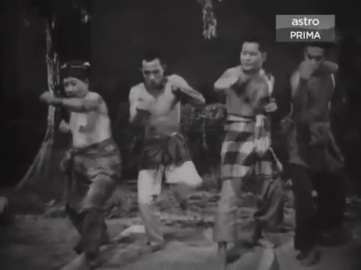
I’ve persevered, though, and sometime back I found time one. Pendekar Bujang Lapok (The Three Bachelor Warriors) is the second in a highly successful series of films made by iconic film-maker and actor P Ramlee. It has been called one of the five best Malaysian films to be shot in Singapore, and considering I’ve just returned from a trip to Singapore, I figured it was time to watch this.
Continue reading

Daaera (1953)

From one birth centenary to another.

Less than a week after Chitalkar Ramachandra was born in Maharashtra, on January 17, 1918, in the town of Amroha (in north-west Uttar Pradesh) was born, into a wealthy family of landowners, Syed Amir Haider Kamal Naqvi. Syed (or Kamal, as it probably more appropriate to refer to him) began writing Urdu stories at a young age and harboured a dream of making them into films—a dream quickly shot down by a father who did not think cinema a worthwhile profession. Faced with the prospect of having to manage the family’s estates, the 16-year old Kamal sold his sister’s gold bangles to finance his clandestine escape to Lahore. Here, he continued to write stories while studying (at Lahore’s Oriental College) and by managing to have some of these published, was able to finally save up money enough to travel to Bombay.

In 1938, when he was just 21 years old, his story Jailor was adapted to the screen by film-maker Sohrab Modi.

And that was how Kamal Amrohi made an entry into the Hindi film industry. This was the man who would write perhaps the most memorable Urdu dialogues of any film in Hindi film history (Mughal-e-Azam). This was the man who made what is arguably the finest and most memorable Muslim social in Hindi cinema (Pakeezah). This was the man, too, who—even though he directed only five films—made a mark for himself with those films, three of them (Mahal, Pakeezah and Razia Sultan) becoming pretty much cult classics.

Continue reading

Chitalkar Ramachandra Sings: Ten Songs

Today is the birth centenary of one of my favourite music directors, C Ramachandra: he was born a hundred years ago, on January 12, 1918, in Puntamba (Maharashtra). I won’t go into his biography, since that is something I’ve covered before on this blog, when I compiled a list of my ten favourite songs composed by C Ramachandra.

That said, I couldn’t possibly have let C Ramachandra’s centenary pass by without celebrating it in some way. So, a list of great songs C Ramachandra sang. Like SD Burman, C Ramachandra (billed often as Chitalkar, especially when he sang playback) had a slew of songs to his name as singer. Unlike SD Burman’s instantly recognizable voice, Chitalkar’s was a little more elusive—to the average listener, he can be recognized at times, but more often than not, he sounds like someone else altogether…

Continue reading

Baradari (1955)

When I did my post on ‘unusual  singers’—actors and actresses who are familiar to movie-watchers, but have very few songs to which they’ve lip-synced—a couple of people suggested Ajit as a possible candidate for the list.  For those who associate Ajit only with the leering villain of films like Yaadon ki Baaraat, the man of classic (not to mention corny) dialogues like “Lily, don’t be silly” and “Ise liquid oxygen mein daal do. Liquid ise jeene nahin dega aur oxygen ise marne nahin dega”—all delivered, of course, in classic Ajit style—the idea of Ajit ‘singing’ was novel enough.

But the Ajit I first knew in cinema was the Ajit of the old black-and-white Hindi films: the hot-headed rival -and-friend of Dilip Kumar’s character in Naya Daur. The embittered cynic in Nastik. The quiet, handsome and very dependable Durjan Singh of Mughal-e-Azam. Meena Shorey’s friend-enemy-accomplice from the hilarious Dholak. Yes, before he slipped into middle age and the villain roles, Ajit acted the hero in plenty of films (and, more to the point when it came to the ‘unusual singers’ post, lip-synced to many songs, including some big hits).

Continue reading