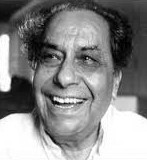
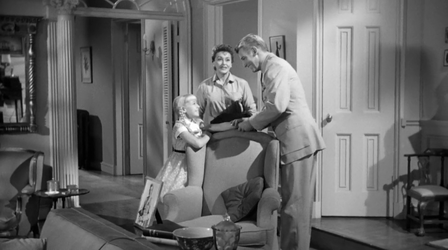
Dev Anand: Ten Songs, Ten Voices

The very first Hindi film song I remember watching was a Dev Anand one. I was nine years old, and the film was CID. The film had already had a couple of songs (Boojh mera kya naav re, Leke pehla-pehla pyaar) that featured him, but when Aankhon hi aankhon mein ishaara ho gaya came on, it cast its spell on me. I was completely bowled over, and from then on, was a starry-eyed Dev Anand fan.

Over the years, as I’ve become older and wiser (more cynical?), the love for Dev Anand has been tempered somewhat. I don’t like the mannerisms, the exaggerated drawl and pout, the puff of hair, and the larger-than-himself persona he took on once he became a superstar. I find him a bit embarrassing in later films, from the 70s onward, where he’s trying desperately to appear much younger than he really was.

But, in his heyday, I think there was nobody to rival Dev Anand in the charisma department: nobody as suave, as charming, as watchable. And, as if that wasn’t all, his films always had great music. About 90% of my favourite songs as a teenager were from Dev Anand’s films. Munimji, CID, Nau Do Gyarah, Guide, Solvaan Saal, Kaala Paani, Kaala Bazaar, Baat ek Raat ki, Teen Deviyaan… one wonderfully entertaining film after another, one great song after another.

Continue reading

Lata Mangeshkar: Ten Composers, Ten Songs – Part 5

The first post in this series of song lists was posted as a tribute to Lata Mangeshkar when she passed away in early 2022. I had previously posted a song list featuring Lata in Ten Moods, so this time I wanted to be different: to showcase Lata’s work with different music directors. Naturally, given Lata’s oeuvre (even till just 1970, which is my self-imposed cut-off for this blog), that list, with just ten composers included, was far from enough. I ended up doing several more posts in the series, and every time, some reader or the other would comment: “What about so-and-so composer? How about this song?”

Continue reading

The Ladykillers (1955)

Long-time readers of this blog probably know by now that I have a soft spot for suspense films, heist films, comedies, and—where these genres sometimes meet—films about bumbling crooks. The funny heist film, so to say, where everything goes wrong. Some months back, when I watched Gambit (which I enjoyed very much), a subsequent search for funny heist films threw up another suggestion that I’d heard of before: The Ladykillers. Like Gambit, this too starred Herbert Lom, an actor I like, and because I was fresh from watching Gambit, I thought why not give this one a try too.

The Ladykillers begins with the lady in question: sweet, somewhat scatter-brained old lady Mrs Wilberforce (Katie Johnson), who emerges from her house at the end of a lane and walks down the street nearby. Everybody around seems to know and like Mrs Wilberforce: people greet her, and when she reaches her destination—the local police station—the cops are indulgent. Mrs Wilberforce has come to clarify that her friend, another elderly lady who had informed the police station about spotting a spaceship, was actually misinformed… Mrs Wilberforce’s explanation is detailed and apologetic, and her earnestness shines through bright and clear.

Continue reading

Raj Nartaki (1941)

Aka The Court Dancer.

When I was watching Amrapali some weeks back, I was reminded of another court dancer of Hindi cinema: Sadhona Bose’s character from this film, which claimed to be the first English language film to be made in India with an all-Indian cast and crew. I had made an attempt at watching Raj Nartaki a couple of years back, but I could not get into it, and abandoned it after a few minutes. I guess the concept of Indian actors speaking only English (and that back then) was sufficiently unusual to take time to get used to.

After Amrapali, though, I decided I had to give Raj Nartaki another try.

The film begins by laying the ground. This is the early 19th century, and the film is set in Manipur. Here, Prince Chandrakirti (Prithviraj Kapoor) is heir to the throne. He is also in love with the newly-appointed court dancer, the lovely Indrani (Sadhona Bose). When the story begins, Chandra (as Indrani affectionately addresses him) is at Indrani’s palace, where several of her fellow dancers are entertaining them.

Continue reading

Shailendra in Ten Moods

One of Hindi cinema’s leading lyricists, and a stalwart poet in his own right (I cannot resist wondering if that shouldn’t be “in his own left”, given Shailendra’s socialist leanings!), Shailendra was born on this day a hundred years ago. I have written about him before, in this post to mark an earlier one of his birthdays. But, since I like Shailendra’s poetry so much, I could not let his birth centenary pass without a post dedicated to him. A list of Shailendra’s songs, therefore, that are in ten different moods. And, so that this post isn’t a repeat, even in a small way, of my earlier Shailendra post, none of the songs here are from my earlier post.

Continue reading

Barjatri (1951)

Aka The Wedding Procession, though Hindi speakers will probably be able to relate to a more exact approximation of what barjatri means: baraati. The people who, at a wedding, accompany the bridegroom to the venue, invariably in great pomp and to be made much of. This delightfully funny film centres around a group of young men whose story begins just before all of them are to travel, as baraatis, for their friend’s wedding.

One of these is Ganesh ‘Gansha’ (Kali Bannerjee), who lives in his uncle’s home, and is unemployed. Uncle (?) has been pushing Ganesh to find a job, but Ganesh couldn’t be bothered. He would rather spend time sitting with his pals, chatting and smoking, all of them generally enjoying themselves.

Continue reading

Amrapali (1966)

Happy birthday, Vyjyanthimala! (it’s either her 90th birthday or her 87th today, it doesn’t seem very clear which, but anyway).

Among the recent books I’ve read is Advait Kottary’s Siddhartha: The Boy Who Became the Buddha, a fictionalized retelling of the story of the Buddha. While Siddhartha is the focal point of the narrative, several other important historical personages appear in the book, among them the nagarvadhu or courtesan of Vaishali, Amrapali. Amrapali is shown to have originally had a relationship with the ruler of Magadha, Bimbisara: so much so that she bears him a son, whom she is later compelled by circumstances to hand over to the Buddha to bring up. Bimbisara’s belligerent and headstrong son and heir, Ajatshatru, though he’s never seen ‘his father’s courtesan’ (as Kottary describes her), detests Amrapali.

… until he, injured in a way with Vaishali, impersonates a Lichhavi (native to Vaishali) soldier in order to escape with his life. Fate brings Ajatshatru and Amrapali together: she, thinking him to be Lichhavi, tends to his wounds and heals him, and they fall in love.

It’s been ages since I watched the Vyjyanthimala-Sunil Dutt Amrapali, and while I remembered some of the core elements, I’d forgotten much of it. As far as I remembered, the film had nothing whatsoever about Amrapali’s relationship with Bimbisara or her having a son with him. To be honest, I’d have been very surprised if that aspect of her life had been shown: it would have been far too bold for Hindi cinema, back then, to have a heroine who could have affairs with both father and son, and bear a child out of wedlock.

So I decided it was time to rewatch Amrapali, which begins in Magadha. Here, the king, Ajatshatru (Sunil Dutt), is in conference with his trusted advisor, friend, and Magadha’s commander-in-chief, Veer (Premnath). Ajatshatru is a hot-headed warmonger, and right now baying for the blood of the democratic Lichhavis, whose land, Vaishali, lies across the river to the north.

Continue reading

Insaniyat (1955)

This is one film that’s been on my to-watch list for several years now, mainly because it is the only film that stars both Dev Anand and Dilip Kumar. Also, as I’ve gathered from a few articles and posts I’ve read, this is also possibly the only film that doesn’t feature Dev Anand as a modern city slicker. He’s still somewhat of a sophisticate—by no means an illiterate rustic—but this is set in some undefined ‘raja-rani’ time period where Dev Anand spends all the film in something other than Western clothing.

But, to begin at the beginning. Zangoora (Jayant) is a nasty tyrant whose idea of ruling his kingdom is to be brutal with his subjects. Every now and then, his soldiers are sent out into the countryside to loot villages and bring back all that they can find. Zangoora’s troops are vile, uncaring, as brutal as their boss.

They’re at one village, upturning things, grabbing and snatching, when a furious village woman, Durga (Bina Rai) comes charging up. Durga lets fly at the man leading the troops, Bhanu Pratap (Dev Anand, his upper lip topped with a ridiculous moustache). Durga slaps Bhanu, and then proceeds to berate him for his mindless cruelty.

Continue reading

Spring in Park Lane (1948)

PG Wodehouse is one of my top favourite writers. I’ve read most of his books, and I’ve explored some of his intersections with cinema: the films he was involved in, and the films that were based on his books. Of the latter, I’ve realized again and again, there seem to be very few that do anything close to justice to Wodehouse’s inimitable blend of humour. Some of the shorter TV films (like Heavy Weather, starring Peter O’Toole as the eccentric Lord Emsworth) or TV series like Jeeves and Bertie are good (though Jeeves and Bertie, after a few good episodes, went off the rails).

But now and then I come across a film that has nothing to do with Wodehouse, but seems somewhat like a homage. With the same light-hearted charm of the master, the same frothy humour that never fails to appeal to me.

As in Spring in Park Lane

The film begins with Judy Howard (Anna Neagle) ringing the doorbell of her home in London, only to have the door opened by a complete stranger (Michael Wilding). Judy is surprised, and the conversation that ensues has both her and the man quite baffled. It’s only with a little perseverance, and some help from the butler Perkins (GH Mulcaster), who comes rushing up from below stairs, for the fog to clear. This man, Richard, is the new footman.

Continue reading

Mukesh in Ten Moods

Today is the birth centenary of one of Hindi film music’s greats: Mukesh Chand Mathur was born on July 22, 1923, in Delhi. In a far too short lifetime (he died in 1976, before his fifty-third birthday) Mukesh sang playback for many of Hindi cinema’s most popular songs. He was Raj Kapoor’s ‘voice’, known and loved not just in India but in countries far and wide, from the Soviet Union to Turkey.

Introduced to the film industry by Motilal, who was a relative, Mukesh’s first hit song ended up being for Motilal himself: Dil jalta hai toh jalne de in Pehli Nazar (1945). He had already debuted four years earlier, with the song Dil hi bujha hua toh from Nirdosh (1941), the film which also marked Mukesh’s debut as an actor.

Continue reading