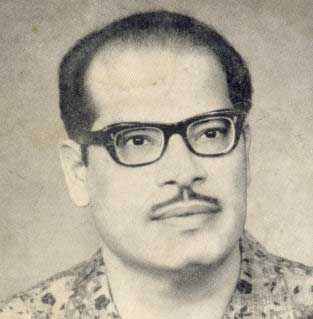
I am listening to Poochho na kaise maine rain bitaayi as I write this. I am hearing Manna Dey’s voice, bringing so much emotion, so much frustrated longing into “Ut jale deepak, it mann mera; phir bhi na jaaye mere mann ka andhera”. And I am remembering all the other songs of Manna Dey that I’ve loved over the years. Songs that I grew up with (and, more often than not back then, didn’t know who sang them). Songs that I loved from the very first moment I heard them. Songs that have grown on me. Songs that make Manna Dey immortal, even though he’s no more.
Category Archives: Dusted Off
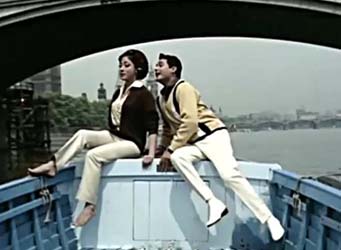
Ten of my favourite boat songs
Some of you may know that I’ve recently returned from an exhilarating time at the Bangalore Literature Festival—one of the highlights (at least for a cinema fanatic like me!) of which was that I got to meet Nasreen Munni Kabir. (And was introduced to Farhan Akhtar, and met Sidharth Bhatia, and got to get photographed within the same frame as Gulzar… but that’s a different matter). Nasreen Munni Kabir and I actually shared a cab for the two-hour trip from the airport to the hotel, and spent most of it chatting about all things cinema. I told her about this blog, of course, and happened to mention that among the most popular posts seem to be song lists.
Which reminded me: it’s time for another list. And because this popped into my head while I was travelling, I decided to do another ‘sung in transit’ list. But because I’ve already done car songs (not to mention ghoda-gaadi songs and train songs), I’m going the water way this time: with boat songs. The criteria here (besides my usual ones, of the films being all pre-70s ones that I’ve seen) are:
(a) The singer(s) should be on the boat for at least three-fourths of the song’s duration
(b) All types of boats are allowed—shikaras, rafts, motorboats, ships, anything. Moving or not.
Waaris (1954)
As frequent visitors to this blog would know by now, one of my weaknesses is good music—and there have been, over the years, dozens of films that I’ve watched primarily because they had good scores. In some instances, just one song that I really liked. More often than not, my luck’s been pretty shoddy and I’ve ended up sitting through frightful films like Akashdeep, Saaranga, and Akeli Mat Jaiyo.
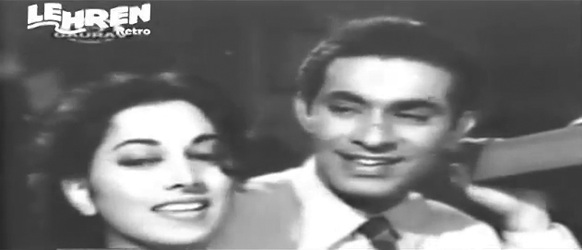
With Waaris, which I watched mostly because of Raahi matwaale, I had hopes [cautious, considering my track record, but hopes nevertheless]. It stars Suraiya and Talat Mahmood, both favourites of mine, and it was produced by Sohrab Modi, who even if (when acting) had a penchant for ‘declaiming to the skies’, did make some good films.
Charly (1968)
This was not the film I’d been intending to review this weekend.
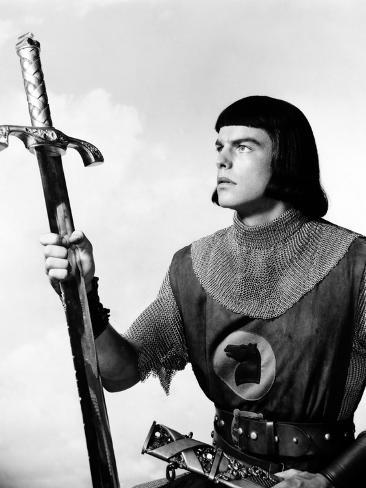
The film I’d meant to watch was, instead, quite a different one: a Viking/King Arthur historical, the Robert Wagner-Janet Leigh-Debra Paget starrer Prince Valiant (1954). Why, then, am I reviewing this film, which has nothing to do with Vikings or history? Simply because Prince Valiant turned out to be—as a blog reader had so succinctly described The Long Ships in a comment—a ghanta film. (ghanta, for those not familiar with this particular usage of the Hindi word, refers to something cheesy, inferior, and generally avoidable).
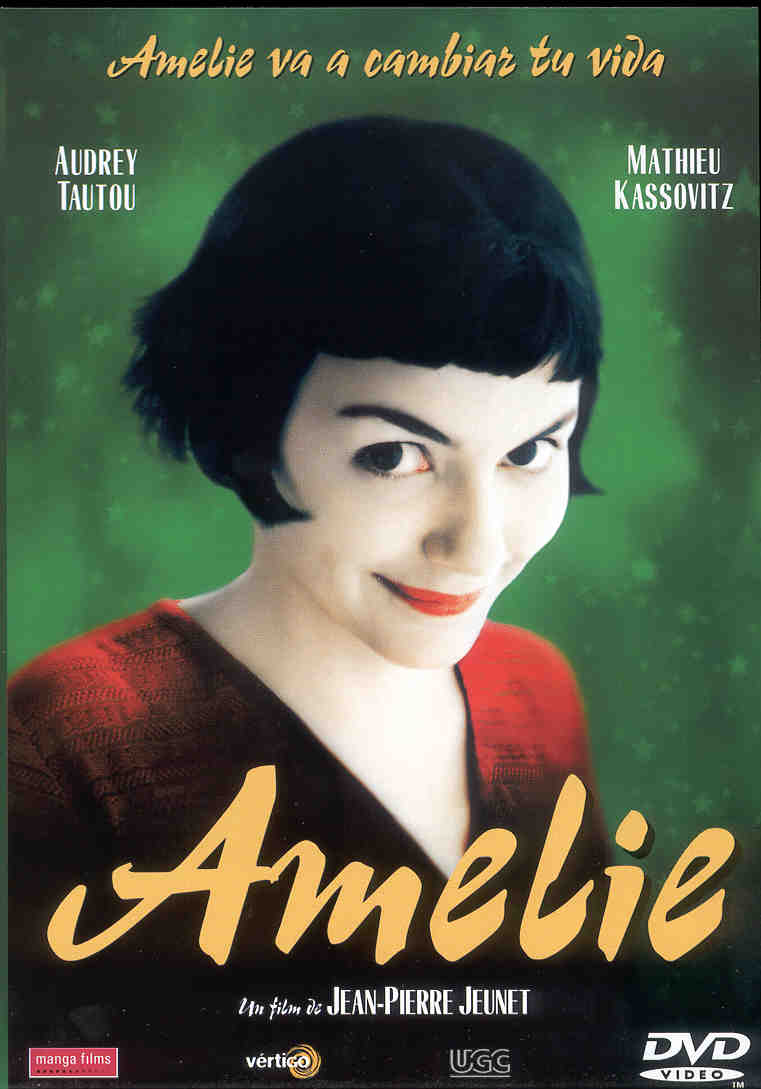
Besides the fact that it consisted of slightly pointless (not to mention extended) violence and some very predictable romance, Prince Valiant had Robert Wagner looking like a masculine Amelie, which really put me off. To recover, I decided to watch Charly instead.

Dharmputra (1961)
Several readers have told me, over the past couple of years, that I should watch this film. It is, if you go by just the details of cast, crew, and awards won, a promising film. Directed by Yash Chopra, starring Mala Sinha, Rehman, Ashok Kumar, Shashi Kapoor (in his first role as an adult), Nirupa Roy, Indrani Mukherjee, Manmohan Krishna—with guest appearances by Rajendra Kumar and Shashikala. The winner of the President’s Silver Medal for Best Feature Film in Hindi at the National Film Awards.
And with lyrics by Sahir Ludhianvi, set to music by N Dutta. I could well imagine Dharmputra would be a film worth watching. So when I finally managed to lay my hands on it, I didn’t waste much time getting around to seeing it.
Asha in Ten Moods
A couple of months back, blog reader Shalini alerted me to the fact that this year was Asha Bhonsle’s 80th birthday. Would I be doing a special post to mark the occasion? I hadn’t known that it was such a landmark birthday for Asha, but I couldn’t miss this opportunity, because—at the risk of being labeled an iconoclast and inviting censure (and possible debates?)—I have to admit that I tend to prefer Asha to her sister Lata.
Unfortunately, most people tend to associate Asha Bhonsle only with the sultry, ‘cabaret’ songs that she sang for umpteen songs picturised on vamps, all the way from Helen to Parveen Babi. Few remember that Asha’s was also the voice of the hauntingly beautiful Yehi woh jagah hai, or the bhajan Tora man darpan kehlaaye.
To compile a list of my ten favourite Asha Bhonsle songs would be impossible; there are far too many Asha songs that are simply out of this world as far as I’m concerned. So I decided to celebrate Asha’s birthday with this list: ten Asha solos, from pre-70s films, all in different moods. Not merely seductive, not merely cheerful or come-hither, but songs that are proof of Asha’s superb versatility. As always, these are from films I’ve seen.

Shikast (1953)
There is a story behind how I ended up watching this film last week.
I had first seen Shikast on TV years ago. I was a pre-teen, and didn’t much care for the film: it was too tragic, too angst-ridden, too lacking in entertainment, as far as I was concerned. For years afterwards, the only thing I remembered about the film was that it starred Nalini Jaywant and Dilip Kumar, and that through most of the film, Nalini Jaywant’s character sported a vivid crescent-shaped scar on her forehead. I had even forgotten the name of the film.

Ten of my favourite “I am -” songs
I’d been thinking, for the past few months, of doing a post on songs that a person uses to introduce himself or herself in Hindi cinema. Not the “Awaara hoon” or “Main rangeela pyaar ka raahi” type, which actually use a set of adjectives to describe the singer, but an actual introduction: this is my name, this is where I live, stuff like that. I can think of a number of songs along those lines, and it seemed like a good idea to do a list.
When I watched Love in Bombay last weekend (and saw Kishore Kumar belting out Maazaa naav ahe Ganpat Rao), I was reminded of that long-pending list. So here it is: ten of my favourite songs, mostly from pre-70s films, where the singer introduces himself/herself by name. These are, as I usually stipulate for my lists, from films I’ve seen. Not all of them are necessarily good songs, music-wise, but they invariably have something or the other—lyrics, picturisation, situation, whatever—which sets them apart for me.

Love in Bombay (2013)
Or 1971, if you go by the year the film was made, not the year the film was released. Or 1974, which was when the censor certificate dates from.
I came to know of Love in Bombay a few months back, when a newspaper article mentioned that Joy Mukherji’s sons were finally going to be releasing this film. I forgot about it until I discovered that it had finally been released this last Friday—and then I was in a quandary. To see or not to see, as I put it. Various friends urged me on: Harvey, for instance, said that with Agha Jani Kashmiri having revised the script, it may be pretty good. Beth said that she’d heard the costumes were good. Sidharth Bhatia suggested that the presence of Joy Mukherji and Kishore Kumar might be one reason to watch.
Genghis Khan (1965)
Considering the last film I reviewed—about Genghis Khan’s grandson, Halaku (Hulegu Khan)—it seemed to me about time that I watched this one. What strengthened my resolve was that I happened to watch the Julie Andrews-Omar Sharif starrer The Tamarind Seed last week, and I was reminded that Omar Sharif starred as Genghis Khan here. ‘And Omar Sharif as Genghis Khan’, as the credits read. [An uncanny coincidence there, with—as in Halaku—the lead actor’s name appearing at the end of the credited cast].

 Dustedoff