How many actors have had films named for them? How many appear in the lyrics of songs? And how many, without being lead actors, manage to invariably feature in at least one song in every film they’ve acted in?


How many actors have had films named for them? How many appear in the lyrics of songs? And how many, without being lead actors, manage to invariably feature in at least one song in every film they’ve acted in?
One of my biggest failings when it comes to cinema viewing is the naive belief that an actor or actress whom I’ve seen and appreciated for the first time will necessarily be fantastic in all their subsequent films that I watch. Thus, having watched The Sound of Music—and raved over every single element of it, especially Julie Andrews—I began searching out other films that starred Julie Andrews, in the childish hope that they’d all be as fabulous as The Sound of Music.
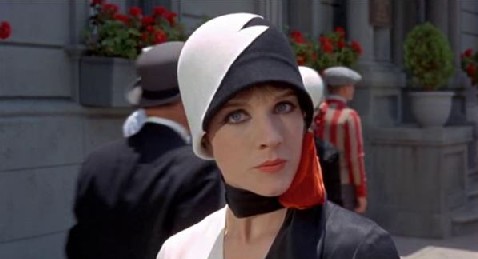
Alas, no. This one, for instance, made only two years after the von Trapp saga, is nowhere close to as endearing. Julie is superb as the 20’s flapper girl Millie Dillmount, trying her best to be hard-heartedly modern, but the film is a bit of a drag.
This is one of those films that have a very interesting—and unexpected—twist that can come totally as a bolt out of the blue if you’re watching it for the first time. Subsequent watchings, no matter how far apart, tend to dilute the suspense a good deal because (unless you have a really frightful memory) you know what’s coming. And somehow, unlike films like Teesri Manzil or Mera Saaya or Woh Kaun Thi?, Jewel Thief lacks other elements that could encourage repeated viewings.

The other day, after a long gap of 16 years, I met someone who used to teach me in college. I never knew back then that he was a Mohammad Rafi aficionado; and now, chatting with him about Dusted Off, I got a request: do a Rafi post.
So, as a sort of gurudakshina, here it is: a Rafi post. And since I cannot even begin to think of trying to narrow down my favourite Rafi songs to just ten (or even a hundred), I’m taking the easy way out. Rafi, in ten moods. Ten songs that showcase the breathtaking versatility of this man and his voice. There will always be dozens of other Rafi songs out there that reflect the same emotions behind these songs, but these are my favourites. And, in keeping with the rules I always set for myself, they’re all from the 50’s and 60’s, from films I’ve seen.

A few quick updates for those who liked The Englishman’s Cameo (and for those who didn’t: Haaah!). But seriously, these are all very encouraging bits of news for a newbie author writing in a genre that the literati seems to generally frown upon.
First of all, The Englishman’s Cameo (or, as Hachette and I refer to it, TEC) has been long-listed for the Vodafone Crossword Book Award in the Fiction Category. All right, nomination and long-listing seems to be synonymous this year, but still. The competition’s very stiff; there are 72 other books in the running, with entries from both stalwarts as well as new authors. TEC needs all the luck and good wishes it can get (not to mention votes).
Secondly, a bit of good news for those who live in the UK and have been waiting to lay their hands on the book: Little, Brown will release TEC in UK stores in October 2010. The book’s already been featured on the UK-based book site Curious Book Fans and by the time the book’s on the shelves in the UK, you can hope for more: a review, an interview, etc.
Lastly, something that’s really not that much in the way of literary recognition, but hey, so what. The Indian National Parliament Library purchased The Englishman’s Cameo in February 2010. And Arti Jain of Friends of Books assures me that ‘they’re very discerning’. So I take that as a pat on the back!
My mother’s grandfather was one of those domineering patriarchs who governed everything his family did, including the films they saw. The films deemed worthy of watching were very limited; Hollywood, by virtue of producing films with a Biblical theme, managed to get some (like Quo Vadis, The Ten Commandments and Ben Hur) past his strict censorship, but Hindi cinema didn’t have a chance. Kismet holds the distinction of being the only Hindi film he allowed his family to see. Considering it’s quite a formulaic potboiler (with an anti-hero and a girl who gets pregnant without being married), I was surprised at his choice—but then, it may have had something to do with the fact that Kismet was a huge hit that ran for 3 years in a theatre in Calcutta, where my mum’s family lived. Great-granddad must’ve thought anything that sustained so must have some merit.

In the film This Above All, Joan Fontaine’s character tells Tyrone Power’s character: “Oh, you’re rather good-looking, really. Nice sort of face. Nose a little on the fine side, mouth a little too big. One of your ears sticks out a little more than the other… did you know, your face is slightly lopsided?! [giggles]… but your eyes are good, nice deep brown.”
So, in celebration of those eyes, that fine nose and that nice sort of face: a Ty candy post (as bollyviewer commented, Tyrone Power’s name can be punned endlessly!)
To begin with, a shot from one of his earliest films, Suez (1938). He looks so wistful and downright beautiful here, very different from in his later films:

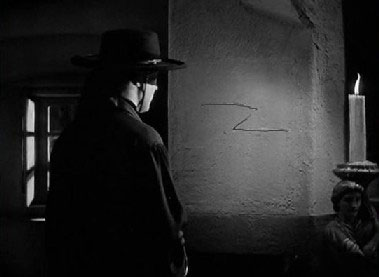
If there’s one film that’s quintessential Tyrone Power, it’s this one. The Mark of Zorro changed Tyrone Power from being just a pretty face to being a pretty face who could also do some very fancy stunts with a sword in hand. It made him a swashbuckling star, a stereotype that was to stick with him for a while, even though he tried to shake it off with roles like that in Nightmare Alley.
And what a film. What a rollicking, enjoyable, delightful film! I love every bit of it, and have been looking forward to sharing the joy with everybody ever since I first saw it, a few months back. So, without more ado, here goes.
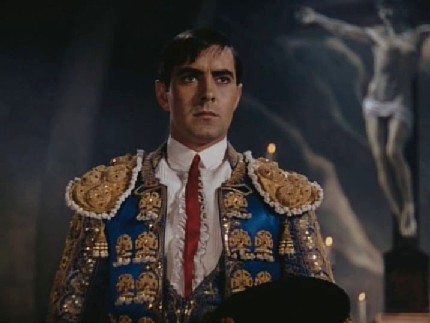
Several months ago, I did a week-long special featuring Robert Mitchum. In the course of that week, I reviewed one of my favourite Mitchum films, Not as a Stranger. Watching Blood and Sand—a film Tyrone Power cited as among the favourites of those he’d worked in—I was struck by the similarities between the two films. Both are about ambitious men who don’t let anything get in their way of making it to the top, men who fall prey to a femme fatale despite being married, men who falter both in their professional and personal lives.
But Power’s Juan Gallardo is also different from Mitchum’s Lucas Marsh. And his story too is eventually different.
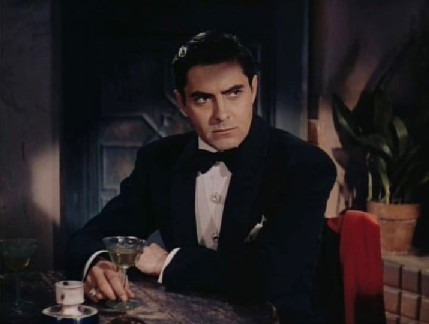
I was in two minds about this list. Should it be a list of the ten best Tyrone Power films there are? As in ‘great’ films—the Nightmare Alley or This Above All category? Or should it be a list of ten films, even frivolous swashbuckling stuff in which all Power was required to do was romance a pretty heroine and wield a sword?
I decided on the middle path. These are ten films that starred Tyrone Power and are worth seeing—for whatever reason.
 Dustedoff