Today, April 23, 2016, marks the 400th death anniversary of one of English literature’s greatest writers, a man who had a huge hand in making English what it is today. Though William Shakespeare’s date of birth is unknown, he died on this day, nearly 52 years after he was baptized. In less than half a century, he created a corpus of work that has endured—and continues to spawn adaptations by the dozen in popular culture—ever since.
Poonam ki Raat (1965)
One style of mystery story popular in the early 60s (though there was the odd film even earlier, like Mahal) was the one where the suspense includes a seemingly supernatural element. A woman in white, singing a ghostly song of eternal yearning as she wanders half-seen (or unseen) through the gloom. Woh Kaun Thi?, Yeh Raat Phir Na Aayegi, Bees Saal Baad, Gumnaam, Raaz: all of them used this trope to the hilt.
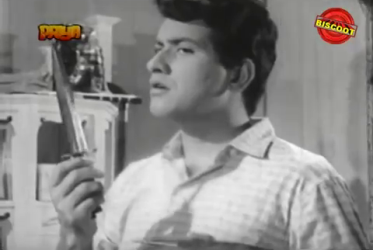
As did this relatively lesser-known film [and you’ll probably realize, by the end of this post, why it’s little-known]. Poonam ki Raat was made by actor/writer/director Kishore Sahu, who played an important role in this film, the star of which was Manoj Kumar, quite a veteran of these suspense thrillers.
Restaurant Review: Big Fat Sandwich
Ambience Mall in Vasant Kunj is one of those places that have a fairly good record (as far as I am concerned, and as far as malls in Delhi go) of restaurants that are worth a visit. While it has … Continue reading
The Thomas Crown Affair (1968)
I have a thing for heist films. Give me a clever one, and I can watch it again and again. The other day, I was reminded ofThe Thomas Crown Affair, which—to a teenaged me—was only about The Windmills of Your Mind, since I’d never seen the film itself. And, to an older me, it was Pierce Brosnan and Rene Russo in a film with one of the most deliciously clever endings I’d ever seen. Time to watch the original, I decided, if only to see if it was as clever as the remake.
Ten of my favourite funny songs
Considering the ‘comic side plot’ used to be such an integral part of old Hindi cinema—and that the presence of a Johnny Walker, a Rajendranath, or a Mehmood almost invariably meant that there would be not just laughs but also a secondary (light-hearted and often outright comic) romance, and at least one song picturized on the comedian in question. Oddly enough, then, there aren’t those many songs that I find outright funny. Even an iconic ‘comic’ song (or what most people seem to refer to as a comic song—Sar jo tera chakraaye)—is actually more philosophical than comic.
So I set out to compile a list of ten songs that are actually funny. Funny because of the lyrics, the rendition, the picturization—whatever (in some stellar instances, all of the above). These may not be songs that make me laugh out loud (I am not a guffawer, anyway), but they are songs that always make me smile rather more widely than usual. As always, these are all from pre-1970s films (except one) that I’ve seen, and they’re in no particular order. Just songs that I find funny. And—I hasten to add—which are intentionally funny.
Abhilasha (1968)
A lot of my memories of 50s and 60s cinema date back to the 1980s, when almost all the films I watched were those shown on Doordarshan. In the early years, with Doordarshan being the sole channel, my sister and I (our parents were rather more discerning) watched every single Hindi film that was telecast, down to painful stuff like Jai Santoshi Ma and the thoroughly obscure Fauji, with Joginder Singh (who, if I remember correctly, also produced and directed it) in the lead role.
But, to get around to the topic of this post: Abhilasha, not a very well-known film but one which made an impression on me because of two songs I liked a lot. And because it depicted a mother-son relationship that was a little different from the usual.
Ni Liv (1957)
There is something attractive about survival stories, about men and women finding themselves struggling to survive against whatever man and nature throws at them. Nature more often than man, because nature can be an even more merciless enemy—and yet can contain within it the means to overcome its ruthlessness. Scorching heat and bone-dry deserts; cold so severe it freezes flesh; wind and driving rain and wild animals… no wonder films like The Revenant, Sanctum, Grey, Ice Cold in Alex, and even Gravity and The Martian end up being popular. Perhaps a lot of us like the vicarious pleasure of seeing someone else battle overwhelming odds—and come out on top.
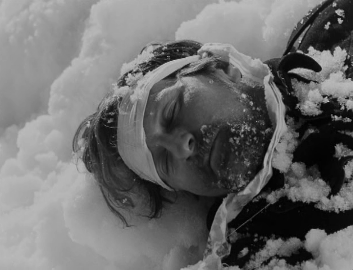
Outside of Hollywood, too, there have been survival adventure films, and one of my favourites is this, a Norwegian film, the name of which translates as Nine Lives. The story of a Norwegian Resistance fighter during World War II, the only survivor of a group of men on a mission that ends disastrously. Directed by Arne Skouen, Ni Liv got an Oscar nomination for Best Foreign Film, and in 1991, was voted (by Norwegian TV audiences) the best Norwegian film ever made.
Ten of my favourite ‘Man Sings, Woman Dances’ songs
Sometime back, I was watching Dil Hi Toh Hai, and for the first time, actually paid attention to the scenario and picturization of the classic Laaga chunari mein daag. Raj Kapoor, in disguise, plays a classical singer who prides himself on singing such complex tunes that no accompanying dancer can match him. That sparked off a memory: the situation in Madhuban mein Radhika naache re is similar—it’s a faceoff between a singer (a man) and a dancer (a woman).
And that led to memories of other songs, all with a similar setting: a man singing, a woman dancing. A good enough theme for a post, I thought—especially as I could think of some superb songs that would fit right in. I only had to set down some rules for myself, and these (besides my usual one of including only songs from pre-70s films that I’ve seen) would be that in each of these songs, the man shouldn’t dance, and the woman shouldn’t sing.
Also, the man must be physically present in the picturization of the song (which is why the popular Tu hai mera prem devtaa doesn’t feature in this list, even though I like it).
Restaurant Review: Lodi—The Garden Restaurant
The Lodhi Gardens in Delhi are an amazing place. Once known as Lady Willingdon Park, these gardens in South Delhi are a hit with just about everyone from nature lovers (there are lots of species of trees here, and with … Continue reading
Dil Hi Toh Hai (1963)
Some months back, I watched two relatively new Muslim socials: Daawat-e-Ishq and Bobby Jasoos. Both were an interesting reflection on the way the Muslim social has changed over the years (after close to disappearing during the 90s). The Muslim social of the 1950s was, more often than not, a film that, even when set amongst the wealthy upper class—the nawabs and their kin—came heavily burdened with all the stereotypical trappings of what was perceived as ‘Muslim’: the qawwalis and mushairas, the shararas and sherwanis. (I’ll write about all of those, and more, in a post to follow).
Bobby Jasoos and Daawat-e-Ishq had shed those to quite an extent. But that process had begun in earlier films, even as far back as the 60s. In Neend Hamaari Khwaab Tumhaare, for example, where Nanda’s character—the daughter of a nawab, no less—doesn’t merely have a Western education, but spends most of her time in skirts and dresses. And this film, where Nutan’s Jameela is a firebrand, giving as good as she gets, and by no means the simpering and demure Muslim girl exemplified by her contemporaries in films like Mere Mehboob, Mere Huzoor, and Chandni Chowk.