Fellow blogger and friend Harini and I meet up every couple of months to chat about films, books, and more—and we invariably do so over lunch, followed by coffee and tea. Our usual haunt (we are creatures of habit, as … Continue reading
Or, to put that better: Hindi film songs that begin with the word “Aaja”.
Let me give the background for this. My daughter, ever since she was a baby, has always had an ear for music. All you had to do was turn on the music (or start singing) and she’d start wiggling her shoulders. When she began walking, the dancing became rather more vigorous—and the first song she totally fell in love with was Aaja aaja main hoon pyaar tera. The very first time she heard it (and she hadn’t even started talking coherently yet), she joined in at the end: “Aaja, aaja!” After that, every time she’d do a little wriggle and say “Aaja, aaja!” we knew she wanted to listen to some dance music.
So, Aaja. Literally, ‘Come!’ Though I’ve always puzzled over why aaja—which combines aa and jaa, and should create a paradox—and not simply aa? Does the imperativeness, the urgency (which is invariably a part of Hindi love songs that use aaja in the lyrics) come through more when the word is aaja and not aa?
Hindi cinema has, over the years, borrowed liberally from English literature. Shakespeare (Hamlet, and in more recent years, Angoor, Omkara, Maqbool, and Haider), Agatha Christie (Gumnaam), Arthur Conan Doyle (Bees Saal Baad), AJ Cronin (Tere Mere Sapne): Hindi cinema seems to have drawn inspiration from a lot of authors, whether or not that inspiration has always been acknowledged or not.
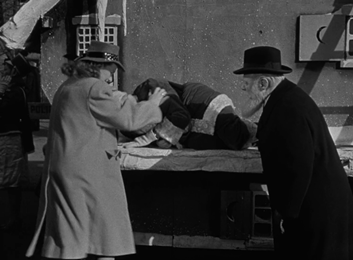
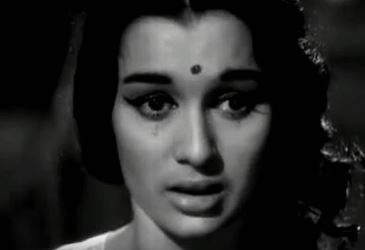
Here, then, is another film derived from a literary work by a writer in the English language. Charlotte Brontë’s Jane Eyre, published in 1847, has spawned a number of cinematic adaptations (one of the first I ever saw starred Orson Welles and featured a very young Elizabeth Taylor as Helen Burns; one of my favourites stars the brilliant Toby Stephens as Rochester). In Hindi cinema, too, Jane Eyre was made into a film: Sangdil. I’ve been wanting to watch this for a while, and when recently I finally got around to reading the complete, unabridged version of Jane Eyre, I decided it was also time to watch the film.
Long-time readers of this blog probably know by now that I’m a writer. Those who’ve been reading this blog for a couple of winters may also remember that, come autumn, and when India’s 70-odd literary festivals swing into action, I generally end up going to one of these dos. I must admit to being no good when it comes to networking, and I’m usually so busy with my writing that I can’t spare the time to frequent lit fests. But if I’m invited, I will go.
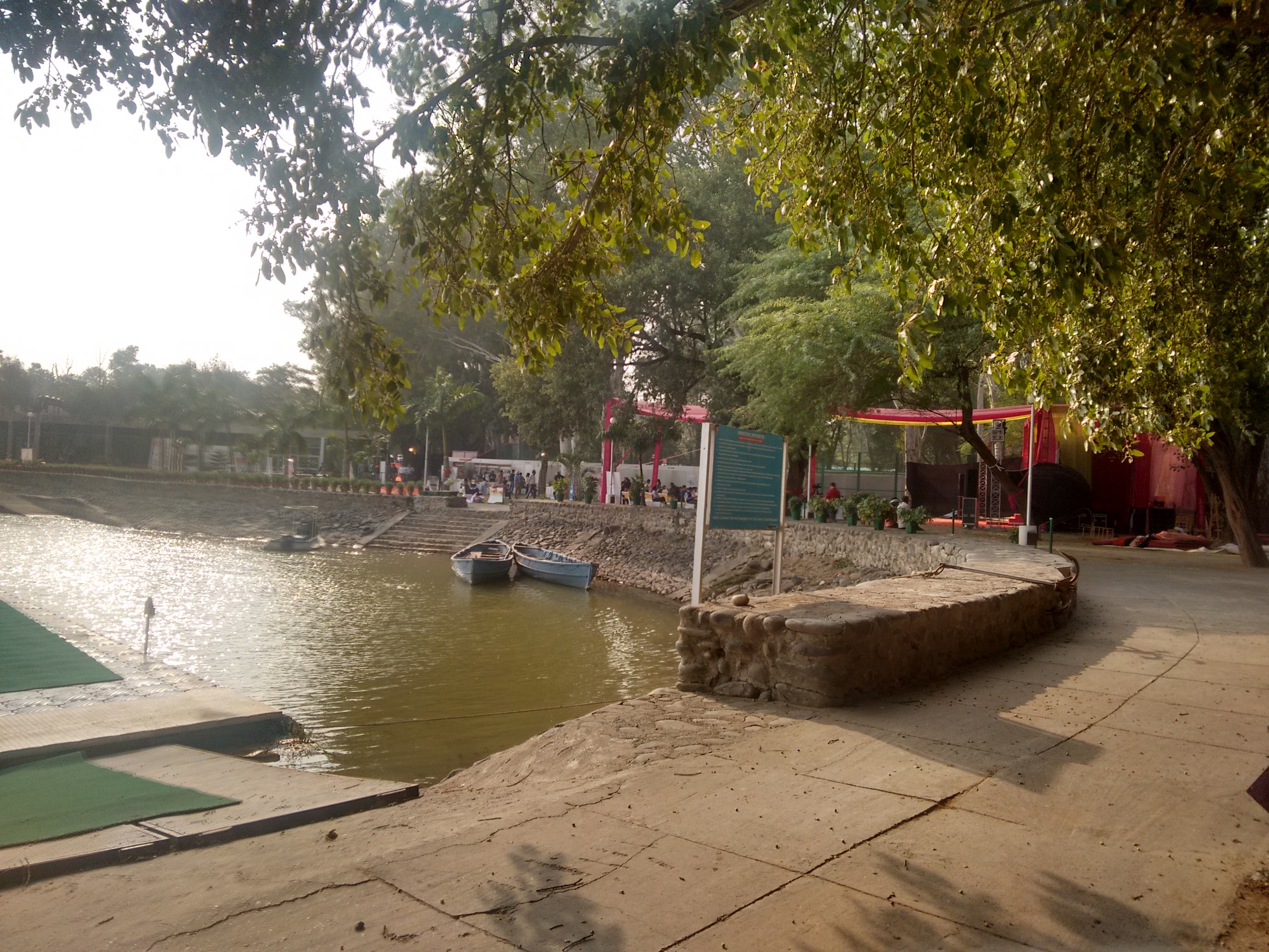
This year, it was Literati, the Chandigarh Literary Society’s literary festival. 2015 was the third year the society organised the function, and I was invited for two sessions, both on the 7th of November, which was the second day of the festival (which was inaugurated on the 6th and ended on the 8th).
Some weeks back, fellow blogger and reader Abhik Majumdar suggested an idea for a song list: songs actually sung by (not merely lip-synched by) actors. Not singer-cum-actors, but people who were known only for their acting. I couldn’t think of too many songs that would fit my criteria (and those I could think of, were more often than not, from films I hadn’t seen). It did sound like an interesting topic, though (and wouldn’t it be fun to hear the singing voices of people we invariably ‘heard’ only in the voices of playback singers?). So I took the easy way out: I asked Abhik to do a guest post. And here it is. Since this one’s a guest post (and atithi devo bhava and all that…), I allowed Abhik a bit of a free hand. No need to stick completely to my blog’s time lines, for example.
Over to Abhik:
Madhulika’s blog is what a friend calls a ‘time black-hole’ – you get completely immersed randomly browsing through, and then you’re left wondering just where all that time went. Some time I had suggested to her a ‘top-ten’ post on actors singing their own songs or singers appearing onscreen. Most generously, she responded by asking me to do a guest-post instead.
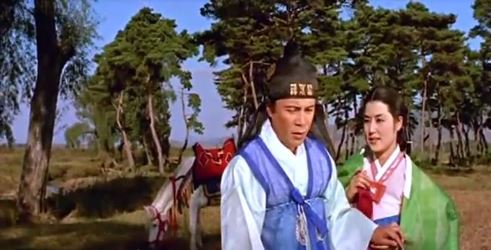
Among the most popular old tales in Korea—or so various sites inform me—is that of Chun Hyang, the beautiful daughter of a courtesan, and of Chun Hyang’s efforts to remain faithful to her husband, come what may.
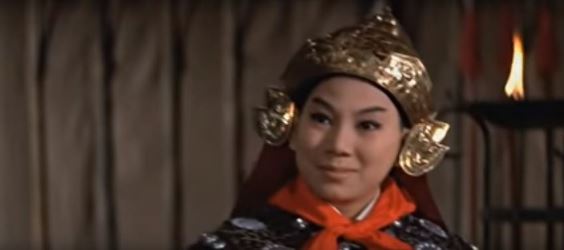
I happened to come across a highly abridged version of The Tale of Chun Hyang on Scribd, read it (it was just six pages long) and liked it enough to try and see if I could get a novel-length version. I couldn’t get one—but what I found was that this tale seems to be to Korean cinema what Beauty and the Beast is to Western cinema: done and redone since the first moving pictures began. There have been over twenty versions made of this story, some of them now gone missing. The original story has been retained in most versions (including this one that I’m reviewing); there’s a TV series dating from 2005 (Delightful Girl Choon Hyang) which sets the same story in modern-day Korea and gives it a typical K-drama touch; and there are ‘what-if’ scenarios that have been spawned from The Tale of Chun Hyang.
I have Richard, over at Dances on the Footpath, to thank for this. Several years back, Richard had linked a blog post to a URL from where one could download Balraj Sahni’s autobiography. Since I’m a fan of Mr Sahni’s, I did so, promptly (which was just as well, since sometime later, that link went dead). What with this and that, however, I didn’t get around to reading the book until a week or so back—and then I wished I’d taken the time to read it earlier.
What is it about Bengali directors—Bimal Roy, for instance, or Hrishikesh Mukherjee, or (if one steps out of the realm of just Hindi cinema, Satyajit Ray)—that they manage to bring so vividly to life the everyday happenings in the lives of everyday people? Not the escapist fare that most people tend to equate Hindi cinema with, but stories about real people, people one can relate to? Films like Majhli Didi, Parivaar, Parakh, Sujata, Anand: not larger than life, not without a shred of reality. Not art films, not angst-riddled, songless films about the search for the meaning of life, but everyday stories. Songs and all, still very much commercial cinema, but easy to relate to.
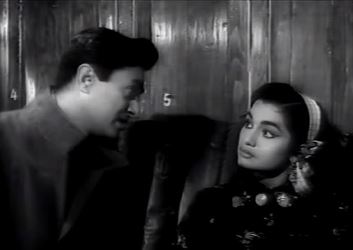
Add to that list Dulal Guha, who while he also went on to make films like Mere Humsafar, began his career as a director in Hindi cinema with this charming little film about a sleepy village named Chandangaon, that’s jolted by the arrival of a new doctor…
When I posted my list of ‘background songs’ (songs that form part of the film, but to which nobody lip-synchs), I made one stipulation: that they wouldn’t include ‘credits songs’, or songs that play while the credits roll. Not all of these, as you’ll see from my list below, are necessarily ‘background songs’ as well: some of them are ‘sung’ by people onscreen. And they run the gamut from songs that introduce the film’s ethos or primary theme, to—well, just another song to add to a list of songs the film already boasts of. And they are all sorts, from romantic to philosophical to patriotic.
My husband and I tend to steer clear of Delhi restaurants that have huge menus, especially when those menus scream ‘multicuisine’! Most of these (note: I’m not saying all, because there are some exceptions, like the delightful Latitude 28° in … Continue reading