
While watching Pakeezah some months back (and reading Meghnad Desai’s book about the film), I was struck by how fond old Hindi cinema used to be of the motif of the ‘chaste tawaif’. A paradox, seemingly, because how could a woman be a tawaif – a prostitute, to put it bluntly – and be chaste? But films like Pakeezah and Adalat did just that: they portrayed women who lived in kothas, sang (in Adalat) and danced (in Pakeezah) but were ‘good’ women, chaste and pure, women who may have been lusted after by bad men, but who – thanks to fate, good friends and relatives, kind strangers (both human and animal) – were always able to avoid the fate worse than death: of yielding their chastity to a man they were not married to, or weren’t going to eventually marry, even if only in secret.

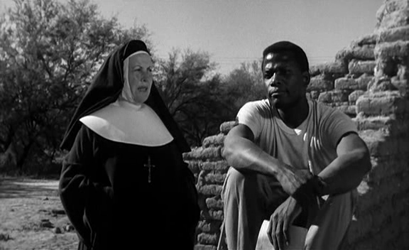
Lilies of the Field (1963)
And why take ye thought for raiment? Consider the lilies of the field, how they grow; they toil not, neither do they spin:
And yet I say unto you, That even Solomon in all his glory was not arrayed like one of these.
-Matthew 6: 28-29, King James Version
I am very familiar with this passage from the Bible (part of the Sermon on the Mount, this passage is part of one of my favourites—a beautiful little piece of scripture on how futile it is to worry), but when I first heard of the name of this film, the relevance of its title didn’t strike me. When I started watching it, I realized: yes, the lilies of the field are impermanent, evanescent, depending on no-one and yet not even doing anything very visible to keep themselves alive. But they—like all the flowers of this world, especially the wild ones, with no-one to care for them—are amongst the most beautiful of God’s creations.
Not an exact parallel with the protagonists of this heart-warming and sweet little tale, but close. And with some subtly-put messages about being content with one’s lot, yet pushing on, working hard.
The Tomb of ‘Jamaali-Kamaali’

I first came to know of Jamaali-Kamaali sometime in the mid-90s, when I was working for a hospitality company. The organization catered to a number of events, and one of the events for which we’d received an order was a … Continue reading
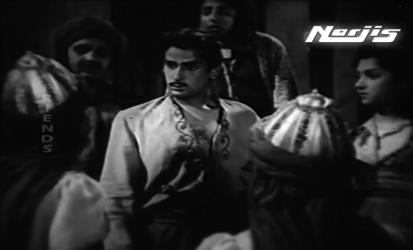
Chor Bazaar (1954)
There were various reasons for my wanting to see this film. One was that it’s a historical (okay, faux historical, considering it’s set in some undefined supposedly Middle Eastern land named Sherqand). The other was that its music was scored by Sardar Malik, one of—in my opinion—Hindi cinema’s very underrated music directors. The main reason, however, was Shammi Kapoor. Though still in his moustached pre-Tumsa Nahin Dekha days, he is one of my favourite actors. So just about anything starring Shammi Kapoor is, for me, worth watching at least once.
Sultangarhi: ‘The Sultan of the Pit’

The locals—and the local signboards, when written in Devnagari—mostly refer to this little-known tomb as ‘Sultangarhi’ (सुल्तानगढ़ी), which sounds more like a fortress than a tomb. The actual, correct pronunciation, is सुल्तानग्हारी (or, if you can’t read Devnagari, approximately ‘Sultanghaari’,). … Continue reading
Ten of my favourite Madan Mohan songs
I have never—in all the years this blog has been in existence—compiled a list of my favourite Madan Mohan songs. An oversight, and one for which I have no explanation to offer: just reparation.
Born Madan Mohan Kohli in Erbil (Iraqi Kurdistan) on June 25, 1924, the young Madan Mohan returned with his family to their home town of Chakwal (in Punjab) when he was 8 years old. His parents went on to Bombay, where his father, Rai Bahadur Chunilal, entered the cinema industry: as a partner at Bombay Talkies Studio, and then at Filmistan Studio. Madan Mohan too moved to Bombay, where he finished school and eventually joined the army—only to finally leave soldiering to become a music director. The first film for which he provided the score, at the age of 26, was Aankhen (1950).

Restaurant Review: Terminus 1

Writing about Ambience Mall the other day, I mentioned that this place—what with restaurants like Yauatcha, Indigo Deli, etc—was swiftly becoming a good place to eat out. This weekend, again in the mall to do some shopping, my husband and … Continue reading
Ánimas Trujano (1962)
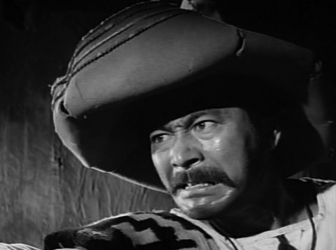
In a scene in Ánimas Trujano, the protagonist—the eponymous Ánimas, an inveterate gambler, drunk, and believer in every charm or superstition floating around—has just lost a lot of money on a cockfight. Ánimas, before the fight, had been certain he would win, because a fortune teller’s little bird had ‘told’ Ánimas’s fortune by picking out a card on which were written words to the effect that Ánimas’s luck would shine on this day.
But the bird has proved wrong, and Ánimas has lost all his money. In a fit of anger, he goes back to the fortune teller, takes the bird from him, and goes off into a deserted ruin by himself, where he raves and rants at the bird, clutching it in his fist and cursing it for not predicting his fortune correctly.
Restaurant Review: Monkey Bar

MonkeyBar opened around the same time as The Hungry Monkey, and we’d had this on our list of places to eat at ever since. Then, what with the sudden flurry of other restaurants that opened, Monkey Bar got pushed to … Continue reading
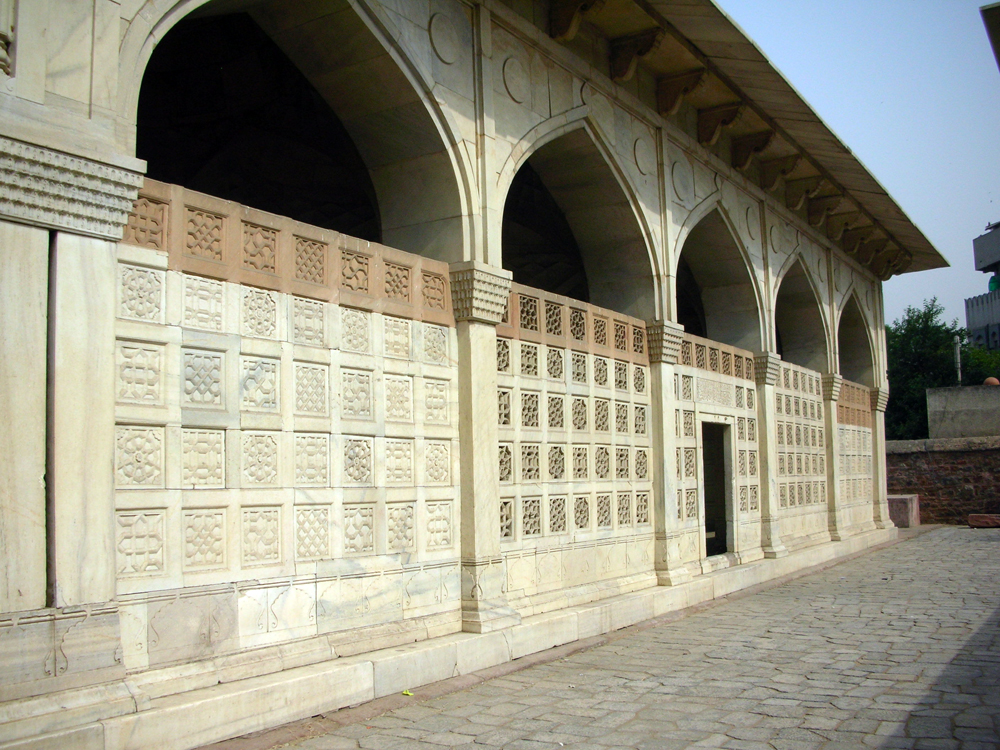
Chaunsath Khamba: a very unusual tomb
A couple of weeks back, I’d written a post here on a little-known but lovely little medieval tomb in Delhi: that of Atgah Khan, foster-father of Akbar. This tomb—Chaunsath Khamba (literally, ‘sixty-four pillars’)—is not just in close proximity to Atgah Khan’s Tomb, but also has a connection to Atgah Khan’s Tomb: Chaunsath Khamba is the tomb of Mirza Aziz Kokaltash, the son of Atgah Khan. (Incidentally, also the man who built Atgah Khan’s Tomb).
Chaunsath Khamba – a view of the tomb.
 Dustedoff