Chaar Darvesh (1964)

YouTube suggested this film to me, and for a few days, I was torn. Should I watch it (Feroz Khan is not a favourite of mine, though I don’t find him as irritating as some others), or should I not? Sayeeda Khan, after all, is someone I’ve wanted to watch, mostly because I was intrigued—she was married to film director/producer Brij Sadanah, and was murdered by him on their son’s eleventh birthday party (Sadanah also shot and killed their daughter, before committing suicide). Yes, macabre (not to mention tragic), but that’s how it is.

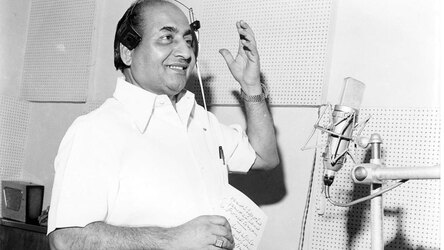
Eventually, it was the music—by the very talented but vastly underrated GS Kohli—that tipped the scales in favour of my watching Chaar Darvesh. Kohli, who did a lot of work as assistant to OP Nayyar (and it shows, in the rhythms and styles of much of his work), composed music on his own for several B-grade films, of which among the best-known are Shikari (1963; easily his magnum opus, with one great song after another) and Chaar Darvesh. Even if just for the music, I wanted to watch this film.

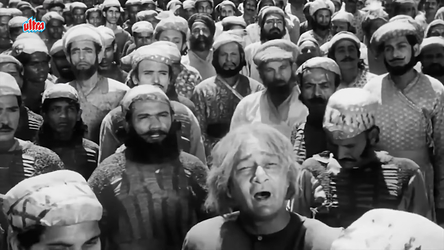
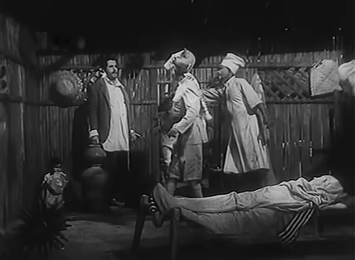
The story is set in some fictitious fantasy kingdom somewhere in the Middle East. At a shrine, three bearded darveshes, clad in flowing robes, have gathered to pray for boons. One is seeking a treasure [that sounds a little shallow, for a darvesh]; another is searching for his sweetheart, who’s gone missing.

These three men have learnt, though, that their wishes will only be granted once they have been joined by a fourth darvesh… who, thank heavens, arrives soon after. This is Qamar (Feroz Khan in blackface), and he proceeds to tell them his tale of woe and to explain how he happens to have turned so black.

Continue reading

Announcing a New Book: Unlocked Lunches

(and, free right now on Amazon Kindle for the next three days!)

If you’ve been visiting this blog over the past couple of years, you may have noticed that I published a cookbook sometime back. Lockdown Lunches: The World on a Plate was a documentation of twenty-six lunches, one for every fortnight of the year starting April 2020, when Covid struck and India went into lockdown. As I’d explained when I introduced that book, the lockdown meant that my family—my husband, I, and our daughter, ardent foodies who enjoy eating out and exploring interesting new cuisines—found ourselves stuck at home and getting increasingly bored with the mundanity of everyday meals. To relieve the boredom, I decided we’d party at home: every two weeks, a three-course meal featuring the cuisine of a different country. Complete with a specially curated playlist of music from that country.

Those twenty-six lunches, menus, recipes, and some background food history about the countries in question, were chronicled in Lockdown Lunches. However, our lunches didn’t stop there. By the time I’d published Lockdown Lunches, we’d already done quite a few more of our lunch parties. 

A sequel, I decided, was in order. This, therefore: Unlocked Lunches. Because, of course, by the time I finished with this batch of twenty-six lunches, the lockdown was over and done with. Like Lockdown Lunches, Unlocked Lunches too is divided into chapters, each chapter prefaced with a short insight into the country’s food and how it’s evolved, what are the important elements of the cuisine, and so on. Then, there’s the menu, and all the recipes.

In the making of Lockdown Lunches, because our daughter (then all of six years old) had been so excited and had so many interesting insights and anecdotes to offer, I had included that—by way of comic relief, really—for each chapter. In Unlocked Lunches, I decided to skip that, so if you’re a fan of the LO (the ‘Little One’, as I used to call her; she’s now nearly eleven and no longer little), sorry. What I do have, though, is a brief introduction to the menu, some tips and tricks for distributing the work involved, and such.

Some notes. For one, while most of the main courses are based around animal protein, I made it a point to have vegetarian starters and side dishes to compensate for all that meat. You will therefore find plenty of vegetarian recipes here. Also, I made an attempt to curate my menus in such a way that they could be easily made in the average Indian kitchen: without too much fuss, without too many exotic ingredients that might break the bank or be impossible to get hold of. And, importantly, recipes in which the whole is greater than the sum of its parts: delicious without involving a lot of backbreaking work. Among the countries whose food you’ll find featured in Unlocked Lunches are Thailand, Lebanon, Morocco, Mexico, and Belgium.

Here, then, is Unlocked Lunches. It’s a digital-only book, available on Amazon Kindle. All Amazon sites worldwide have it, and for the next three days, starting today, it’s free for download.

Click here to buy it on Amazon India; here for Amazon US; here for Amazon UK; and so on. Whichever Amazon website you opt for, simply search on it for ‘Unlocked Lunches Madhulika Liddle’, and you should be able to get it. Happy reading!

If you enjoy exploring food cultures, if food interests you, give this one a try. Bon appetit!

Jaal (1967)

I had first watched this film many, many years ago, probably as a young teen. It had been aired on Doordarshan, back in the good old days when our family used to watch pretty much every film that was shown (including some seriously grotty ones like Fauji).

I remembered little of Jaal: Mala Sinha and Biswajeet, yes; and that it was a suspense thriller set in a spooky mansion beside the sea. That was all.

While I don’t like Biswajeet, and the music of Jaal (by Laxmikant-Pyarelal) is forgettable enough to not want to watch it for the songs, I decided I should give this one another try. At least find out what it’s about.

The story begins on a stormy night at sea. A small boat is tossed about on the waves, and we catch glimpses of the lone man on board: Sunder Singh (Sujit Kumar) as he tries to control his vessel. In the distance can be seen (like the boat and the waves, looking patently artificial) a lighthouse. Sunder, however, cannot make it safely to shore; his boat crashes against the rocks and explodes in a great burst of fire.

Continue reading

The Treasure of the Sierra Madre (1948)

This is one film I’ve known of for a long time, but have always had conflicting views on whether I wanted to watch it or not. On the one hand, I usually enjoy Westerns (more the escapist adventure kind, I will admit; but also, increasingly, those which go just beyond that). On the other hand, Humphrey Bogart is not one of my favourite actors. Then, again: I knew that this film (unlike another ‘seeking-gold-in-the-West’ film I love, McKenna’s Gold) was more gritty, more real. So Bogart—whom I do acknowledge as a good actor—might have done well in it.

The only way to find out, I guessed, would be to watch it for myself.

The story begins in a small Mexican town, Tampico, where a broke American, Fred Dobbs (Bogart) is wandering about, trying to make ends meet. Dobbs seems to have no set idea in mind of what he wants to do: he doesn’t seem to make any attempts to get a job, and all his energies are directed towards relatively prosperous-looking fellow-Americans who might be able to spare him some money to buy a meal.

Continue reading

Ten of my favourite ‘multiple version’ songs: solo/duet (or more)

Many years back, I’d begun doing a series of posts on multiple version songs in old Hindi cinema. Songs that seem to have struck their composers/film directors as so impactful that they needed to be repeated, in different scenarios, sometimes in different moods and even with different singers, singing differing lyrics. I did two of those posts, then something cropped up (I don’t remember what) and the project got abandoned.

But I’ve got back to this now, and here’s a third post on multiple version songs. My earlier posts focused on solos: two-version songs sung by a male singer and a female singer; and the same song, sung by the same singer but in two versions.

This time, I’m focusing on songs that appear at least twice in a film, but at least once in the form of a solo and the other time as a duet (or more: one of the songs in this list has three singers).

Continue reading

Aasmaan Mahal (1965)

Blog reader Raunakjoy, commenting on Himalaya ki God Mein (which won the Filmfare Award for Best Film, outdoing films like Waqt and Haqeeqat), remarked that there were, besides these contenders for the award, also lesser-known but equally—if not more—meritorious films, like Aasmaan Mahal.

I had to admit I had never even heard of Aasmaan Mahal before, let alone watched it. Directed by Khwaja Ahmed Abbas, this film—as I discovered from a cursory look at Google search results—appears in the Limca Book of Records as one of the first Hindi films to not use sets for shooting. Also, the film won Prithviraj Kapoor an honourable mention at Karlovy Vary for his portrayal of an ageing and impoverished nawab trying desperately to hold on to the tatters of his family’s once-substantial prestige.

Continue reading

The Odisha Lit Fest—and Some Sightseeing

This is part 2 of two connected blog posts. The first post, about my visit to Dehradun for a literary festival (and, more so about the sightseeing in the city) is here.

After our trip to Dehradun, we got back home on Monday—and on Friday, I took a flight to Bhubaneshwar. Odisha is a state I’ve never been to, though it’s such a historical and cultural powerhouse, I’ve been wanting to go for a long while. Both my sister Swapna and I had been invited to speak at the Odisha Literary Festival, and since we’re both keen on history, we decided we would take advantage of the few hours we’d have in the afternoon of our arrival to go around town a bit and see some of its historical sights.

Continue reading

A two-film Tapan Sinha article

… not on this blog, but here, on Learning and Creativity’s Silhouette e-magazine.

Highly acclaimed director Tapan Sinha was born on 2nd October, 1924, in Kolkata, and at the height of his career, was considered one of a quartet of top Bengali directors, along with Satyajit Ray, Mrinal Sen, and Ritwik Ghatak. He was to make some very fine Hindi films too (including Ek Doctor ki Maut and Sagina—the latter a remake of his own Bengali work, Sagina Mahato), but it was in the realm of Bengali cinema that Tapan Sinha made a special mark, with poignant, insightful films like Kabuliwala (which, by the way, Anu from Conversations Over Chai has written about, exquisitely, here).

Khaniker Atithi, made by Tapan Sinha in 1956, was remade by him 16 years later in Hindi as Zindagi Zindagi. The two films are basically the same story, but it’s the details that make all the difference. You get a glimpse of how Sinha’s mind worked, how he tailored his film to suit two different eras, two sets of audiences with probably very different expectations from cinema.

The editors at Silhouette had asked me to contribute a piece on any of Tapan Sinha’s films for their Tapan Sinha centenary celebrations, and I’m grateful to them for giving me this opportunity: I got to see two very interesting films, always a thing of joy.

Click here to read the article.  

Two Lit Fests—And Some Sightseeing: Part 1, Dehradun

September was a busy month for me. Unusually (for me) I had to travel on work; and that, not once but twice. On September 15th, I was discussing the Delhi Quartet at The Literary Table’s festival of arts and literature at Dehradun; the next weekend, on September 21st, my sister Swapna (who is a historian) and I were speaking, for the first time in a session together, at the Odisha Literary Festival in Bhubaneshwar.

Me, in conversation with Bijoya Sawian (on my right) and Jasleen Kaur, in Dehradun.
Continue reading

Sapan Suhaane (1961)

Starring Balraj Sahni and Geeta Bali. With music by Salil Choudhary.

How could I—with a well-established reputation for watching films based on a single name I like among the crew and cast—pass up this one? Balraj Sahni is a favourite, as is Geeta Bali. And Salil Choudhary is one of those rare music directors for whom I’ll watch a film (even if I could just as well just listen to a playlist of the songs online).

These three were the reason I watched Sapan Suhaane, and I’ll admit that till more than midway through the film, I was congratulating myself on having stumbled on a hidden gem. Or, if not strictly a ‘gem’, at least a film that was watchable enough. After that…

But to start at the very beginning, when we are introduced to Shankar (Balraj Sahni) and his younger brother Dilip (Chandrashekhar). Shankar and Dilip are stepbrothers, but deeply devoted to each other. Shankar has given up his own comfort, his own prospects, in order to work so that he can finance Dilip’s studies.

Continue reading