Ten of my favourite ‘Kashmir songs’

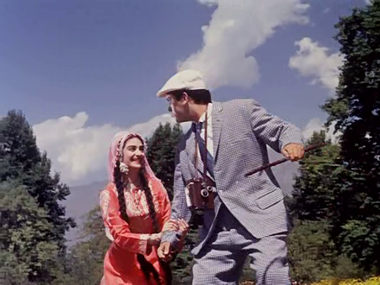
Some of you may have noticed my recent hiatus. Some of you may even know the reason for that—a trip to Kashmir (or, to be more specific, Srinagar). I lived in Srinagar for 3 years, beginning with when I was about 9 years old. I loved Srinagar. It was a beautiful place, and the beauty of it changed with the seasons: from the golds and reds of the chinars in autumn to the billowy white of winter (winter also meant teeth-chattering cold and long power cuts and occasionally no water, but never mind). From the masses of narcissi and daffodils, and the flowering fruit trees in spring, to the gardens bursting with poppies, roses and pansies in summer.

Continue reading

Cinematic Adaptations of Books: Some Ramblings

While writing my review of Piccadilly Jim—and comparing it to P G Wodehouse’s book—I was struck by the fact that most of the time, when I watch a film based on a novel I’ve read, I end up feeling let down. What is it, after all, that makes it difficult to recreate the magic of a book onscreen?
No, I’m certainly not saying all cinematic adaptations of books are bad; some are very good, as you’ll see in my list of ‘Goodies’, below. But there are Baddies too, and they, to my mind, far outnumber the Goodies.

When I began thinking about this topic, the first thing that came to mind was: I’m a purist. I like my books to be retained as is even on screen.

Continue reading

Piccadilly Jim (1936)

… a review, to be followed (probably tomorrow) by some ramblings on film adaptations of books, and why so many tend to fall flat on their faces.

I adore the books of P G Wodehouse. His writing is utterly charming, very witty, and very intelligently (not to mention intricately) plotted. From the loony Lord Emsworth and his pig, the Empress of Blandings, to the always-broke-but-ambitious Ukridge, to Psmith, Bertie Wooster and the omniscient Jeeves… all absolutely fantastic.


Continue reading

Waqt (1965)

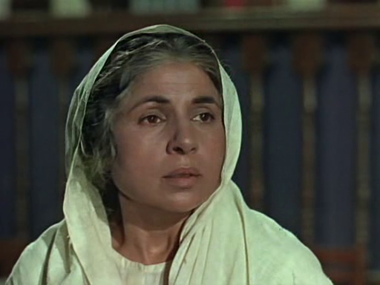
By some strange oversight, despite the fact that Waqt is one of my favourite masala films, I’ve never reviewed it on this blog. And I’m wishing I didn’t have to end up writing about it on such a sad occasion—because Achla Sachdev, the actress who played the self-sacrificing, long-suffering mother and wife in this film, passed away on April 30, 2012.

Continue reading

A story published in Open Road Review

Open Road Review (ORR) is a brand new literary magazine in India. They’ll be publishing an online issue every three months, in three categories: short fiction, creative nonfiction, and poetry. For the first issue of ORR, its editor, Kulpreet Yadav, invited me to contribute. One look at the guidelines (“literary work that is elegant and subtle… takes the reader to a deeper level”), and I knew Muzaffar Jang, much as I love him, wouldn’t do. What was needed here was something in a very different style.

So here is what I submitted. It’s a story called Maplewood, set in a fictitious colonial bungalow (named Maplewood), where an old widow, transplanted into the middle of the sleepy backwaters of the country, passes her days. It’s a story that came deep from within my heart – not because I myself have felt what the narrator of Maplewood must feel, but I can imagine it. And I can imagine what my reaction would be if I were to find myself in her place.

Do read, and let me know what you think.


The Agony and the Ecstasy (1965)

One of the good things about growing up in a family that loved reading was that even as a child, I was surrounded by books—novels, of course; and treatises on everything from Wordsworth’s poetry (thanks to my mother) to gardening and homoeopathy (thanks to my father). Those books, big tomes that were all words and no pictures, were of no interest to a 6-year old who wasn’t too deeply into literature.

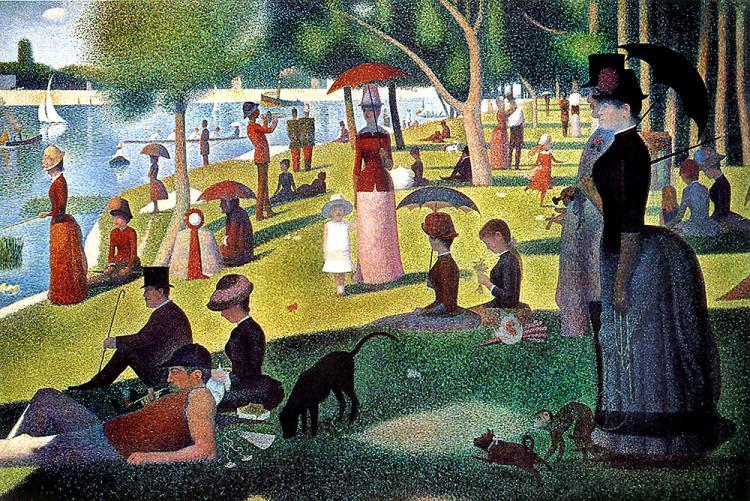
My favourite book from my parents’ vast collection was a large Readers’ Digest coffee table book called Family Treasury of Great Painters and Great Paintings. This one was a fascinating book. You didn’t need to be able to read much to be able to enjoy it, because it was full of the most amazing paintings. That was where I first saw The Music Lesson, La Grande Jatte, The Arnolfini Wedding, Sunflowers… and The Creation of Man. I don’t even need to open that book now to see what The Creation of Man looked like, spread across the top half of two pages. It took my breath away.

Continue reading

Celebrating World Heritage Day: Ten Songs

Today, April 18th, is World Heritage Day. A day to thank God, our ancestors, civilisation—for the richness that surrounds us. Whether it’s in the form of a unique ecosystem, or a beautiful old building. Or a language, a cuisine, a medicinal system. It’s all heritage, and it’s all precious. All remarkably, frighteningly fragile.

The United Nations Educational, Scientific and Cultural Organisation (UNESCO) has, as one of its wings, the World Heritage Centre. This is responsible for selecting (based on very strict criteria), preserving and promoting the UNESCO World Heritage Sites: natural and cultural heritage believed to be of ‘outstanding value to humanity’. India has a total of 28 World Heritage Sites, with a further 32 nominated and therefore on the ‘Tentative List’.

So: to celebrate. Ten songs, from Hindi films of the 50s and 60s (the only exception being Johny Mera Naam, 1970), which are picturised, either in part or totally, against a backdrop of a UNESCO World Heritage Site—or at least a tentative one. These are all from films I’ve seen. Enjoy!

Continue reading

Charulata (1964)

… and some random comparisons with Sahib Bibi aur Ghulam.

This Satyajit Ray film had been lying in my to-watch pile for a long time. Then, I learnt a few days back that the Indian government had finally decided to award a Dadasaheb Phalke to Soumitra Chatterjee for his contribution to Indian cinema. Better late than never, I guess (even though a number of people have said that it’s too late). The announcement, however, did give me a solid reason to watch Charulata (aka The Lonely Wife). And I ended up wanting to hit myself for not having seen this masterpiece earlier.

Continue reading

Reporter Raju (1962)

A couple of months ago, I got a call from Seventymm (the video rental service I’d subscribed to), letting me know that they were shutting down rentals and becoming retail-only. Since I’d paid up in advance for a year’s subscription, I had Rs 800 worth of unused vouchers—which, they said, I could use to pick products from the store. I ordered seven DVDs. They (or, rather, the five Seventymm were able to deliver—the rest went out of stock) arrived last week. Reporter Raju was one of them.

Also, last week, I finished a writing assignment for which the research involved watching a diverse set of films. A lot of them, though, had one thing in common: a newspaper office and/or a reporter as an important character. This one was on the to-watch list, but didn’t arrive in time for me to see it before submitting my article. Just as well, actually, because despite the name, it doesn’t exactly show the reporter doing much any newspaper work. Unless beating up goons is part of the job description.

Continue reading