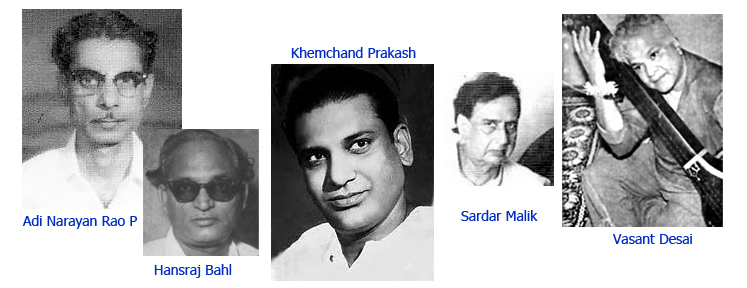
Celebrating the Uncelebrated: Ten of my favourite songs by lesser-known composers

This blog hosted a ‘Classic Bollywood Quiz’ a while back. In true film awards style (and we have pacifist to thank for this idea), everybody who submitted answers got a prize. The winner, Anoushka, got a tangible prize, and our runner-up, Anu Warrier, got the ‘dictate-a-list’ prize. For the others, I decided I’d dedicate one post each. This is the first of those posts; it’s dedicated to Karthik, who won the Just for the Heck of it Award (I assume full responsibility for that ghastly name; my creative juices had run dry by the time I got to naming this prize).

So, Karthik: this is for you, because though I’d thought vaguely that I’d do this list sometime, it was your suggestion (that comment on a long-ago post…) that spurred me on to get down to it. Enjoy!

Now, a few words about what this post entails. I’ve noticed that a lot of people, including those who do like old Hindi films and their music, tend to equate good music direction with the ‘greats’: Salil Choudhary, S D Burman, Shankar-Jaikishan, Madan Mohan, Roshan, O P Nayyar, Naushad… and so on. I did, too, till not too long ago. But a spate of watching some rather obscure films over the past decade or so has made me more aware of music directors who may not have made it big, but who certainly did not lack talent. In some cases, a couple of their songs became runaway hits. In some cases, the songs may not have been huge hits but are nevertheless very melodious.

Continue reading

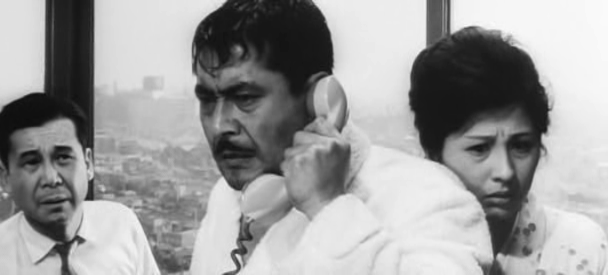
Tengoku to Jigoku (1963)

This blog’s been focussing on Hindi cinema for a while now, so I decided it was time to get back to being a bit more diverse. And this time with a film from one director whose work I admire a lot: Akira Kurosawa. If all you’ve seen of Kurosawa are his samurai films, I’d recommend Tengoku to Jigoku (High and Low) as a good way of getting introduced to the films he made in other genres. If you’ve never watched a Kurosawa, this is still one of his best films – and one of the best classic crime films I’ve seen.

Loosely based on King’s Ransom, a novel by American crime writer Ed McBain, Tengoku to Jigoku is about a kidnapping and its repercussions. The result is an unforgettable film that brilliantly combines the personal, the social, the psychological, the dramatic and the mundane, with the sheer sweat-and-drudgery of the police procedural.

Continue reading

Ten of my favourite Shammi Kapoor songs

My sister keeps a stack of CDs in her car. Often, when she gives me a lift, she puts a CD into the stereo and we listen as she drives along. The CDs are a mixed lot: Harry Belafonte, Simon and Garfunkel, 3 Idiots, Wake up, Sid!, The Best of S D Burman… and The Best of Shammi Kapoor. The others are in reasonably good condition; the Shammi Kapoor CD is battered and scratched and sadly in need of replacement.

I can understand why.

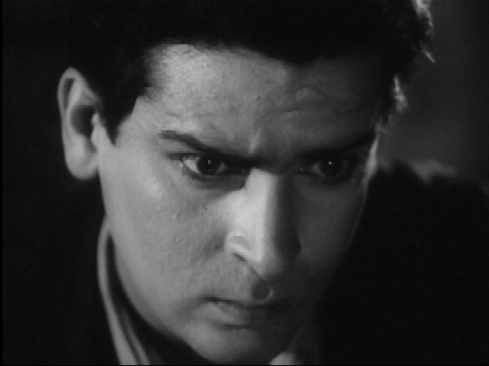
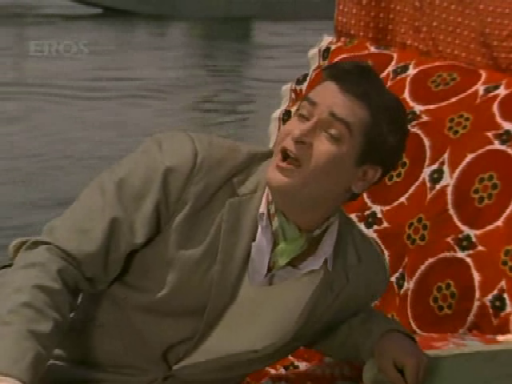
Shammi Kapoor is, for me (and I think I can speak for my sister too), one actor on whom some of the most fabulous songs in classic Hindi cinema were filmed. Funny songs, sad songs, romantic songs, madcap songs, rock-and-roll songs: he did them all, and memorably. And – somewhat unusually for an actor – he took a great interest in the music of his films. (There is an oft-repeated story of how Shammi Kapoor was so biased in favour of Shankar-Jaikishan’s music that he at first refused to let R D Burman compose the music for Teesri Manzil. But RDB, by insisting on playing a couple of the tunes he’d already composed, won Shammi over).

Continue reading

Professor (1962)

The first time I watched this film was on TV, back in the mid-80s. Luckily enough, our TV was hooked up to a VCR, and a blank tape was in the VCR – so we recorded Professor. I loved the film so much, I rewatched that tape again and again over the next 15 years. By that time, VCDs had come to India and I’d just gotten married. My husband and I bought a VCD player. And guess which was the first VCD I bought?

Now I have the DVD, and I have seen Professor so many times that I know each scene. I remember a lot of the dialogues, and I still love the film as much as I did way back then the first time, as a starry-eyed, Shammi Kapoor-loving 12 year old.

Continue reading

Junglee (1961)

For a lot of people of my generation – or those younger than me, who have seen Shammi Kapoor in his earlier films, this is the film that is probably representative of Shammi Kapoor: the ‘Yahoo! Kapoor’ as a friend of mine says with a sneer.
Junglee is one of the major successes of Shammi Kapoor’s heyday. It is also, with Shammi’s wild whooping and crazy antics in songs like Suku suku, an important reason for him getting saddled with that ‘Yahoo! Kapoor’ epithet.

Continue reading

Ten of my favourite Shammi Kapoor roles

It seems a bit of a paradox that Tumsa Nahin Dekha was both good and bad for Shammi Kapoor. Good, because it turned him from a wannabe to a big star. Bad, because it created a certain persona – the fun-loving, completely madcap yet good at heart rebel.
Bad? Was that ‘bad’?

I think so. In film after film, Shammi Kapoor ended up doing pretty similar roles. (Even the films had similar names: Junglee, Jaanwar, Budtameez, Bluffmaster…). You wouldn’t expect a Raj Kapoor, a Dilip Kumar or a Rajendra Kumar to debase themselves by making faces and leaping about like Shammi Kapoor was willing – even eager – to do. The result? Shammi Kapoor got typecast. ‘India’s Elvis Presley’, ‘the rebellious star’, the man who could dance and sing and do comic scenes and romances. But if emotion was needed, directors turned to other stars.

So, when I decided I wanted to do a list of my ten favourite Shammi roles, I began to pick out films in which one can see glimpses of what a fine actor this man actually was. Roles that allowed Shammi Kapoor, even if he was prancing about and singing in places, to show off his skill as a thespian.

Continue reading

Kashmir ki Kali (1964)

This particular Shammi Kapoor film has a very special place in my heart – because Yeh chaand sa roshan chehra was one of the first Hindi film songs I ever learnt to sing. I must’ve been about eight years old. I’d never seen the film; television was yet to make its way into our lives (it was just round the corner, though I didn’t get to see the song till much later). But I used to hear it now and then on radio, and sometimes on an LP my parents owned. I always did wonder who the heroine was, the woman who was praised for the fact that her ‘zulfon ka rang’ was sunehra, and who had jheel si neeli aankhein. Could she have been an Indian actress, I wondered? She sounded firang.

Continue reading

Dil Deke Dekho (1959)

Dil Deke Dekho isn’t quite the perfect film I’d like to make it out to be.
(a) The story isn’t exactly original (Nasir Hussain had already used it in Tumsa Nahin Dekha. He also went on to use it in Jab Pyaar Kisi se Hota Hai and Phir Wohi Dil Laaya Hoon, but that can’t be laid at the doorstep of Dil Deke Dekho).
(b) The plot is too complicated, relies too heavily on convenient coincidences, and has some unbelievable – and often unclear – motives.
(c) The lead actress, Asha Parekh (just 16 years old), though pretty as a picture, isn’t a terribly good actress at this stage of her career.

On the other hand: the film stars Shammi Kapoor.

Continue reading

An Eye Candy Post to Begin Shammi Kapoor Week

Over a year ago, my husband remarked, “You’ve done special weeks on Robert Mitchum and Tyrone Power. You’re also going to be doing one on Johnny Walker. But what about your favourite actor? Don’t you think you should be doing a Shammi Kapoor Week sometime?”

Of course, I said. I just wanted to time it well – in time for Shammiji’s 80th birthday, which would be on October 21st, 2011. That would be quite an occasion, and the right time for me to spend an entire week gushing about my favourite film star.


Continue reading

Edwina (Part 4): Dancing

Sadly, all good things must come to an end. So, with a heavy heart, I’m having to publish this post: the last of the four-part guest posts on Edwina Lyons, written by Edwina, along with Tom Daniel. If you haven’t yet read the earlier posts, click here for the first (a mini biography), here for the second (on the actors, actresses and choreographers Edwina worked with) and here for the third, about Edwina’s fellow dancers. As in the earlier posts, in this one too Edwina’s writing is formatted in black, while Tom’s words are in blue. Over to Tom:

After three preparatory articles, we finally get to the heart of the matter – what it was like to film these movie dances fifty years ago. What was the process and how was the life of a young female dancer? Some of what will be covered in this article were among Edwina’s earliest writings to me, because these are the things about which I wanted to know the most. This early material was also later supplemented by telephone conversations which I rewrote in my own words. Ultimately, though, it all comes from Edwina.

Continue reading