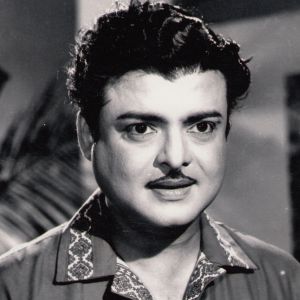
Chitralekha (1964)

I have decided it’s high time I began rewatching some of the old Hindi films I last saw when in my teens (or, in some cases, even before that). Back then, all our film viewing used to happen on India’s sole television channel, Doordarshan, which would telecast Hindi films every weekend, and sometimes in between as well. Most of the films were old classics, and I have fond memories of first viewings of films which became firm favourites almost from the get-go: Junglee, Teesri Manzil, Nau Do Gyarah, Dekh Kabira Roya, Woh Kaun Thi?, Mera Saaya

There were also films that I watched (we watched everything, there was such a paucity of options for entertainment) but which I ended up not liking. Or, as in the case of Chitralekha, not really understanding. I guess this was a simple case of being too young, too immature, to grasp the niceties of a film that wasn’t the standard masala entertainer.

About time, I thought, I saw this one again.

Kidar Sharma, who directed Chitralekha, had already made this film (based on a novel by Bhagwati Charan Verma) earlier as well. The 1941 Chitralekha starred Mehtab (who of course later married Sohrab Modi) and the juiciest bit of information about the film is that it featured a bathing scene (Cineplot used to have an article about this, an excerpt from Kidar Sharma’s autobiography, but since Cineplot now seems to be sadly defunct, that’s gone). Kidar Sharma did say, from what I recall of his autobiography, that the original Chitralekha was far superior to the 1964 remake.

But the 1941 film is, I think, gone—or at least not available for viewing online, though there are songs and stills galore. I may as well watch the 1964 Chitralekha, I decided, since that was the one I had hazy recollections of watching as a child.

The story is set in Pataliputra during the heyday of the Gupta Empire. Aryaratan Samant Beejgupt (Pradeep Kumar), a high nobleman, has just returned to Pataliputra after a sojourn elsewhere. Beejgupt’s arrival in the city is greeted with anticipation: his fiancée Yashodhara (Shobhna) is shyly hopeful that this time he will marry her.
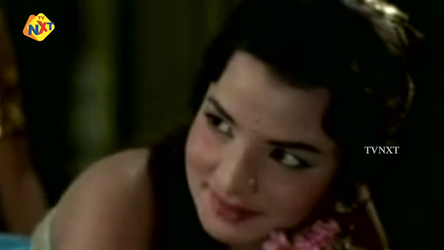
Continue reading

Himalaya ki God Mein (1965)

I realized the other day that there are umpteen well-known old films that I have seen but have never got around to reviewing on this blog—invariably because I had watched them before I started Dustedoff, and because there were so many ‘new’ old films to watch and write about, I never got around to rewatching stuff. It’s time to amend that, and revisit some films that perhaps should be talked about.

To begin with, Himalaya ki God Mein. Directed by Vijay Bhatt, Himalaya ki God Mein beat Haqeeqat and Waqt to win the Filmfare Best Film Award, and was a superhit. I had watched this donkey’s years ago, when it was telecast on Doordarshan. I remembered almost nothing of it except the fact that Manoj Kumar played a city doctor who relocated to the mountains to treat villagers and ended up falling in love with a village girl played by Mala Sinha. That was it. Time for a rewatch, I decided.

The film begins at night, on an aeroplane where Dr Sunil (Manoj Kumar) and his fiancée, also a doctor, Neeta (Shashikala) are travelling. Another passenger on the plane suddenly clutches his chest; Sunil examines him, diagnoses a heart problem, and asks that the plane land immediately.

Continue reading

Zabak (1961)

Zabak is a film I’ve been wanting to watch for a while, mostly for Shyama. I like Shyama a lot, and as far as I know, this is one of the rare colour films in which she acted as a lead. Plus, given my penchant for raja-rani films, I thought this might be worth a try.

Zabak (Mahipal) is the son of a healer and hamaam owner named Hassan Shah Isfahani (?). Hassan Shah is much acclaimed as a man who knows his medicine, and everybody around, from the Haakim (the Lord) of Isfahan to the man in the street, comes to him for relief from a variety of ailments. Zabak is a happy-go-lucky sort, spending his time joking around town, and romancing Zainab (Shyama), the daughter of the Lord of Isfahan.

Continue reading

Do Dulhe (1955)

Today is the birth centenary of one of a handful of Hindi film actors who managed to cross from one type of role to another—again and again. Like Ajit, Pran, and Premnath (though not in the same league as them, when it came to success and popularity), Sajjan Lal Purohit—better known simply as Sajjan—appeared in leading roles in several of his early films (including, notably, in Saiyyaan, where he acted opposite Madhubala), then drifted into supporting roles (as Dev Anand’s sculptor friend in Paying Guest; as Mini’s father in Kabuliwala; and more), and eventually into villainous roles (in April Fool, Aankhen, Farz, etc).

Continue reading

Raat ke Raahi (1959)

What a dreadful year this is turning out to be. As if the communal violence at the start of the year wasn’t bad enough, we were then hit by coronavirus. And as I struggle to cope, trying to keep my spirits high in the face of failing economies, loss of income, and of course the threat of a lethal disease—the last thing I needed was the passing of two of my favourite actors. Irrfan Khan and Rishi Kapoor, both very good actors, immensely watchable and with a charisma hard to match, died within 24 hours of each other.

This blog is not about cinema after 1970, so there will not be a separate tribute piece for these two brilliant actors, but yes: I did want to put it out there, my sorrow at their passing, a blow that oddly enough (given that I never even met either of them) hit really hard.

What this is, though, is a tribute to another actor, someone whose birth centenary it is today. Achla Sachdev.

Continue reading

Miss Mary (1957)

This film has been on my watchlist for a long time now. Earlier this year, when I reviewed the delightful Maya Bazaar, my attention was drawn to Miss Mary, because—like Maya Bazaar—this was a film that was originally made in Tamil and Telugu (as Missiamma/Missamma) and, in this case, then into Hindi too. I was already aware that the film had some lovely songs, and Meena Kumari in a light-hearted role is always a pleasure to watch.

Plus, it stars Gemini Ganesan, whose birth centenary it is today. He was born on November 16, 1919, into a distinguished family that included his aunt Muthulakshmi Reddi, a much-respected social reformer who was instrumental in passing the Devadasi Abolition Act. Thanks to Muthulakshmi, Ganesan was enrolled at Ramakrishna Mission Home, and acquired a fairly strong ‘classical’ education here, including Sanskrit, the Vedas and Upanishads, and yoga. As an adult, though, Ganesan’s career graph was rather more eccentric: he harboured dreams of becoming a doctor, attempted to join the Indian Air Force, and ended up teaching chemistry at Madras Christian College. In 1947, a job at Gemini Studios (from which Ganesan drew his screen name) led him to receive a casting offer from the studio—and Gemini Ganesan’s acting career was launched.

Gemini Ganesan, b Nov 16,1919

Continue reading

Naukri (1954)

I have a confession to make: I am not especially fond of Kishore Kumar as an actor. He’s a brilliant singer, and he can be pretty funny in films like Chalti ka Naam Gaadi or Pyaar Kiye Jaa or Padosan—but that, as far as I am concerned, is about it. Asha, Rangoli, Naughty Boy, Half Ticket, Jhumroo, Ek Raaz, Naya Andaaz, Bandi, Manmauji: I have lost count of the number of films I’ve seen because of good songs, or a cast that appeals to me, but have ended up regretting because Kishore Kumar’s antics were so very over the top as to be unfunny.

But then there are films like New Delhi and Naukri, where there isn’t a concerted effort to make Kishore’s a comic character. Films about young men who are like most other young men: trying to go from being boys to men, facing trials and tribulations, trying to laugh through them when they can, caving in occasionally. Not heroes, not comedians, just normal men.

Continue reading

College Girl (1960)

Look what I found!

[To make that clearer to those not in the know: I am a die-hard Shammi Kapoor fan, especially of the Shammi Kapoor between 1957 and 1966. I have watched most of his films from that period, and to find one I haven’t seen is cause for rejoicing. Even if it turns out to be a dud. Therefore the euphoria].

I first came across a mention of College Girl while watching a video of Halke-halke chalo saanwre (from Taangewaali, also starring Shammi). Besides the music (which I loved), I thought the song looked great too, and was eager to try and get hold of Taangewaali—until someone told me that a neat job of mixing had been done here: the audio was of the Taangewaali song, but the video was from College Girl. College Girl went up on my list of films to search for—and I discovered it last week on Youtube.

Shammi Kapoor and Vyjyantimala in College Girl Continue reading

Kalpana (1960)

Though I’d heard of this film – and loved one of its songs (As-salaam-aaleikum babu) – I’d not been too keen on watching it. Firstly, Ashok Kumar is not really my idea of a dashing leading man. Secondly, I’m not a great one for the Travancore Sisters. At the risk of being labelled an iconoclast, I’m going to admit that dance is not generally a big thing for me – I’m awful at any sort of dancing myself, and I don’t have much of an eye for watching it, either. Plus, there’s the fact that both Padmini and Ragini have horrid Hindi accents, which means that when they’re playing Hindi-speaking characters, they are not exactly very believable.

Then Richard reviewed Kalpana, and I got to know a bit more about the film. And then, to add to it all, Tom Daniel praised it too. So, I ended up watching Kalpana. It turned out to be – surprise, surprise – much more engrossing than I’d expected it to be.

Ashok Kumar and Padmini in Kalpana

Continue reading

Adalat (1958)

My family first acquired a TV in 1982. For the next few years, Doordarshan remained our main source of entertainment. And the films Doordarshan telecast at 5.45 PM every Sunday (and a couple of times during the week, mostly at odd times) were the highlights of the week. We saw loads of films during those years. Everything that was shown—from the simply horrendous Fauji to Fedora, which I didn’t understand—was grist to the family mill.

Looking back, I now realise just how tolerant I was back then of cinema that now induces irritation at best, ‘kill-this-film maker’ fury at worst. Watching Adalat now, after having first seen this when I was a pre-teen, I can see that what I thought of as a tragic but entertaining film is really not that great. In, fact, almost tedious.

Continue reading