Baaz (1953)

Today, July 9, 2025, marks the 100th birth anniversary of one of Hindi cinema’s best-known film directors. Born in Mysore on this day in 1925 as Vasant Kumar Shivshankar Padukone, Guru Dutt studied in Calcutta before joining Uday Shankar’s India Culture Centre (in Almora, present-day Uttarakhand) to train in dance. By the time he turned 19, he had moved to Pune, where he began working as a choreographer for Prabhat Studios. By the time Prabhat Studios folded up (in the early 1950s), Guru Dutt had formed a close friendship with Dev Anand, because of whom he received his first break as a director: in 1951, he directed Navketan’s Baazi, starring Dev Anand, Geeta Bali and Kalpana Karthik in a noir thriller that was to become a defining film for Navketan: edgy, stylish, dark, very urban.

Guru Dutt is today revered more for the hard-hitting, cynical cinema he made: films like Pyaasa, Sahib Bibi aur Ghulam and Kaagaz ke Phool hold up the mirror to a world that is selfish, cruel and opportunistic. These are bitter films, films that plumb the depths of human nature; films that—despite following most of the standard tropes of commercial Hindi cinema (a romance between the lead couple; a fair number of songs; a comic character invariably played by Johnny Walker)—were quite different from other Hindi films.

These, too, are the films for which Guru Dutt is mostly remembered today. Is that because over the decades, people have seen how the tragedy and turmoil of Guru Dutt’s personal life was probably reflected in films like these? Is there a voyeuristic tendency to try and spot the man behind the director?

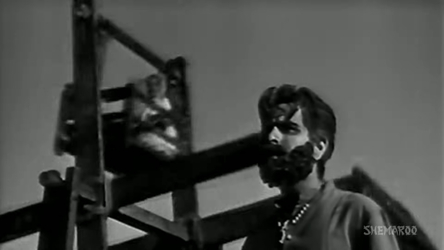
But Guru Dutt also made other films, on other subjects. This one, for instance, an adventure/patriotic film set on the high seas, with Geeta Bali starring as the eponymous ‘Baaz’ (falcon), a woman who becomes a pirate to free her land of a colonial tyrant.

Continue reading

Udan Khatola (1955)    

Does Udan Khatola hold some sort of record for largest number of love/lust triangles?

Here’s a rough count:

There’s the unnamed aviator, the pardesi (played by Dilip Kumar) who is in love with the local peshwa’s daughter Soni. Who, in turn, loves him back.

Continue reading

Kaala Paani (1958)

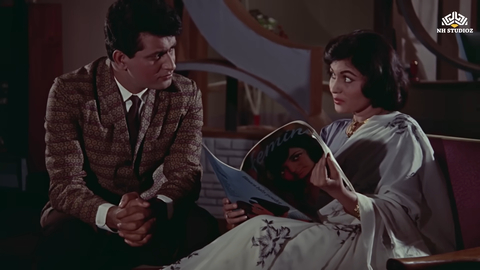
Today is the 100th birth anniversary of one of my favourite Hindi film directors, the suspense-specialist Raj Khosla (I hasten to add: I am well aware that that’s a generalization, since Khosla made a lot of films, too, that had nothing to do with the thriller/suspense genre: Mera Gaon Mera Desh, for example; Chirag, Main Tulsi Tere Aangan Ki, Do Badan, etc). But it is Khosla’s prowess with this particular genre that I especially admire, a skill and talent he showcased in classics of the genre such as Woh Kaun Thi? ((1964), Mera Saaya (1966), CID (1956) and Kaala Paani (1958). In each of these films, he managed to combine the classic elements of the Hindi masala film—a romance, a comedic side track, lots of fabulous songs—while making sure that the suspense remained (mostly) taut, the mystery a solid one.

To commemorate Khosla’s birth centenary, I wanted to review one of his suspense films. Several of these (CID, Mera Saaya, Ek Musaafir ek Haseena, Woh Kaun Thi?) I have already reviewed; I was torn between some of the others: Solva Saal, Kaala Paani, and Anita, all of which I have seen at some time or the other. I decided, eventually, that it was time to rewatch Kaala Paani, a film that I’ve watched several times, but too far back to have reviewed it on this blog.

The story begins on a night in Bombay, with a woman (Mumtaz Begum) hurrying through the streets to the home of a family friend, Mr Kapoor (?). She is in great distress, and confides in Kapoor: Karan has discovered the truth. What this truth is we discover when Kapoor hurries to Karan’s home to find Karan (Dev Anand) sitting, looking bereft. He has found out (how, we aren’t told) that his father Shankar Lal has, for the past fifteen years, been incarcerated in Hyderabad jail for the murder of a tawaif named Mala. Not, as Karan has been led to believe all these years, dead.

Continue reading

Mela (1948)

I have never really wanted to watch this film, the main reason behind that being a long-ago comment by my father, saying that it was a ‘serious’ film. Which meant, basically, that you shouldn’t expect a happy ending. Whatever may happen before that—starry-eyed romance, good songs, even some humour—is all the light-heartedness you could hope for. When tragedy came, it would pile up.

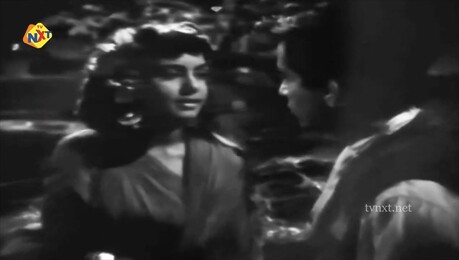
Mela (which I ended up watching mostly for the songs, and partly because I like both Dilip Kumar as well as Nargis) gets off to a bad start, because it begins with gloom and doom. Mohan (Dilip Kumar), old and sad-looking, is released from prison after what seems to be a long, long time in jail. He goes out into the wide world, and walking along, comes across someone singing Yeh zindagi ke mele, while—in the background—crowds of happy, laughing people throng a fair, whirling about on carousels, milling about stalls, enjoying themselves.

Continue reading

Hindi Film Characters with Books, Part 3

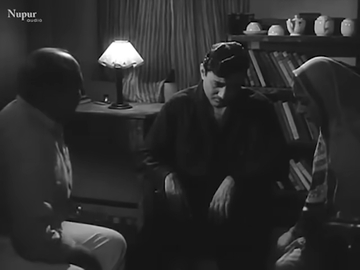
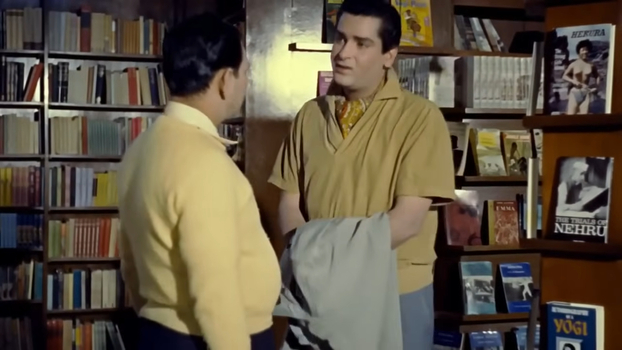
In 2018, for World Book Day, I compiled a post on Hindi film characters depicted with books. I had not meant it to be the first part of a series of posts; not at all. It had taken me a good bit of effort, many days of trawling through films, much research, to come up with those ten books on that list. To be honest, besides those ten books, those ten characters, I couldn’t think of any other Hindi film characters I’d seen with books.

I don’t know how it is with you, but I have noticed one thing about myself: as soon as I’ve done a post on some theme (or even thought of one), I keep noticing that theme again and again in films I watch. After 2018, I found myself spotting books in several old films I watched. Enough to enable me to post a follow-up list: ten other books.

And now another ten. As I’ve done for the other book lists I’ve made, these are all from films I’ve seen, and (barring one film, Dil Daulat Duniya, 1972), from before the 1970s. I’ve made an exception for Dil Daulat Duniya because (like—say, Sharmeelee—it has a very 60s look and feel to it, and is anyway on the cusp of the decade). These ten books are all real books, and can be bought online even today; I’ve provided links to buy, wherever possible.

Continue reading

Ten of my favourite Manoj Kumar Songs

RIP, Manoj Kumar.

The first week of April has seen two major actors of the film world pass away. Hollywood great Val Kilmer (whom I actually always associate with The Saint, though most others probably think Batman and Jim Morrison of the Doors), on April 1st; and on April 4th, Manoj Kumar. Kilmer, though I’ve watched several of his films, isn’t part of my timeline when it comes to blogging; but Manoj Kumar certainly is.

Continue reading

Book Review: Manek Premchand’s ‘And the Music Lives On’

In the past couple of years, I’ve read two books by Manek Premchand—Director’s Chair, and his biography of Majrooh Sultanpuri—so when he offered to send me a copy of his latest book, And the Music Lives On, I leaped at the opportunity to read yet another Premchand.

The cover of this book gives a fair indication of what And the Music Lives On is all about: those stills from Mughal-e-Azam, Awara, Guide, Madhumati, Memsahib and Dilli ka Thug are a clear pointer to the films and the era Premchand writes about here, an era in Hindi cinema’s history that may be long past, but whose music lives on.

Continue reading

Meera (1947)

I am not a one for mythologicals or devotionals.

If you go through the list of Hindi films I’ve reviewed in the sixteen years this blog has been in existence, you’ll probably only find a handful of films that fit the bill (offhand, I can only think of Mahabharat, though in Telugu, I’ve also reviewed the excellent Maya Bazaar and in Tamil, Karnan). I have watched more than that, but nearly all I have found to be so ho-hum, I couldn’t be bothered to review them.

The story of Krishnabhakt Meera, wife of Bhojraj, was not one I expected to be any different. A woman, so completely devoted to the deity she has chosen to worship that she gives up everything, down to her husband and the kingdom of which she is queen, in order to go to Vrindavan to fall at Krishna’s feet… I was quite certain this film would be a hard slog. There was only one reason I wanted to watch it, and that was MS Subbulakshmi, who played Meera. I knew that Meera had originally been made in Tamil (in 1945), and was later (in 1947) dubbed in Hindi, with some scenes being reshot. MS Subbulakshmi, of course, given her stature as one of the greatest vocalists the Indian subcontinent has ever produced, sang all the songs.

Continue reading

Chitralekha (1964)

I have decided it’s high time I began rewatching some of the old Hindi films I last saw when in my teens (or, in some cases, even before that). Back then, all our film viewing used to happen on India’s sole television channel, Doordarshan, which would telecast Hindi films every weekend, and sometimes in between as well. Most of the films were old classics, and I have fond memories of first viewings of films which became firm favourites almost from the get-go: Junglee, Teesri Manzil, Nau Do Gyarah, Dekh Kabira Roya, Woh Kaun Thi?, Mera Saaya

There were also films that I watched (we watched everything, there was such a paucity of options for entertainment) but which I ended up not liking. Or, as in the case of Chitralekha, not really understanding. I guess this was a simple case of being too young, too immature, to grasp the niceties of a film that wasn’t the standard masala entertainer.

About time, I thought, I saw this one again.

Kidar Sharma, who directed Chitralekha, had already made this film (based on a novel by Bhagwati Charan Verma) earlier as well. The 1941 Chitralekha starred Mehtab (who of course later married Sohrab Modi) and the juiciest bit of information about the film is that it featured a bathing scene (Cineplot used to have an article about this, an excerpt from Kidar Sharma’s autobiography, but since Cineplot now seems to be sadly defunct, that’s gone). Kidar Sharma did say, from what I recall of his autobiography, that the original Chitralekha was far superior to the 1964 remake.

But the 1941 film is, I think, gone—or at least not available for viewing online, though there are songs and stills galore. I may as well watch the 1964 Chitralekha, I decided, since that was the one I had hazy recollections of watching as a child.

The story is set in Pataliputra during the heyday of the Gupta Empire. Aryaratan Samant Beejgupt (Pradeep Kumar), a high nobleman, has just returned to Pataliputra after a sojourn elsewhere. Beejgupt’s arrival in the city is greeted with anticipation: his fiancée Yashodhara (Shobhna) is shyly hopeful that this time he will marry her.

Continue reading

Chori Chori (1956)

Happy 100th birthday to one of India’s greatest film makers, Raj Kapoor!

RK was born in Peshawar on December 14th, 1924. What can I say about him that hasn’t already been said or written, and by people much more erudite, well-informed, and more fond of RK’s cinema than I am? Yes; I will admit that I am not the greatest of Raj Kapoor’s fans, but let us keep the whys and the wherefores of that, the debates and the discussions, for another time. As Anu Warrier (of Conversations over Chai, not just a fellow blogger I admire hugely, but also an RK fan) said “I know there are RK films you like!”: and for RK’s birth centenary, I decided it was high time I finally reviewed an RK film that I particularly like.

I have watched Chori Chori several times, and always with great satisfaction. Even though it starred Raj Kapoor (opposite Nargis, moreover), the film is not at all the sort of film RK was known for: this was the light-hearted romp that younger brother Shammi was to go on to make his own. A road trip, a pampered heiress, a romance. Lots of songs, great chemistry.

Continue reading