Dev Anand: Ten Songs, Ten Voices

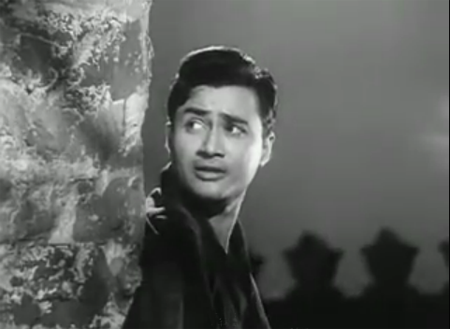
The very first Hindi film song I remember watching was a Dev Anand one. I was nine years old, and the film was CID. The film had already had a couple of songs (Boojh mera kya naav re, Leke pehla-pehla pyaar) that featured him, but when Aankhon hi aankhon mein ishaara ho gaya came on, it cast its spell on me. I was completely bowled over, and from then on, was a starry-eyed Dev Anand fan.

Over the years, as I’ve become older and wiser (more cynical?), the love for Dev Anand has been tempered somewhat. I don’t like the mannerisms, the exaggerated drawl and pout, the puff of hair, and the larger-than-himself persona he took on once he became a superstar. I find him a bit embarrassing in later films, from the 70s onward, where he’s trying desperately to appear much younger than he really was.

But, in his heyday, I think there was nobody to rival Dev Anand in the charisma department: nobody as suave, as charming, as watchable. And, as if that wasn’t all, his films always had great music. About 90% of my favourite songs as a teenager were from Dev Anand’s films. Munimji, CID, Nau Do Gyarah, Guide, Solvaan Saal, Kaala Paani, Kaala Bazaar, Baat ek Raat ki, Teen Deviyaan… one wonderfully entertaining film after another, one great song after another.

Continue reading

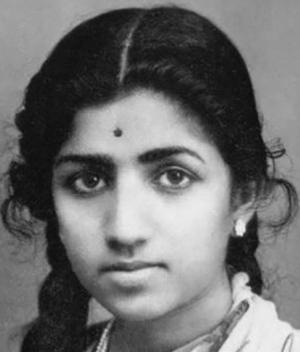
Lata Mangeshkar: Ten Composers, Ten Songs – Part 5

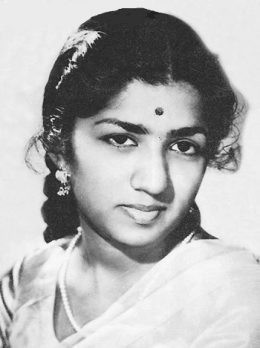
The first post in this series of song lists was posted as a tribute to Lata Mangeshkar when she passed away in early 2022. I had previously posted a song list featuring Lata in Ten Moods, so this time I wanted to be different: to showcase Lata’s work with different music directors. Naturally, given Lata’s oeuvre (even till just 1970, which is my self-imposed cut-off for this blog), that list, with just ten composers included, was far from enough. I ended up doing several more posts in the series, and every time, some reader or the other would comment: “What about so-and-so composer? How about this song?”

Continue reading

Shailendra in Ten Moods

One of Hindi cinema’s leading lyricists, and a stalwart poet in his own right (I cannot resist wondering if that shouldn’t be “in his own left”, given Shailendra’s socialist leanings!), Shailendra was born on this day a hundred years ago. I have written about him before, in this post to mark an earlier one of his birthdays. But, since I like Shailendra’s poetry so much, I could not let his birth centenary pass without a post dedicated to him. A list of Shailendra’s songs, therefore, that are in ten different moods. And, so that this post isn’t a repeat, even in a small way, of my earlier Shailendra post, none of the songs here are from my earlier post.

Continue reading

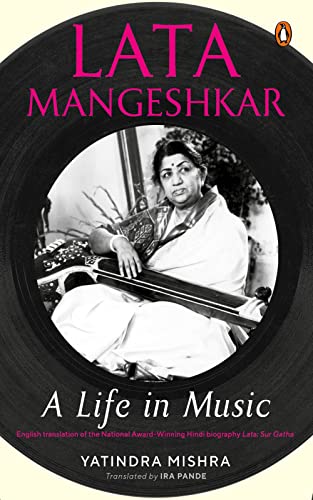
Book Review: Yatindra Mishra’s ‘Lata Mangeshkar: A Life in Music’

Over a period of about four years, from 2010 to 2014, Lata Mangeshkar was interviewed by the biographer Yatindra Mishra, the interviews coming together in the form of a Hindi book, Lata: Sur Gatha. The biography won a National Award, and was published in its English translation (Lata Mangeshkar: A Life in Music, translated by Ira Pande) earlier this year.

Continue reading

Ten of my favourite crooner/club songs

This post has been in the pipeline a long, long time. When I first started this blog way back in November 2008, the very first ‘ten favourites’ song list I compiled was for Madhubala songs—and (unlike what I now do, which is to steer clear of assigning ‘absolute favourite’ status to any particular song), I actually went out on a limb and marked one Madhubala song as my favourite. That was Aaiye meherbaan baithiye jaan-e-jaan. And, even as I was putting that down on my list, I thought to myself: “I must do a list of my favourite crooner and club songs someday.”

Well, here it is, finally. It’s not as if I’ve spent the last many years thinking of this post; but the ‘Crooner Songs’ folder has been there on my laptop all these years, even with some screenshots taken of the songs I knew had to be part of the list.

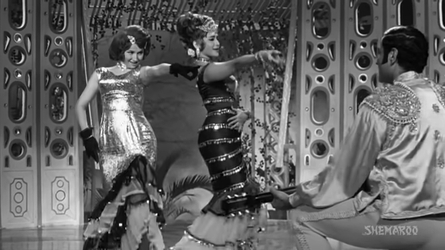
In any self-respecting, urban-centric film of the 50s and 60s, a club song was almost de rigueur. It would probably be picturized on someone of the likes of Helen, but not necessarily: at times, what was needed was not someone who was a fabulous dancer, but someone who could project the oomph one associated with the club singer.

Continue reading

Ten of my favourite spooky songs

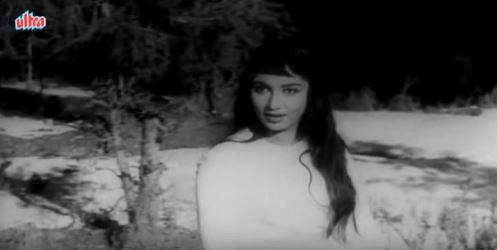
Some days back, I watched A Shamshir’s Woh Koi Aur Hoga (1967), starring Mumtaz, Feroz Khan, and Sohrab Modi. It turned out to be one of the most incoherent and illogical films I’d ever seen: Sohrab Modi’s character, a professor, is drugged (by Asit Sen in yellowface, a Chinese villain pretending to be the professor’s Indian servant) and made to do the dirty work of the Chinese: that is, inject hapless victims with something that will drain the blood from their bodies. The corpses are then covered with wax and sold off as mannequins to the wealthy gullible who want realistic-looking statues in their homes (and are possibly not averse to the frightful stench).

But, digressions aside: there was also, in the film, Mumtaz. Wearing a shimmery white dress and roaming about the hills at night, singing a sad song. Repeatedly.

Watching Ae raat ke andhere mujhko gale lagaa le, I was reminded of many other songs with a similar premise: a ghostly figure (invariably female), wandering about in the night and singing a signature spooky song. There is often an echo, sometimes other props, something else perhaps to suggest darkness, mystery, ghosts.

Continue reading

Lata Mangeshkar: Ten Solos, Ten Composers – Part 4

Last year, when Lata Mangeshkar passed away, I did a series of posts featuring songs she’d sung for different composers. This post, the fourth and final one, had been lying waiting to be published for the past several months.

I began the first list as a tribute to Lata when she passed away, but that, I realized, was too little; there were too many very talented composers, too many wonderful songs, which had perforce been left out of that list. I therefore ended up making another list. And then another.

Here, I cover ten more composers, most of them unfortunately either forgotten now or never really given their due. But, as can be seen (or heard?) by this list, they were not short of talent. These ten solos are all, as always, from pre-1970s Hindi films that I’ve seen. Plus, these songs do not overlap with the very first Lata Mangeshkar post I had published on this blog, here.

Continue reading

Ten of my favourite ‘two songs in one’

Some years ago, while watching Adalat, I was struck by the interesting way in which the song Jaa jaa re jaa saajna was composed (by Madan Mohan). It begins as a plaintive, melancholic song, the singer (Nargis, lip-syncing to Lata Mangeshkar’s voice) filling her song with the emotion she feels at being betrayed. Then, just as one had settled into thinking that this was a particular type of song, the tone of the song changed. The tempo increased, and though the lyrics still conveyed the same emotion, the singer (Asha Bhonsle) made them so teasing and flirtatious that their import changed. Two songs, one slow and anguished, one fast and vibrant, but woven together into one song. 

What an impressive performance, I thought: and it occurred to me that there were other songs, too, of this type, where a composer and a lyricist create two songs but weave them together. Note that I’m not talking of the back-to-back songs, like Kya se kya ho gaya/Mose chhal kiye jaaye. I mean songs where the two styles of the song alternate. Also note that I regard two tempos of the same tune as two different styles.

Continue reading

The ‘Not-Naachnewaali’ Gaanewaali: Ten Songs

I have been watching Hindi cinema for most of my life. And for most of my life, too, I have been happily swallowing all the many outlandish tropes and elements that are part of this realm. Not the least the many obscurities and questions that surround songs: how do people think up a tune and words at the drop of a hat, with no rehearsals whatsoever? How do two people who are not even within earshot of each other, manage to sing—perfectly—a duet? Where does the music come from? And how do people who are dancing about energetically manage to sing at the same time?

The naachne-gaanewaali so derided by the ‘shareef’ of Hindi cinema is, in essence, an unlikely character. The Vyjyanthimala of Sadhana, who dances with so much energy, or even the Meena Kumari of Pakeezah, her dance often more sedate, but a dance nevertheless… or the many, many other onscreen naachne-gaanewaalis, from Minoo Mumtaz in Saaqiya aaj mujhe neend nahin aayegi to Kumkum in Dekh idhar o jaadugar: they must be having Olympic athlete-standard fitness levels to be able to dance so vigorously and sing so well at the same time.

But there is the occasional naachne-gaanewaali who doesn’t dance. She only sits, or, at the most, stands up a bit and languidly moves about. No proper dancing. Not, I think, because she realizes that it’s well-nigh impossible to do both at the same time or that she’s conserving her energy, but perhaps because that’s the filmmaker’s way of showing that she is relatively pure. This invariably happens in cases where the heroine is the naachnewaali, sitting in a kotha or other similar house of ill-repute and forced to use her beautiful voice to earn her living. Only her voice, mind you. No more.

Continue reading

Ten of my favourite Shankar-Jaikishan songs

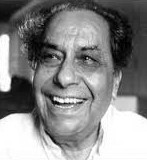
When it comes to Hindi film composer duos, for me there’s none greater than Shankar-Jaikishan. By no means the first (Husnlal Bhagatram, for one, predated them) and definitely not the last (there have been many others, from Laxmikant Pyarelal and Kalyanji Anandji to more recent duos like Anand-Milind), Shankar Jaikishan were unparalleled in the sheer quality of their work. They composed some of Hindi cinema’s best-loved tunes, all the way from Westernized club songs to ghazals, from dreamy love songs to peppy folk numbers. Versatility, finesse, and that ability to appeal to the common janta, to have ordinary folk humming their tunes: these were some traits which set Shankar-Jaikishan apart.

Continue reading