Judgement at Nuremberg (1961)

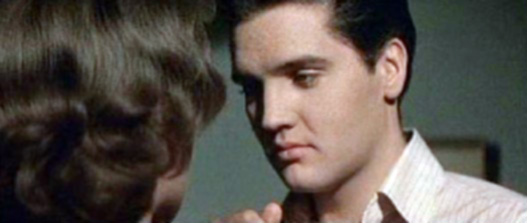
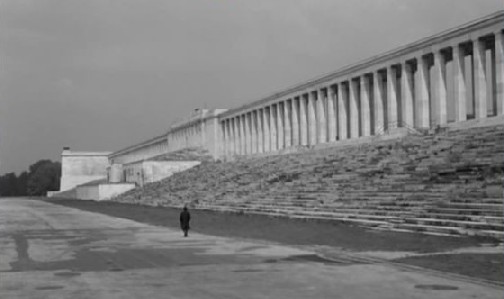
My mother was brought up in a family ruled by a very orthodox old curmudgeon—sorry, gentleman—who believed cinema was inherently evil. This was my great-grandfather, and thanks to his restrictions, the only films my mother and her siblings were allowed to watch were The Ten Commandments and Quo Vadis. After his death, though, the family let themselves go to seed. No, they didn’t start watching all the porn they could lay their hands on (I doubt there was much floating around in the Calcutta of the 60’s, anyway), but they certainly began seeing some films that, while not evil by any stretch of imagination, would probably not have won great-granddad’s approval. The Innocents. The Three Faces of Eve. And this one, a thought-provoking, disturbing film that raises a lot of questions.

Continue reading

The Magnificent Seven (1960)

After having watched Akira Kurosawa’s brilliant Shichi-nin No Samurai last week, I figured it was time to rewatch this film, which goes so far as to mention that it’s based on Shichi-nin No Samurai. For me, The Magnificent Seven has much to recommend it. Firstly, it’s a Western, a genre I’m usually fond of (as long as it steers clear of the run-of-the-mill formulas that John Wayne acted in during the early 30’s—and which, sadly, continued in a lot of films well past the 30’s). Secondly, The Magnificent Seven stars one of my favourite actors, Yul Brynner. Thirdly, it was directed by John Sturges, the very capable man behind classic adventure films like Escape from Fort Bravo, The Great Escape, and Ice Station Zebra.

Continue reading

Hold Back the Dawn (1941)

A few preliminaries before I launch into a synopsis of this little-known but lovely little film.

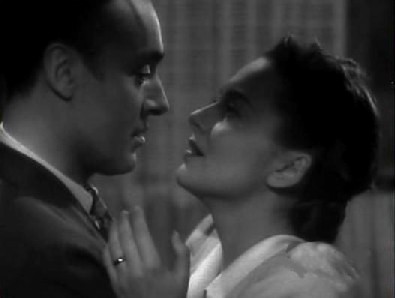
This is the third film of Charles Boyer’s that I’ve reviewed on this blog (the other two are Gaslight and Love Affair). As in Gaslight, in Hold Back the Dawn too Boyer plays a less-than-scrupulous man who marries not for love but for less savoury reasons—after having convinced the woman in question that he’s deeply in love with her.
Now for the coincidence. This is also the third film of Olivia de Havilland’s that I’ve reviewed on this blog (the other two are The Charge of the Light Brigade and Not as a Stranger). As in Not as a Stranger, in Hold Back the Dawn too de Havilland plays a gullible woman duped into marrying a man she’s convinced loves her—though his motives for the marriage are very mercenary.

Continue reading

The Maltese Falcon (1941)

This probably sounds really weird, but The Maltese Falcon (based on a novel by Dashiell Hammett) reminds me of a landed fish. Fresh out of the water and flapping about like mad, its tail swishing from side to side at breakneck speed. One twist here, another twist there, one turn here and another there, never still for a moment. Possibly not the best simile for a film, but I can’t help it: the speed of this film is just so frenetic. I saw it again last night, and found myself struggling to keep pace.

The Maltese Falcon begins with a quick introduction, a paragraph scrolling down the screen to the effect that in 1539, the Knight Templars of Malta paid tribute to Charles V of Spain by sending him a golden falcon encrusted from beak to claw with jewels—but pirates seized the galley carrying it, and the Maltese Falcon was lost, its fate a mystery.

Continue reading

Ocean’s Eleven (1960)

Sabrina Mathew’s latest post is an interesting one that compares the two (1968 and 1999) versions of The Thomas Crown Affair. A couple of things from Sabrina’s review struck me: “The remake is keenly aware that the original got away with a lame robbery only because Steve McQueen planned it. So the remake fixes the problem with a daring art heist…”. And, ”The film is not just content with redoing the heist bit; it also wants to fix the romance by giving it a happy ending.” That reminded me of another film, again with two versions, for which I could quote Sabrina verbatim. Ocean’s Eleven, both the 1960 and 2001 versions, are also about robberies. And in this case too, the remake features a much sleeker robbery than the original—and a happier end.

Continue reading

Bells are Ringing (1960)

I so, so adore this film.

And that, mind you, keeping in mind the fact that I generally don’t think very highly of Hollywood musicals. I have nothing against the music, usually—most of the films had excellent songs—but what really gets my goat is that other than sounding and looking good, few of Hollywood’s musicals have anything substantial to back them up. Look at Oklahoma! or South Pacific (or even Singin’ in the Rain, for that matter): great music, nice looking leads, superb dancing—and that’s it. I can count, on my fingers, musicals that also have worthwhile plots. The Sound of Music. Fiddler on the Roof. And this, a gloriously funny and romantic story about a loony telephone operator and the man she falls in love with.

Dean Martin and Judy Holliday in Bells are Ringing

Continue reading

Oklahoma! (1955)

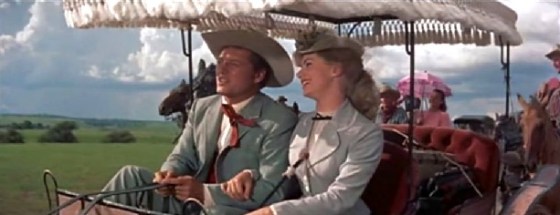
A couple of days back, a friend of mine, well aware of my obsession with old films, forwarded me a few URLs for sites where one can watch classic cinema for free. I had just begun watching Oklahoma!, and by the time I finished, I had a URL to add to my friend’s list. Yep, Sam: you missed this one: youtube, and I don’t mean a film in n number of parts. I mean the songs. Oklahoma!, for those who’d like to see it, is freely available on youtube—watch the songs in sequence, and you’re pretty much done.

Gordon MacRae and Shirley Jones in Oklahoma!

Continue reading

Waterloo Bridge (1940)

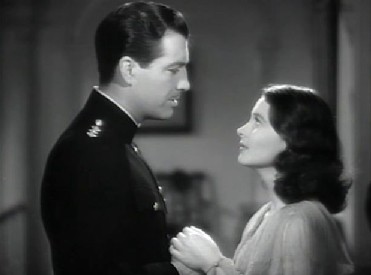
Individually, both Charles Boyer and Irene Dunne said Love Affair was their favourite of the films they’d acted in. Quite an achievement for a film—one reason why I’d put Waterloo Bridge in the same league as Love Affair. The two stars of this film, Robert Taylor and Vivien Leigh, also rated Waterloo Bridge as their favourite of all the films they’d acted in (yes, Vivien Leigh rated this higher even than Gone With the Wind!). Like Love Affair, this is also a love story. And it too takes a very tragic turn midway.

Robert Taylor and Vivien Leigh in Waterloo Bridge

Continue reading

Arsenic and Old Lace (1944)

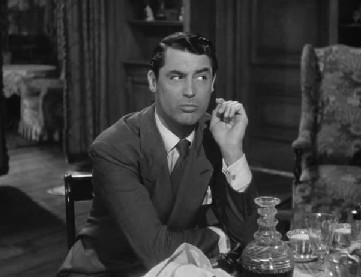
Fellow blogger and Cary Grant fan Sabrina Mathew’s sometime-ago link to this stunning slideshow of the actor made me take a silent vow to do a Grant post soon. It’s taken a while, mainly because I wasn’t able to make up my mind whether I wanted to review Arsenic and Old Lace, Charade, or Operation Petticoat—all classic Grant comedies—but the wait’s finally over. I’ll do Operation Petticoat and Charade later; for now it’s this hilarious, sometimes slapstick, dark comedy directed by Frank Capra, that I remember as being the first Cary Grant film I ever saw. It also remains one of my favourites—across time, genres, actors, everything.

Cary Grant in Arsenic and Old Lace

Continue reading

How to Marry a Millionaire (1953)

Here’s how:

(a) Look like Marilyn Monroe/Betty Grable/Lauren Bacall
(b) Dress as if you were already married to that millionaire
(c) When asked the definition of scruples, open those baby blues wide and say “Huh?”
(d) Be very, very lucky
…which more or less sums up the `strategy’ the three protagonists of this film use to try and hook great (read wealthy) husbands for themselves.

Marilyn Monroe, Betty Grable and Lauren Bacall in How to Marry a Millionaire

Continue reading