Kaala Paani (1958)

Today is the 100th birth anniversary of one of my favourite Hindi film directors, the suspense-specialist Raj Khosla (I hasten to add: I am well aware that that’s a generalization, since Khosla made a lot of films, too, that had nothing to do with the thriller/suspense genre: Mera Gaon Mera Desh, for example; Chirag, Main Tulsi Tere Aangan Ki, Do Badan, etc). But it is Khosla’s prowess with this particular genre that I especially admire, a skill and talent he showcased in classics of the genre such as Woh Kaun Thi? ((1964), Mera Saaya (1966), CID (1956) and Kaala Paani (1958). In each of these films, he managed to combine the classic elements of the Hindi masala film—a romance, a comedic side track, lots of fabulous songs—while making sure that the suspense remained (mostly) taut, the mystery a solid one.

To commemorate Khosla’s birth centenary, I wanted to review one of his suspense films. Several of these (CID, Mera Saaya, Ek Musaafir ek Haseena, Woh Kaun Thi?) I have already reviewed; I was torn between some of the others: Solva Saal, Kaala Paani, and Anita, all of which I have seen at some time or the other. I decided, eventually, that it was time to rewatch Kaala Paani, a film that I’ve watched several times, but too far back to have reviewed it on this blog.

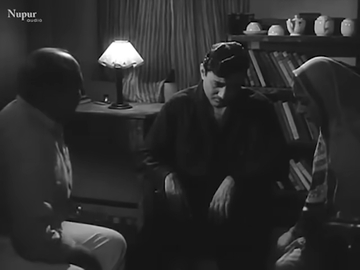
The story begins on a night in Bombay, with a woman (Mumtaz Begum) hurrying through the streets to the home of a family friend, Mr Kapoor (?). She is in great distress, and confides in Kapoor: Karan has discovered the truth. What this truth is we discover when Kapoor hurries to Karan’s home to find Karan (Dev Anand) sitting, looking bereft. He has found out (how, we aren’t told) that his father Shankar Lal has, for the past fifteen years, been incarcerated in Hyderabad jail for the murder of a tawaif named Mala. Not, as Karan has been led to believe all these years, dead.
Continue reading

Aadhi Raat ke Baad (1965)

I dithered over this film for a long time after I’d finished watching it. Should I review it? Should I not? It wasn’t a great film, but it wasn’t terrible, either. It wasn’t as if a review was needed to warn potential viewers off it. Or vice-versa, to alert people to a film they must see.

Eventually, I decided that at least a brief review was in order, because this film had an interesting connect to another film I’ve wanted to watch for a while: Mr X.

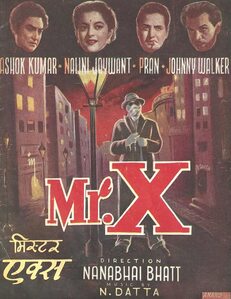
In 1957, Nanabhai Bhatt had directed a science fiction film (borrowing from HG Wells’s novel The Invisible Man) that starred Ashok Kumar and Nalini Jaywant. According to this web page on Mike Barnum’s blog, the film is about a man who ingests a drug that makes him invisible; he uses this invisibility to go on a Robin Hood-esque spree, helping the poor by robbing the rich. The cops, baffled by the invisible man, dub him Mr X.

I’ve long wanted to watch Mr X, mostly because it features one of my favourite N Dutta songs, Laal-laal gaal. The film isn’t available online, at least, or even on DVD, from what I can tell; perhaps there are carefully guarded prints deep in some archive…

Continue reading

Sadhu aur Shaitan (1968)

Cinema looking at itself is not an uncommon feature; there have been several notable films, both in India (Kaagaz ke Phool, Sone ki Chidiya) as well as abroad (Cinema Paradiso, 8½, The Bad and the Beautiful, etc), which are about cinema and film-making. But this film, relatively obscure, really should be part of the annals, simply because of its sheer devotion to Hindi cinema. Not because it’s about film-making, not because there is even (as in Solvaan Saal), a single scene on the sets of a film. But because it celebrates Hindi cinema in so many ways, on so many levels.

Sadhu aur Shaitan begins by introducing us to the eponymous ‘sadhu’ of the story: Sadhuram (Om Prakash), a widower who lives with his two children Ganesh (Master Shahid) and Munni (Baby Fauzia), and the maid Ramdeyi (Dulari) who looks after home and the children. Sadhuram is a somewhat excessively ‘good and righteous’ man, the living image of piety (all a little over the top as far as I’m concerned, but at least he isn’t stuffy about his righteousness).

Continue reading

Ganga ki Lehren (1964)

Ganga ki LehrenWho, in case you’re curious, include Dharmendra, Kishore Kumar, Nasir Hussain, Kumkum, Hari Shivdasani, Rehman, Asit Sen, Azra, and Aruna Irani, besides Telugu star Savitri. With, in smaller roles, everybody from Tuntun, Brahm Bhardwaj, Mridula Rani, Manorama and Jankidas, to child star Master Shahid. [All that was missing was wonder dog Tommy]. Continue reading

Ek Musafir Ek Haseena (1962)

My post on how similar classic Hollywood actually is to classic Bollywood omitted a popular cliché: amnesia. So, if Greer Garson’s character could fall in love with a soldier who’d lost his memory in Random Harvest, Sadhana can do so too, in Ek Musafir Ek Haseena.
Two years after they both debuted in the generally-enjoyable Love in Simla, Joy Mukherji and Sadhana acted together again in this film. It has lots to recommend it: a very beautiful lead actress (I personally think Sadhana looks her best in this film), a superb musical score by O P Nayyar, Raj Khosla’s direction—then why, at the end of two and a half hours, do I feel a sense of dissatisfaction?

Continue reading

Dil Bhi Tera, Hum Bhi Tere (1960)

I was initially undecided about whether I should expend any energy on writing a review for this film. It wasn’t great—not even good, really. On the other hand, it wasn’t a pain to sit through and offered no unintentional hilarity of the Leader brand. Instead, it was a meandering, sometimes pointless film with little development of characters and indifferent screenplay.
Why then this review? Simply because this was the first film of a charmingly gawkish youth who went on to become one of Hindi cinema’s biggest stars—and one of my favourite actors.

Dharmendra in Dil Bhi Tera, Hum Bhi Tere

Continue reading