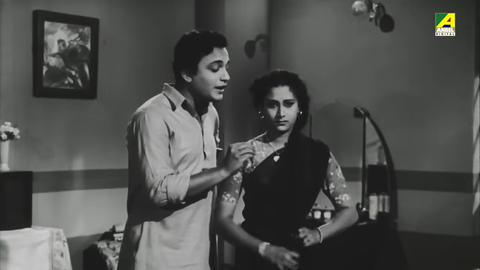
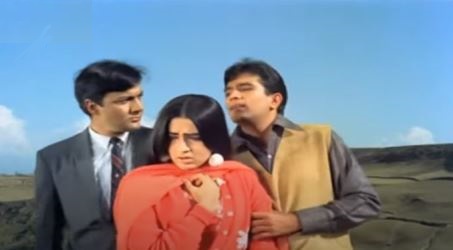
Il Giorno della Civetta (The Day of the Owl), 1968

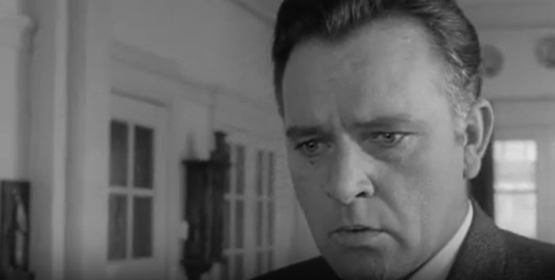
AKA Mafia, the singularly apt title of this Franco-Italian film for its release in America. Based on a novel by Leonardo Sciascia, the film was directed by Damiano Damiani and starred Claudia Cardinale, Franco Nero, and Lee J Cobb.

Claudia Cardinale was the reason I watched this film: she passed away on September 23, 2025. I had just paid tribute then to Robert Redford, and coming on the heels of his death, Cardinale’s death was even more saddening. Two greats of Golden Age cinema, one after the other. Two people who were contemporaries (though they didn’t co-star in any films). Two people who left a mark.

Claudia Cardinale was born in Tunisia and made her debut in 1958 opposite Omar Sharif in the French-Tunisian film Goha. She went on to act in several Italian films, and then moved to Hollywood—for a few years, after which she returned to Europe and resumed work in French and Italian films.

Continue reading

It’s All About Context: Ten Songs

When I create song lists, I always include only songs form films that I’ve watched. This is a rule I’ve imposed on myself, and it’s something that’s drawn questions, sometimes even accusatory. Why would I do that? I am asked.

Besides the fact that this is my blog (and so I get to govern it!), I have usually responded to that question by saying that some songs are best known in context.

Some songs. In fact, not very many. Most Hindi film songs—whether romantic, or depressed, or philosophical (or whatever other emotion)—are almost invariably neatly stitched together with the picturization. What’s happening onscreen is what’s echoed in the song.

Not always, though. There are a few songs where the song’s lyrics, or the picturization, are deceptive. If you don’t know the context, you may well end up interpreting the song as something very different from how it appears in the film.

Continue reading

Butch Cassidy and the Sundance Kid (1969)

RIP, Robert Redford.

I will not pretend that Robert Redford was my favourite actor. In fact, offhand, I’d be hard put to remember how many (or, embarrassingly, how few) of his films I’ve watched. All the President’s Men, yes; A Bridge Too Far, yes. A few others, none of them (like Captain America: Winter Soldier) films for which he’s known.

Mea culpa. It isn’t a reflection on Redford, but on me, because most of my life has been spent watching Hollywood from the 30s to the 50s; my favourite era in Hollywood was over by the time Redford burst upon the scene. But it says a lot for him that despite that, I liked him in the few films of his that I watched. A great actor (and so handsome!). Deeply committed to the cause of environmental conservation, and by all accounts, a genuine, warm-hearted person.

Continue reading

Anita (1967)

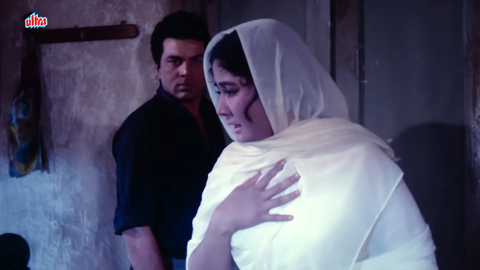
When, for May 31st this year (the 100th birth anniversary of film director Raj Khosla), I wanted to review one of his films, Anita was on my shortlist. Over the course of the years I’ve been writing this blog, I’ve reviewed several of Khosla’s films, including two of the three films (Woh Kaun Thi?, Mera Saaya and Anita) that comprise Khosla’s Sadhana suspense trilogy. Since Manoj Kumar had also passed away earlier this year, it seemed fitting to watch and review Anita, the last of the three films, and a film that starred Manoj Kumar opposite Sadhana.

For a tribute to Khosla, I ended up reviewing Kaala Paani instead. But I did watch Anita (a film that I’d last seen so long back, I remembered only the basics of it). And it seemed appropriate to review it too.

Therefore…

The film begins with a short, rather abrupt scene in which Seth Biharilal (Sajjan) visits a somewhat shady-looking pandit (Ulhas). Biharilal has brought along the horoscope of his 19-year-old daughter Anita for the pandit to have a look at, and to comment upon. The pandit has a peek, and says that this year is going to be really vile for Anita.

Continue reading

Aar-Paar (1954)

I saw this on the big screen, on August 10, 2025.

Given that getting to see a Hindi film as old as this on the big screen, as a proper commercial release (re-release, in this case), is a very rare treat, it needs to be put up front.

To mark the birth centenary of Guru Dutt, the National Films Division Corporation of India (NFDC) and the National Film Archive of India (NFAI) collaborated to restore and re-release several of Guru Dutt’s films. These were shown at PVR and Cinépolis cinema halls across India on August 8th through to 10th. Left to myself, I would happily have seen all the films that were being screened; but duty calls. August 9th was rakshabandhan, and we had family coming over for lunch. I was busy all through the previous day cleaning and cooking and generally preparing, and then again through half of the next day. But, once our guests had eaten, I scurried off cinema-wards to watch Sahib Biwi aur Ghulam. The following day, I managed to watch Aar-Paar.

Continue reading

Ten of my favourite ship songs

Many years ago, on this blog, I’d posted a list of boat songs. Boats happen to be fairly popular ‘platforms’ (so to say) for songs. For philosophical songs, for romantic songs, for songs of everything from despair to hope. There are songs on motorboats, on rafts, on rowboats and shikaras and whatnot. Many of Hindi cinema’s most famous songs from before the 70s were boat songs.

Much rarer, though, have been ship songs. Ships, after all, aren’t usually a part of most narratives (they’re less easily accessible, plus of course require a greater outlay on the part of whoever’s financing the film). Shipboard songs, I’ve realized, fall into a few fairly specific brackets. Either the singer(s) is/are employed on board a ship (as naval officers, deck hands, even pirates), or they are wealthy people travelling overseas. The latter, especially, became a more common theme in the late 1960s, when several films had a cruise as an important part of the storyline, invariably as a setting for a blossoming romance.

Continue reading

Book Review: Lata Jagtiani’s ‘Thank You, Guru Dutt!’

Lata Jagtiani’s Thank You, Guru Dutt! was released a few months back, to mark Guru Dutt’s birth centenary year. This is a book that follows on the heels of several other (well-acclaimed) books about Guru Dutt, his life and cinema: Nasreen Munni Kabir’s Guru Dutt: A Life in Cinema; Yasser Usman’s Guru Dutt: An Unfinished Story; and Ten Years with Guru Dutt: Abrar Alvi’s Journey, by Sathya Saran, among others. I will admit that I haven’t read any of the aforementioned books, so for me Jagtiani’s book was a first, in that sense.

Continue reading

Travels in Karnataka, Part 3: Nagarhole

This is the third and final part of a three-part travelogue, about our recent travels in Karnataka. The first part, about Mangalore, is here, and the second part, about Coorg (specifically Madikeri) is here.

From Coorg, we were to drive down to Nagarhole, an approximately three-hour journey. While researching Coorg, I had marked a couple of places that seemed to be extremely popular tourist attractions, and had been wondering if either of these might be visited while we were in Coorg or midway to Nagarhole. One of these we did manage to see on a day trip from Gateway Coorg: the Dubare Elephant Camp.

Entrance to Dubare
Continue reading

Where the Boys Are (1960)

RIP, Connie Francis, the voice of my teenage years.

Continue reading

Baaz (1953)

Today, July 9, 2025, marks the 100th birth anniversary of one of Hindi cinema’s best-known film directors. Born in Mysore on this day in 1925 as Vasant Kumar Shivshankar Padukone, Guru Dutt studied in Calcutta before joining Uday Shankar’s India Culture Centre (in Almora, present-day Uttarakhand) to train in dance. By the time he turned 19, he had moved to Pune, where he began working as a choreographer for Prabhat Studios. By the time Prabhat Studios folded up (in the early 1950s), Guru Dutt had formed a close friendship with Dev Anand, because of whom he received his first break as a director: in 1951, he directed Navketan’s Baazi, starring Dev Anand, Geeta Bali and Kalpana Karthik in a noir thriller that was to become a defining film for Navketan: edgy, stylish, dark, very urban.

Guru Dutt is today revered more for the hard-hitting, cynical cinema he made: films like Pyaasa, Sahib Bibi aur Ghulam and Kaagaz ke Phool hold up the mirror to a world that is selfish, cruel and opportunistic. These are bitter films, films that plumb the depths of human nature; films that—despite following most of the standard tropes of commercial Hindi cinema (a romance between the lead couple; a fair number of songs; a comic character invariably played by Johnny Walker)—were quite different from other Hindi films.

These, too, are the films for which Guru Dutt is mostly remembered today. Is that because over the decades, people have seen how the tragedy and turmoil of Guru Dutt’s personal life was probably reflected in films like these? Is there a voyeuristic tendency to try and spot the man behind the director?

But Guru Dutt also made other films, on other subjects. This one, for instance, an adventure/patriotic film set on the high seas, with Geeta Bali starring as the eponymous ‘Baaz’ (falcon), a woman who becomes a pirate to free her land of a colonial tyrant.

Continue reading