The Maltese Falcon (1941)

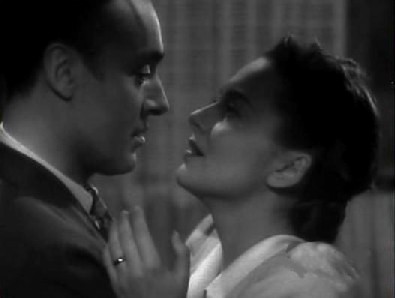
This probably sounds really weird, but The Maltese Falcon (based on a novel by Dashiell Hammett) reminds me of a landed fish. Fresh out of the water and flapping about like mad, its tail swishing from side to side at breakneck speed. One twist here, another twist there, one turn here and another there, never still for a moment. Possibly not the best simile for a film, but I can’t help it: the speed of this film is just so frenetic. I saw it again last night, and found myself struggling to keep pace.

The Maltese Falcon begins with a quick introduction, a paragraph scrolling down the screen to the effect that in 1539, the Knight Templars of Malta paid tribute to Charles V of Spain by sending him a golden falcon encrusted from beak to claw with jewels—but pirates seized the galley carrying it, and the Maltese Falcon was lost, its fate a mystery.

Continue reading

Akeli Mat Jaiyo (1963)

Akeli Mat Jaiyo (‘Don’t Go Alone’—specifically addressed to a female) is, if nothing else, very aptly titled. Because if you gallivant where you’re not supposed to, you run the risk of being pursued by a moron whose best friend is a ventriloquist’s dummy. You may end up betrothed to somebody whose family includes a father with a loony sense of humour. Worst of all, you may have to stake your all on saving the ‘life’ of that ventriloquist’s dummy. So yes, akeli mat jaiyo. No way.

Continue reading

Ocean’s Eleven (1960)

Sabrina Mathew’s latest post is an interesting one that compares the two (1968 and 1999) versions of The Thomas Crown Affair. A couple of things from Sabrina’s review struck me: “The remake is keenly aware that the original got away with a lame robbery only because Steve McQueen planned it. So the remake fixes the problem with a daring art heist…”. And, ”The film is not just content with redoing the heist bit; it also wants to fix the romance by giving it a happy ending.” That reminded me of another film, again with two versions, for which I could quote Sabrina verbatim. Ocean’s Eleven, both the 1960 and 2001 versions, are also about robberies. And in this case too, the remake features a much sleeker robbery than the original—and a happier end.

Continue reading

Ten of my favourite Johnny Walker songs

When I first began blogging about old cinema, my husband asked me, “So will you do a list of Johnny Walker’s songs sometime?” I thought about it (not long; I didn’t need to) and decided yes. Badruddin Jamaluddin Qazi, aka Johnny Walker, definitely deserves a ‘top ten’ list all his own. This, therefore, on what would have been his 83rd birthday, is a list of songs through which he frolics and flirts, teeters and tumbles—just, generally, keeps me glued to the screen. These are all from films of the 50’s and 60’s that I’ve seen, in no particular order.

Johnny Walker (ne Badruddin Jamaluddin Qazi)

Continue reading

Bells are Ringing (1960)

I so, so adore this film.

And that, mind you, keeping in mind the fact that I generally don’t think very highly of Hollywood musicals. I have nothing against the music, usually—most of the films had excellent songs—but what really gets my goat is that other than sounding and looking good, few of Hollywood’s musicals have anything substantial to back them up. Look at Oklahoma! or South Pacific (or even Singin’ in the Rain, for that matter): great music, nice looking leads, superb dancing—and that’s it. I can count, on my fingers, musicals that also have worthwhile plots. The Sound of Music. Fiddler on the Roof. And this, a gloriously funny and romantic story about a loony telephone operator and the man she falls in love with.

Dean Martin and Judy Holliday in Bells are Ringing

Continue reading

Anmol Ghadi (1946)

Ghadi, in Hindi, can mean either a watch (as in a wristwatch or a pocket watch), or a brief length of time. I went through a good bit of life thinking this film was about a moment in time—romantic, most probably.
So this is where I own up: enlightenment dawns, buddhoo becomes Buddha. The ghadi in Anmol Ghadi is actually a watch: a pocket watch with a fob and chain. And it plays an important part in the story of Chandra and Lata, Prakash and Basanti, the protagonists of this tale.

Noor Jehan in Anmol Ghadi

Continue reading

Samadhi (1950)

Two confessions, to start with. Firstly, although I am very fond of Ashok Kumar—I think he was a great actor—I find it difficult to envisage him as the dashing hero of a spy thriller. Secondly, I think 50’s and 60’s Hindi cinema (with the notable exception of Haqeeqat) never quite manages to depict war properly. Battlefields are too often obviously sets or, at the most, a bunch of extras letting off firecrackers in a patch of woodland.
So Samadhi, despite being 1950’s top-grossing Hindi film and starring the beautiful Nalini Jaywant—was a film that I approached with trepidation. Which was perhaps just as well, because if I’d begun watching it with expectations way up there, I’d probably have been disappointed. As it was, by the end, I decided it wasn’t bad; in fact, pretty watchable.

Ashok Kumar and Nalini Jaywant in Samadhi

Continue reading

Oklahoma! (1955)

A couple of days back, a friend of mine, well aware of my obsession with old films, forwarded me a few URLs for sites where one can watch classic cinema for free. I had just begun watching Oklahoma!, and by the time I finished, I had a URL to add to my friend’s list. Yep, Sam: you missed this one: youtube, and I don’t mean a film in n number of parts. I mean the songs. Oklahoma!, for those who’d like to see it, is freely available on youtube—watch the songs in sequence, and you’re pretty much done.

Gordon MacRae and Shirley Jones in Oklahoma!

Continue reading

Mirza Ghalib (1954)

Okaaay. I’m finally back from a whirlwind book tour. I gave endless interviews (I can now answer questions in my sleep); was wined and dined—great ilish in Kolkata and awesome Chettinad food in Chennai—and even ended up on youtube. I met some likeable and interesting people, including crime writer Zac O’Yeah (in conversation with me at the Bangalore do) and blogger-cum-bestselling writer Amit Varma, author of the delightful My Friend Sancho—he was in conversation with me in Mumbai and had some nice things to say about my book. And yes (I can’t resist the temptation to blow my own trumpet!), others have said good things about The Englishman’s Cameo, too: Pradeep Sebastian, writing in BusinessWorld, for instance; and Vivek Tejuja on http://www.goodreads.com.

So, having done my bit of shameless self-promotion—and wound up at exactly the place I wanted this post to go—I’ll begin with this review. Like me, the Urdu poet Mirza Ghalib was a Dilliwala. Like me, he too was a writer (and before I have Ghalib fans leaping at my throat for daring to lump the two of us together: no, I do not compare myself to the man. He was pure genius. Not so with me). And like me, Ghalib loved to hear his writing being praised.

Bharat Bhushan in and as Mirza Ghalib

Continue reading

Ten of my favourite S D Burman songs

Sachin Dev Burman was born on October 1, 1906, a scion of the royal family of Tripura—and a king in the world of Hindi film music. From his first major hit—Mera sundar sapna beet gaya (Do Bhai, 1947)—on, Burman made a name for himself with songs that ran the gamut from folk to Western, from hauntingly poignant to unbeatably seductive (remember Waqt ne kiya kya haseen sitam? Remember Kya ho phir jo din?) To celebrate Burman Da’s music, therefore, this post.
To narrow down my list of S D Burman favourites to a mere ten, I’ve had to resort to a few self-imposed restrictions. All of these songs are, as always, from the 50’s and 60’s, and from films that I’ve seen. In addition, they’re songs that don’t just sound good, but are wonderful in other ways too: songs that I value not just for the music, but also for the lyrics, the picturisation, the feel of the song. Enjoy!

Sachin Dev Burman stamp released by the Indian Postal Department

Continue reading