RIP, Connie Francis, the voice of my teenage years.


(The first part of this three-part travelogue, about our sojourn in Mangalore, can be found here).
The district headquarters of the hill region of Kodagu (or Coorg, as the British dubbed it) is Madikeri, and this was to be our second halt on our trip through this part of Karnataka. Strictly speaking, we weren’t going to be staying within the town of Madikeri, but just about 15- or 20-minutes’ drive from there, at the Gateway Coorg, a Taj Hotels property. It’s a resort, spreading across 45 acres of land, which—besides the usual buildings, swimming pool, gardens, children’s play area, etc—also included a coffee plantation. And much more, as we soon discovered.


Today, July 9, 2025, marks the 100th birth anniversary of one of Hindi cinema’s best-known film directors. Born in Mysore on this day in 1925 as Vasant Kumar Shivshankar Padukone, Guru Dutt studied in Calcutta before joining Uday Shankar’s India Culture Centre (in Almora, present-day Uttarakhand) to train in dance. By the time he turned 19, he had moved to Pune, where he began working as a choreographer for Prabhat Studios. By the time Prabhat Studios folded up (in the early 1950s), Guru Dutt had formed a close friendship with Dev Anand, because of whom he received his first break as a director: in 1951, he directed Navketan’s Baazi, starring Dev Anand, Geeta Bali and Kalpana Karthik in a noir thriller that was to become a defining film for Navketan: edgy, stylish, dark, very urban.
Guru Dutt is today revered more for the hard-hitting, cynical cinema he made: films like Pyaasa, Sahib Bibi aur Ghulam and Kaagaz ke Phool hold up the mirror to a world that is selfish, cruel and opportunistic. These are bitter films, films that plumb the depths of human nature; films that—despite following most of the standard tropes of commercial Hindi cinema (a romance between the lead couple; a fair number of songs; a comic character invariably played by Johnny Walker)—were quite different from other Hindi films.
These, too, are the films for which Guru Dutt is mostly remembered today. Is that because over the decades, people have seen how the tragedy and turmoil of Guru Dutt’s personal life was probably reflected in films like these? Is there a voyeuristic tendency to try and spot the man behind the director?
But Guru Dutt also made other films, on other subjects. This one, for instance, an adventure/patriotic film set on the high seas, with Geeta Bali starring as the eponymous ‘Baaz’ (falcon), a woman who becomes a pirate to free her land of a colonial tyrant.

A few years ago, I decided that every year we would visit at least one Indian national park (or wildlife sanctuary). We began with Corbett; then Kaziranga, Little Rann of Kutch, Sariska… and earlier this year, my daughter suggested Nagarhole. The genesis of this suggestion lay in a book, Sutapa Basu’s Murder in the Jungle, which I had gifted the LO (‘Little One’, though we all agree that at 11, she’s no longer little). I had met Sutapa at the book event where I bought this book, and chatting with the author, was told that Nagarhole is one of her favourite wildlife parks in the country. A snippet I passed on to the LO, who was even more enthused after she’d read the book, which is set in Nagarhole.
So Nagarhole it was. But to go halfway across the country just to see a national park, especially when it’s in a part of the country the LO has never been to, seemed pointless. A longer trip, a more detailed itinerary, seemed logical.
I will not waste time and space describing the many iterations our itinerary went through, the many options that we considered before finally settling on a doable journey. We would fly from Delhi to Mangalore, and after staying a day there, we’d drive down to Madikeri (the district headquarters of Coorg). A couple of days would be spent exploring Madikeri and around, and then we’d go to Nagarhole, to spend three days there before heading back to Mangalore to catch the flight back home.
I will admit I knew next to nothing about Mangalore before I began planning this trip. Thanks to some research I’d done some years back on Christmas traditions and Christmas foods (for this book), I knew that Mangalore had been occupied by the Portuguese, who—as in Goa, further down the west coast—had left their mark, in the vibrant Catholic community of Mangalore. I knew, too, that Mangalore has some pretty mouthwatering food.


Does Udan Khatola hold some sort of record for largest number of love/lust triangles?
Here’s a rough count:
There’s the unnamed aviator, the pardesi (played by Dilip Kumar) who is in love with the local peshwa’s daughter Soni. Who, in turn, loves him back.

Given that I reviewed Raj Khosla’s 1958 film Kaala Paani—based on AJ Cronin’s novel Beyond This Place—last month, I thought it appropriate to also watch and review an English-language adaptation of the same book. And, as always happens when I do something of the sort, to compare the two, see what they do with the same source material. Here, I must point out that that I haven’t read Cronin’s novel, so I cannot say how much Beyond This Place (directed by Jack Cardiff and with a screenplay by Ken Taylor) resembled Cronin’s book.
But, to begin at the beginning.
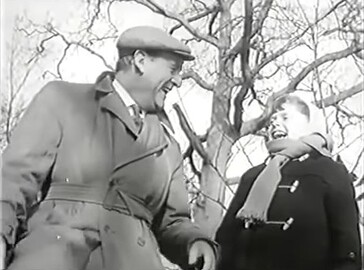
As the credits roll, we see a man, Patrick Mathry (Bernard Lee) and a boy, Patrick’s son Paul (Vincent Winter) running through the woods, laughing and obviously happy in each other’s company.
Today is the 100th birth anniversary of one of my favourite Hindi film directors, the suspense-specialist Raj Khosla (I hasten to add: I am well aware that that’s a generalization, since Khosla made a lot of films, too, that had nothing to do with the thriller/suspense genre: Mera Gaon Mera Desh, for example; Chirag, Main Tulsi Tere Aangan Ki, Do Badan, etc). But it is Khosla’s prowess with this particular genre that I especially admire, a skill and talent he showcased in classics of the genre such as Woh Kaun Thi? ((1964), Mera Saaya (1966), CID (1956) and Kaala Paani (1958). In each of these films, he managed to combine the classic elements of the Hindi masala film—a romance, a comedic side track, lots of fabulous songs—while making sure that the suspense remained (mostly) taut, the mystery a solid one.
To commemorate Khosla’s birth centenary, I wanted to review one of his suspense films. Several of these (CID, Mera Saaya, Ek Musaafir ek Haseena, Woh Kaun Thi?) I have already reviewed; I was torn between some of the others: Solva Saal, Kaala Paani, and Anita, all of which I have seen at some time or the other. I decided, eventually, that it was time to rewatch Kaala Paani, a film that I’ve watched several times, but too far back to have reviewed it on this blog.
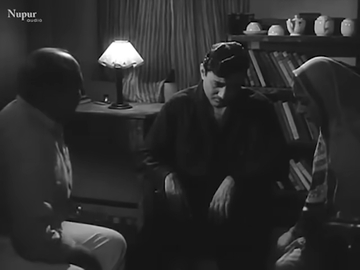
The story begins on a night in Bombay, with a woman (Mumtaz Begum) hurrying through the streets to the home of a family friend, Mr Kapoor (?). She is in great distress, and confides in Kapoor: Karan has discovered the truth. What this truth is we discover when Kapoor hurries to Karan’s home to find Karan (Dev Anand) sitting, looking bereft. He has found out (how, we aren’t told) that his father Shankar Lal has, for the past fifteen years, been incarcerated in Hyderabad jail for the murder of a tawaif named Mala. Not, as Karan has been led to believe all these years, dead.
I was reminded of this film the other day, because I was lecturing at a Delhi college on historical detective fiction, and ended up mentioning And Then There Were None/Ten Little Indians (no, it’s not historical detective fiction, but I wanted to check how many people in the audience had read this book). The novel, first published in 1939, is Agatha Christie’s most popular book (also, the world’s top-selling mystery book), and one which Christie described as being the most difficult one to write. It has been adapted to screen multiple times, in different languages (in Hindi, as Gumnaam, which sadly did not credit Christie even though the film was very obviously based on the book).
I have reviewed—many years ago—an earlier film adaptation, And Then There Were None (1945), directed by René Clair, and I’ve reviewed Gumnaam too, but decided it was high time I watched a later version. This one, directed by George Pollock.
Ten Little Indians gets off to a flying start, the credits rolling as eight guests arrive by train at a snowy, deserted-looking railway station. They proceed, first by horse-drawn carts and then by cable car, up to a grand (but forbidding-looking) mansion situated high up on a rocky, lonely mountain. There, they are met by a couple of servants: Grohmann (Mario Adorf) and his wife (Marianne Hoppe).
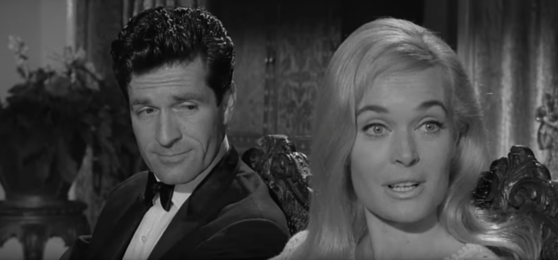
The Grohmanns show the guests to their rooms. None of these guests have ever met each other, though from the curious looks some of them bestow on the others, it’s obvious they’re at least interested. The American Hugh Lombard (Hugh O’Brian) and the host’s newly-appointed secretary, Ann Clyde (Shirley Eaton) seem, for instance, to like what they see.
I must begin this list with a disclaimer regarding that title: no, not really small town. However, a title that went ‘Tier 2 and Below Cities’ would be just too clunky. So give me some leeway here.
When I was watching Sapan Suhaane a few months back, the one song that really stayed with me was Naam mera Nimmo muqaam Ludhiana. Not only because it’s so catchy and Helen is so vivacious, but also because of the words. Why Ludhiana, I wondered. Was Shailendra thinking of Sahir when he wrote the lyrics of this song? Or did Ludhiana just seem to fit the metre and the rhyme scheme well? (It does, and really well).
That thought led to another: all the other songs that, like this one, also refer to the smaller towns of India. The really big cities—the metropolitan agglomerations like Bombay (a particular favourite, of course, given that the Hindi film industry is based there and most films have Bombay as a setting) or Delhi or even Kolkata—have plenty of references to them in song. But the smaller cities, the towns: they are rather more elusive. Not, however, completely missing. And that was what I set out to find: songs that mention smaller cities and towns (not the metros).
In the original Japanese, Ten to Sen. The English title is also often translated as Points and Lines, which was how I originally saw it being referred to.
In a cinema that—at least to the outside eye—seems to be dominated by the works of directors like Akira Kurosawa and Yasujiro Ozu, films that are rather more ‘pure entertainment’ tend to get overlooked. The amusing yet insightful little look at childhood, Ohayo (1959), for example; or this classic noir, a police procedural that revolves around trains: their schedules, their stations, their networks… and how they (along with a ferry and various aeroplane routes) might have been instrumental in helping a murderer pull off a crime.
The story begins on a bleak and deserted seashore, where two dead bodies have been found. The cops from the Fukuoka Police Department have come to investigate, and seem to have reached a consensus that this is a case of a double suicide: everything points to it. A man and a woman, her head sweetly pillowed on his arm, lying stretched out beside each other. The police doctor comes to the conclusion that they’ve died of cyanide poisoning.

 Dustedoff