Seven years back, on a trip to London, we decided we had to eat at a Michelin star restaurant. The choice, after much juggling between budget and location and cuisines we like, ended up being Yauatcha, in Soho. We loved … Continue reading
When a restaurant’s cuisines are listed as ‘North Indian, Chinese, Thai, Asian, Continental’, I tend to raise my eyebrows and wonder which—if any—they are really able to do well. In my experience, multi-cuisine restaurants are invariably flops. Town Hall, newly … Continue reading
Basant Lok Market was, till the 90s, one of South Delhi’s most popular places to hang out—and then stand-alone cinemas gave way to multiplexes. Priya Cinema, the main attraction in the market, suddenly found itself (despite a plush new look) … Continue reading
About two decades back, Thai restaurants were all the rage in Delhi. There was (or so it seemed) one in almost every major market, and a chain—Bangkok Degree 1, 2 and 3—had also set up shop. It looked as if Thai food, with its curry-like flavours, its spice and freshness and obvious points of appeal to Indian palates, was here to stay.
Then there was an odd shift. Every other Oriental restaurant (even those which proclaimed themselves as Chinese) began serving Thai curries and rice. That may have been the only Thai dish on their menus, but it was there, often in a not-at-all-authentic form. And the primarily Thai restaurants retreated into the background, either shutting down or just going downhill.
We have always been very fond of Thai food, so this, of course, was a bit of a blow for us. And there was much excitement when we discovered (on a Facebook foodies group) that a Thai restaurant had opened in Greater Kailash’s N Block Market. Someone who’d eaten there had praised the authenticity of the food, so we were especially keen to check it out. Within hours of hearing about Dao, we’d booked a table for Sunday lunch here with my sister and brother-in-law.
My husband and I end up visiting Select CityWalk Mall every other week or so, invariably combining shopping with lunch, followed by coffee and cake, mostly at either The Coffee Bean and Tea Leaf or Starbucks. When we saw that … Continue reading
Middle Eastern cuisine is a firm favourite with both my husband and I. We love the flavours, we love the textures and the light, fragrant dishes—all the way from relatively rich rice-and-meat dishes to simple pita-olive oil-za’atar snacks. So, when … Continue reading
Amongst India’s best-known museums, Hyderabad’s Salarjung has the distinction of being possibly the largest collection of art and artefacts built up by a single man: Mir Yousuf Ali Khan (Salarjung III). The Salarjungs were one of Hyderabad’s most important aristocratic … Continue reading
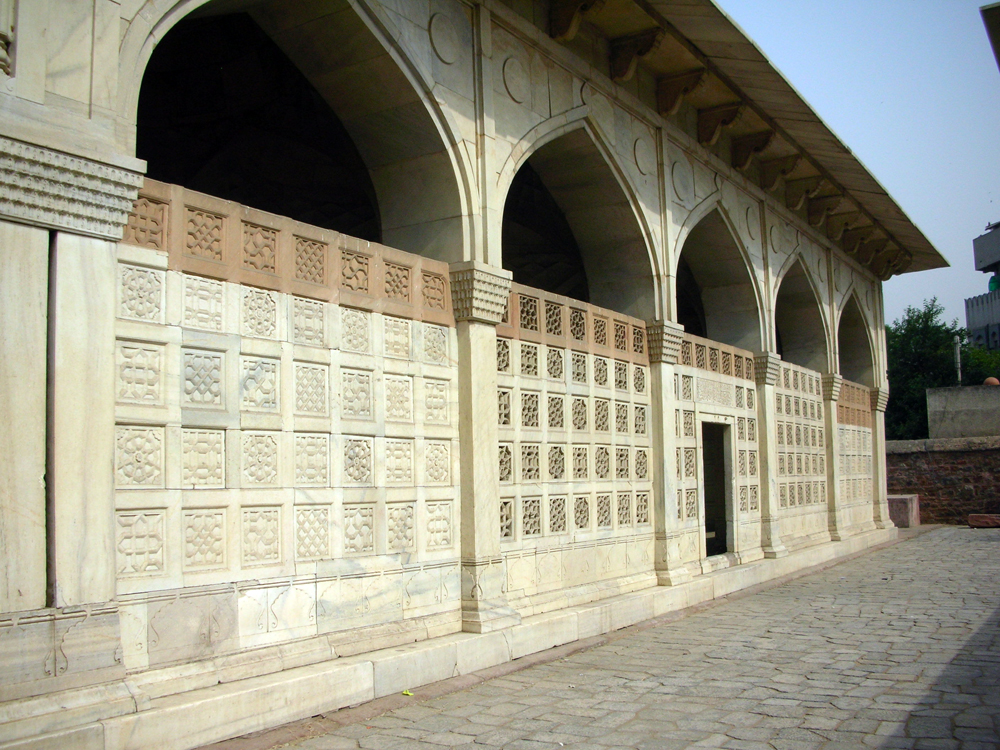
‘Seven Tombs’—the name by which this tomb complex in Hyderabad, one of the city’s major heritage attractions, is known—is very deceptive. Firstly, because while the large tombs, those of various rulers of the Qutb Shahi dynasty, do total up to seven, there are dozens of other tombs, of everybody from dancers to physicians to queens. And more, making this possibly the largest necropolis in the Deccan. Secondly, there aren’t just tombs in this complex; there are also several other types of buildings.
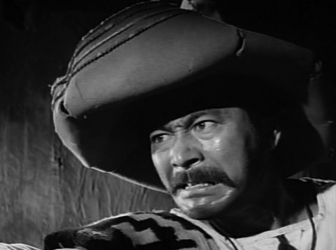
Or, if you want the complete, expanded name, Ugetsu Monogatari (Tales of Moonlight and Rain), named for the collection of supernatural stories by 18th century Japanese writer, Ueda Akinari. Two of the stories from this book—Asaji ga Yado (House amid the Thickets) and Jasei no In (Lust of the White Serpent) were adapted, and directed by Kenji Mizoguchi in what was to become one of the most highly acclaimed Japanese films of all time: Ugetsu went on to win the Silver Lion at the Venice Film Festival; has been listed as one of the best films made in Sound and Sight magazine’s top ten critics poll; and has appeared in countless other ‘best movies’ lists.
Without wasting more time on listing its achievements, though, something about what the story is all about.
We begin with a brief introduction to the time and place. This is 18th century Japan; a civil war is raging; and in a small rural community, the villagers are trying hard to keep body and soul together despite the violence that surrounds them. When we get into the story proper, it’s to find a potter, Genjûrô (Mayasuki Mori), loading a consignment of his pottery onto a cart to take to market.
Of the forts of the Deccan, Golconda is one of the most famous—and it’s one of Hyderabad’s major tourist attractions. We’d decided this had to be among the first sights we visited, so after we’d seen the Qutb Shahi Tombs, … Continue reading