Point and Line (1958)

In the original Japanese, Ten to Sen. The English title is also often translated as Points and Lines, which was how I originally saw it being referred to.

In a cinema that—at least to the outside eye—seems to be dominated by the works of directors like Akira Kurosawa and Yasujiro Ozu, films that are rather more ‘pure entertainment’ tend to get overlooked. The amusing yet insightful little look at childhood, Ohayo (1959), for example; or this classic noir, a police procedural that revolves around trains: their schedules, their stations, their networks… and how they (along with a ferry and various aeroplane routes) might have been instrumental in helping a murderer pull off a crime.

The story begins on a bleak and deserted seashore, where two dead bodies have been found. The cops from the Fukuoka Police Department have come to investigate, and seem to have reached a consensus that this is a case of a double suicide: everything points to it. A man and a woman, her head sweetly pillowed on his arm, lying stretched out beside each other. The police doctor comes to the conclusion that they’ve died of cyanide poisoning.

Continue reading

Mela (1948)

I have never really wanted to watch this film, the main reason behind that being a long-ago comment by my father, saying that it was a ‘serious’ film. Which meant, basically, that you shouldn’t expect a happy ending. Whatever may happen before that—starry-eyed romance, good songs, even some humour—is all the light-heartedness you could hope for. When tragedy came, it would pile up.

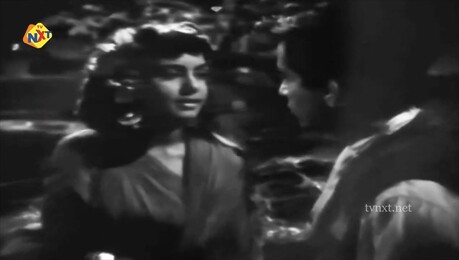
Mela (which I ended up watching mostly for the songs, and partly because I like both Dilip Kumar as well as Nargis) gets off to a bad start, because it begins with gloom and doom. Mohan (Dilip Kumar), old and sad-looking, is released from prison after what seems to be a long, long time in jail. He goes out into the wide world, and walking along, comes across someone singing Yeh zindagi ke mele, while—in the background—crowds of happy, laughing people throng a fair, whirling about on carousels, milling about stalls, enjoying themselves.

Continue reading

Kabuliwala (1957)

This is a film I’ve been meaning to watch for a long time now—ever since someone told me that the 1961 Balraj Sahni Kabuliwala (in Hindi) wasn’t a patch on the Bengali version, directed by Tapan Sinha and starring Chhabi Biswas as the eponymous Afghan. I was reminded of it again last year when, for Tapan Sinha’s birth centenary celebrations, Anu (from Conversations over Chai) wrote this wonderful review of the film.

Then, some time back, I began reading 100 Indian Stories (edited by AJ Thomas, published by Aleph Book Company, 2025)—and one of the very first stories in the collection was Rabindranath Tagore’s classic The Kabuliwala.

I figured it was about time I watched Tapan Sinha’s take on the story.

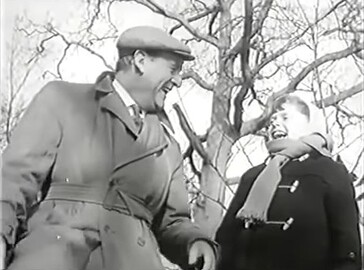
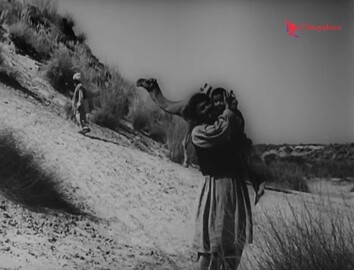
The story begins with scenes (no dialogue, only somewhat sonorous singing in what seems to be Pashto) in rural Afghanistan. Peaks loom high above the valley, a train of camels moves rhythmically along a narrow mountain, and we see Rahmat (Chhabi Biswas) hard at work, but taking out time now and then to play with his little daughter, whom he’s obviously deeply devoted to.

Continue reading

Charley’s Aunt (1941)

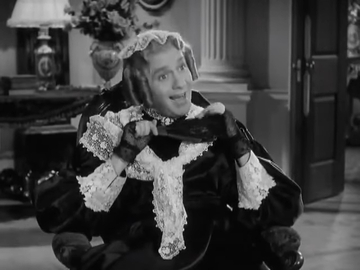
Two young men in Victorian England, eager to propose to their respective girlfriends, fix up a lunch date with the ladies, expecting that the aunt of one of the young men will oblige as a chaperone for the girls. However, the aunt, who has just arrived in England from Brazil, is called away elsewhere and sends a wire pleading her inability to come. Desperate, the young men seek a substitute as chaperone—and pick a friend of theirs, who then ends up spending the day juggling costumes, personas, and more.

That is the gist of Charley’s Aunt, a three-act play written by Brandon Thomas and first performed onstage in 1892. It’s a play I’d heard about often enough, but only got around to reading a couple of years back—and once I’d read it, I wanted to watch at least one cinematic adaptation of it (and yes, there are plenty of adaptations, including silent films as well as films in various languages, ranging from English to German to Arabic, the last-named in a couple of Egyptian versions of the film). Luckily enough, the best-known English adaptation of Charley’s Aunt, starring American comic actor Jack Benny in the lead role, is available even on YouTube (here).

Continue reading

Meera (1947)

I am not a one for mythologicals or devotionals.

If you go through the list of Hindi films I’ve reviewed in the sixteen years this blog has been in existence, you’ll probably only find a handful of films that fit the bill (offhand, I can only think of Mahabharat, though in Telugu, I’ve also reviewed the excellent Maya Bazaar and in Tamil, Karnan). I have watched more than that, but nearly all I have found to be so ho-hum, I couldn’t be bothered to review them.

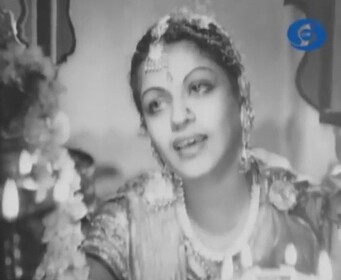
The story of Krishnabhakt Meera, wife of Bhojraj, was not one I expected to be any different. A woman, so completely devoted to the deity she has chosen to worship that she gives up everything, down to her husband and the kingdom of which she is queen, in order to go to Vrindavan to fall at Krishna’s feet… I was quite certain this film would be a hard slog. There was only one reason I wanted to watch it, and that was MS Subbulakshmi, who played Meera. I knew that Meera had originally been made in Tamil (in 1945), and was later (in 1947) dubbed in Hindi, with some scenes being reshot. MS Subbulakshmi, of course, given her stature as one of the greatest vocalists the Indian subcontinent has ever produced, sang all the songs.

Continue reading

Matira Manisha (1966)

Aka ‘Man of the Soil’ (though in the film itself, the subtitle that appears below the title of the film is ‘Two Brothers’).

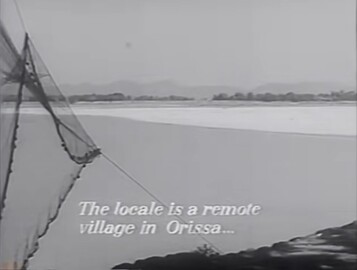
This is a first for my blog: an Odia film. I remain on the lookout for old films in regional languages, and I always, too, have at least some cinema-related books to read. Recently, I read an interesting book on the cinema of Mrinal Sen (review here), and—my interest piqued—went searching for some of the films mentioned in the book. To my surprise, I came upon this film, made in Odia (Sen had a penchant for making films in languages other than his native Bangla or Hindi: he even has, to his name, a Telugu film based on Munshi Premchand’s superb short story, Kafan).

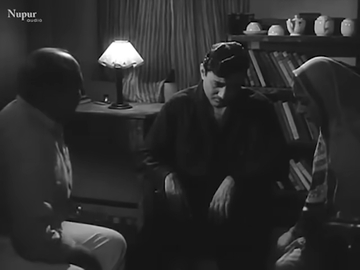
Matira Manisha, based on a classic novel by Odia writer Kalindi Charan Panigrahi, is set in a village in Odisha during World War II. The story focuses on the family of an old man named Pradhan (?), who lives with his family here, farming a small piece of land on which—like the rest of their village—they grow paddy.

Continue reading

Chitralekha (1964)

I have decided it’s high time I began rewatching some of the old Hindi films I last saw when in my teens (or, in some cases, even before that). Back then, all our film viewing used to happen on India’s sole television channel, Doordarshan, which would telecast Hindi films every weekend, and sometimes in between as well. Most of the films were old classics, and I have fond memories of first viewings of films which became firm favourites almost from the get-go: Junglee, Teesri Manzil, Nau Do Gyarah, Dekh Kabira Roya, Woh Kaun Thi?, Mera Saaya

There were also films that I watched (we watched everything, there was such a paucity of options for entertainment) but which I ended up not liking. Or, as in the case of Chitralekha, not really understanding. I guess this was a simple case of being too young, too immature, to grasp the niceties of a film that wasn’t the standard masala entertainer.

About time, I thought, I saw this one again.

Kidar Sharma, who directed Chitralekha, had already made this film (based on a novel by Bhagwati Charan Verma) earlier as well. The 1941 Chitralekha starred Mehtab (who of course later married Sohrab Modi) and the juiciest bit of information about the film is that it featured a bathing scene (Cineplot used to have an article about this, an excerpt from Kidar Sharma’s autobiography, but since Cineplot now seems to be sadly defunct, that’s gone). Kidar Sharma did say, from what I recall of his autobiography, that the original Chitralekha was far superior to the 1964 remake.

But the 1941 film is, I think, gone—or at least not available for viewing online, though there are songs and stills galore. I may as well watch the 1964 Chitralekha, I decided, since that was the one I had hazy recollections of watching as a child.

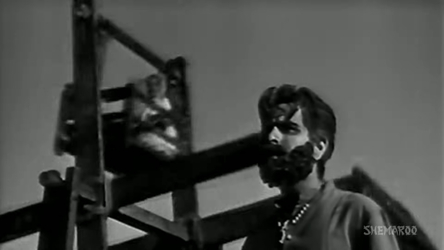
The story is set in Pataliputra during the heyday of the Gupta Empire. Aryaratan Samant Beejgupt (Pradeep Kumar), a high nobleman, has just returned to Pataliputra after a sojourn elsewhere. Beejgupt’s arrival in the city is greeted with anticipation: his fiancée Yashodhara (Shobhna) is shyly hopeful that this time he will marry her.

Continue reading

It Happened One Night (1934)

Last week, to commemorate the 100th birth anniversary of Raj Kapoor, I reviewed my favourite film of his as an actor: Chori Chori, which was a remake (uncredited) of It Happened One Night. I had seen Chori Chori before; I had also seen It Happened One Night before, though in both cases, I had not reviewed the film in question.

Since I’ve finally reviewed Chori Chori, it seemed to me about time I reviewed It Happened One Night as well (which is why there’s also a comparison with Chori Chori further along in this post). Directed and co-produced by Frank Capra, this film was based on a short story, Night Bus, by Samuel Hopkins Adams. It is generally regarded as the first ever screwball comedy, having pretty much invented the genre; it was also the first of only three films so far to have won all five major Oscars: Best Picture, Best Actress, Best Actor, Best Director and Best Adapted Screenplay.

But, to start at the beginning: on a private yacht moored off the coast at Miami, where Ellen ‘Ellie’ Andrews (Claudette Colbert) has been confined by her banker father (Walter Connolly). Mr Andrews disapproves, unreservedly, of Ellie’s having gotten married to a man named King Westley (Jameson Thomas), whom he (Mr Andrews) is convinced is a rotter: only interested in Ellie’s wealth, nothing else.  

Continue reading

Chori Chori (1956)

Happy 100th birthday to one of India’s greatest film makers, Raj Kapoor!

RK was born in Peshawar on December 14th, 1924. What can I say about him that hasn’t already been said or written, and by people much more erudite, well-informed, and more fond of RK’s cinema than I am? Yes; I will admit that I am not the greatest of Raj Kapoor’s fans, but let us keep the whys and the wherefores of that, the debates and the discussions, for another time. As Anu Warrier (of Conversations over Chai, not just a fellow blogger I admire hugely, but also an RK fan) said “I know there are RK films you like!”: and for RK’s birth centenary, I decided it was high time I finally reviewed an RK film that I particularly like.

I have watched Chori Chori several times, and always with great satisfaction. Even though it starred Raj Kapoor (opposite Nargis, moreover), the film is not at all the sort of film RK was known for: this was the light-hearted romp that younger brother Shammi was to go on to make his own. A road trip, a pampered heiress, a romance. Lots of songs, great chemistry.

Continue reading

The List of Adrian Messenger (1963)

YouTube suggested this film to me, and when I looked up a synopsis, it sounded fairly interesting. A man asks a favour of a friend who is ex-MI5: here is a list, of ten men, living in various parts of Great Britain, nothing seemingly to tie them together, no similar occupation, no similar background, nothing. But find them , ask each of them if all is well, whether they’re still living at the addresses given in the list.

The important word here being ‘living’. Because, when the friend—Anthony Gethryn (George C Scott) sets about tracking down the men, it doesn’t take him along to find out that most of the men on the list are already dead, killed in accidents over the past five years. They couldn’t really be accidents, could they?

Very interesting. Rather like And Then There Were None (which, by the way, is referred to more than once in the course of The List of Adrian Messenger). I decided this was a film I had to watch.

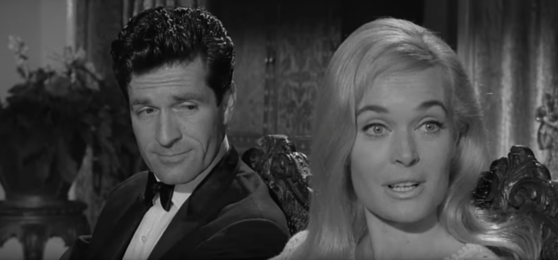
When the credits began to roll, I sat up, because suddenly here were familiar names, one after another. Tony Curtis. Robert Mitchum. Burt Lancaster. Kirk Douglas. Frank Sinatra. Why on earth hadn’t I heard of this film before, I wondered. Tony Curtis, Kirk Douglas and Robert Mitchum, especially, are among my favourites, and even if I haven’t seen all their films, I am mostly at least aware of many of the films they worked in. And one that seemed like such a casting coup? How come I hadn’t known about this?

Continue reading