Genghis Khan (1965)

Considering the last film I reviewed—about Genghis Khan’s grandson, Halaku (Hulegu Khan)—it seemed to me about time that I watched this one. What strengthened my resolve was that I happened to watch the Julie Andrews-Omar Sharif starrer The Tamarind Seed last week, and I was reminded that Omar Sharif starred as Genghis Khan here. ‘And Omar Sharif as Genghis Khan’, as the credits read. [An uncanny coincidence there, with—as in Halaku—the lead actor’s name appearing at the end of the credited cast].

Omar Sharif in and as Genghis Khan Continue reading

Halaku (1956)

Bunny Reuben’s biography of Pran, as many Pran fans would know, is called …and Pran: A Biography, a nod to the hundreds of credit sequences in which Pran—invariably one of the most prominent artistes in whichever film he was in—was listed at the end of the credits. A nod, not just to the fact that his character was more often than not at odds with the hero and heroine and their parents/friends/well-wishers listed first in the credits, but also that Pran deserved to be credited separately. A sort of ‘leaving the best for the last’? I like to think so.

In this film, even though he plays the title role, it’s no different. And Pran as Halaku.

Pran in and as Halaku Continue reading

Saajan (1969)

The other day, a fellow blogger, mentioning her distaste for Manoj Kumar’s films said that while she has “nothing against the man himself”, she really hates his films. I know what she meant (at least I think I do): I hate that insufferably xenophobic “all that is Indian is good, all that is Western is bad” philosophy espoused by films like Upkaar or, even worse, Purab aur Pachhim.
But I tend to shove that lot of films to the boundaries of my recollection of Manoj Kumar’s films. For me, his best films are the outright entertainers, the romances and suspense thrillers he worked in. Especially the suspense thrillers: Woh Kaun Thi?, Anita, Gumnaam—and this one.

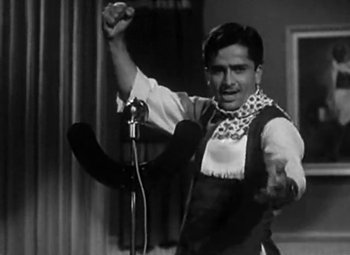
Manoj Kumar and Asha Parekh in Saajan Continue reading

36 Hours (1965)

It is May 31, 1944. In London, the plans for D-Day have been finalized. The Allied invasion of Europe—and, hopefully, the subsequent collapse of the Axis—cannot be far. Things are looking bright. Perhaps a bit too bright? Perhaps the Allied top brass have been a trifle too complacent. Perhaps they’ve not realized exactly how far the Germans will go to find out more about the plans for the invasion.

A week or so ago, a cousin of mine who thrives on films about World War II, sent me a list of all the WWII films and documentaries he owns. He asked me to add to the list. With some caveats. He (like me) doesn’t like gory and gruesome films; he prefers films about missions, espionage, and adventures à la Where Eagles Dare. And he prefers films from the 60s, when colour and better special effects made films more realistic than they’d been in the 40s and 50s.

James Garner in 36 Hours

Continue reading

College Girl (1960)

Look what I found!

[To make that clearer to those not in the know: I am a die-hard Shammi Kapoor fan, especially of the Shammi Kapoor between 1957 and 1966. I have watched most of his films from that period, and to find one I haven’t seen is cause for rejoicing. Even if it turns out to be a dud. Therefore the euphoria].

I first came across a mention of College Girl while watching a video of Halke-halke chalo saanwre (from Taangewaali, also starring Shammi). Besides the music (which I loved), I thought the song looked great too, and was eager to try and get hold of Taangewaali—until someone told me that a neat job of mixing had been done here: the audio was of the Taangewaali song, but the video was from College Girl. College Girl went up on my list of films to search for—and I discovered it last week on Youtube.

Shammi Kapoor and Vyjyantimala in College Girl Continue reading

The Long Ships (1964)

On a stormy night, a Viking longship battles the elements. Waves sweep over, tossing the ship; rocks loom. The men aboard the ship yell in fear and try to hold on to the masts, to each other—to anything—in an effort to stop from being sucked in by the water or dashed against the rocks. But the inevitable happens.

“And so, by the storm’s fury, he lost all that he loved most in this world: his ship, and his shipmates. But he was washed ashore, alone, the only survivor. Then the monks found him and took him to their monastery, where they tenderly nursed him, never asking his name, or his country. And, gradually, he grew stronger…”

A shipwrecked man is saved by monks Continue reading

Andha Naal (1954)

Last week, chatting with a group of friends (equally mad about old cinema) on Facebook, I was stumped by a quiz question posted by one of them. Which was the first Indian language feature film to be made without any songs? Most of us who attempted to answer that question could only think of Hindi films, and the earliest Hindi non-songs film we came up with was Kanoon (1960). That wasn’t the answer—the correct answer was the Tamil film Andha Naal (That Day), made six years before Kanoon, and (like Kanoon) blending suspense—in the form of a murder mystery—with weighty issues about society and politics.

[Edited to add: According to blog reader and blogger AK, of Songs of Yore, the correct answer to that question is actually the 1937 Wadia Movietone film Naujawan].

Andha Naal, the first Indian language film with no songs Continue reading

Bahurani (1963)

Inspirations to watch (and review) films come to me from all over. Friends and relatives are occasionally badgered to suggest genres; blog readers’ requests and recommendations (some of them, alas, long-pending) are taken into consideration. And, sometimes, I get inspired by the most outlandish of things. For instance, this film—which I first watched years ago, on TV—jumped to the top of my to-watch list because one day, while washing up in my kitchen, I was reminded of Mala Sinha.

[And no, not because I happened to be scrubbing a colander].

Mala Sinha in and as the Bahurani Continue reading

Kalpana (1960)

Though I’d heard of this film – and loved one of its songs (As-salaam-aaleikum babu) – I’d not been too keen on watching it. Firstly, Ashok Kumar is not really my idea of a dashing leading man. Secondly, I’m not a great one for the Travancore Sisters. At the risk of being labelled an iconoclast, I’m going to admit that dance is not generally a big thing for me – I’m awful at any sort of dancing myself, and I don’t have much of an eye for watching it, either. Plus, there’s the fact that both Padmini and Ragini have horrid Hindi accents, which means that when they’re playing Hindi-speaking characters, they are not exactly very believable.

Then Richard reviewed Kalpana, and I got to know a bit more about the film. And then, to add to it all, Tom Daniel praised it too. So, I ended up watching Kalpana. It turned out to be – surprise, surprise – much more engrossing than I’d expected it to be.

Ashok Kumar and Padmini in Kalpana

Continue reading

Plein Soleil (1960)

I’ve spent the past month—and more—focussing solely on Indian cinema. Time for a change, I thought.
This, therefore. Director René Clément’s Plein Soleil (literally, ‘Full Sun’, but known as Purple Noon) is a French adaptation of Patricia Highsmith’s The Talented Mr Ripley, and was the first major film of Alain Delon, who really does dominate the film. In more ways than one.

Alain Delon in Plein Soleil

Continue reading