Baaz (1953)

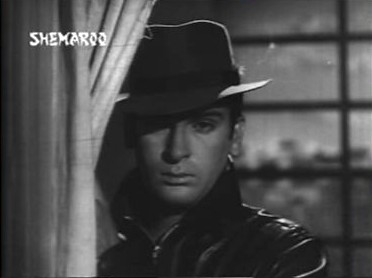
Today, July 9, 2025, marks the 100th birth anniversary of one of Hindi cinema’s best-known film directors. Born in Mysore on this day in 1925 as Vasant Kumar Shivshankar Padukone, Guru Dutt studied in Calcutta before joining Uday Shankar’s India Culture Centre (in Almora, present-day Uttarakhand) to train in dance. By the time he turned 19, he had moved to Pune, where he began working as a choreographer for Prabhat Studios. By the time Prabhat Studios folded up (in the early 1950s), Guru Dutt had formed a close friendship with Dev Anand, because of whom he received his first break as a director: in 1951, he directed Navketan’s Baazi, starring Dev Anand, Geeta Bali and Kalpana Karthik in a noir thriller that was to become a defining film for Navketan: edgy, stylish, dark, very urban.

Guru Dutt is today revered more for the hard-hitting, cynical cinema he made: films like Pyaasa, Sahib Bibi aur Ghulam and Kaagaz ke Phool hold up the mirror to a world that is selfish, cruel and opportunistic. These are bitter films, films that plumb the depths of human nature; films that—despite following most of the standard tropes of commercial Hindi cinema (a romance between the lead couple; a fair number of songs; a comic character invariably played by Johnny Walker)—were quite different from other Hindi films.

These, too, are the films for which Guru Dutt is mostly remembered today. Is that because over the decades, people have seen how the tragedy and turmoil of Guru Dutt’s personal life was probably reflected in films like these? Is there a voyeuristic tendency to try and spot the man behind the director?

But Guru Dutt also made other films, on other subjects. This one, for instance, an adventure/patriotic film set on the high seas, with Geeta Bali starring as the eponymous ‘Baaz’ (falcon), a woman who becomes a pirate to free her land of a colonial tyrant.

Continue reading

Sapan Suhaane (1961)

Starring Balraj Sahni and Geeta Bali. With music by Salil Choudhary.

How could I—with a well-established reputation for watching films based on a single name I like among the crew and cast—pass up this one? Balraj Sahni is a favourite, as is Geeta Bali. And Salil Choudhary is one of those rare music directors for whom I’ll watch a film (even if I could just as well just listen to a playlist of the songs online).

These three were the reason I watched Sapan Suhaane, and I’ll admit that till more than midway through the film, I was congratulating myself on having stumbled on a hidden gem. Or, if not strictly a ‘gem’, at least a film that was watchable enough. After that…

But to start at the very beginning, when we are introduced to Shankar (Balraj Sahni) and his younger brother Dilip (Chandrashekhar). Shankar and Dilip are stepbrothers, but deeply devoted to each other. Shankar has given up his own comfort, his own prospects, in order to work so that he can finance Dilip’s studies.

Continue reading

Mr India (1961)

A simple-hearted—even outright simple, really—man turns out to be the look-alike of a much-wanted criminal. As a result, the police train him to impersonate the criminal so that they can get enough evidence to crack down on a web of crime.

I have no idea if Don (1978) was inspired by Mr India. Don is in many ways a very different film (the criminal, for one, dies fairly early on in the proceedings; for another, it’s a much more complex plot): but there is that fleeting resemblance.

Mr India begins by introducing us to Gullu (IS Johar), naïve and simple, as he goes about job-hunting, and getting rejected at every office because he doesn’t fit the regional profiles demanded by the parochial employers of these places. Gullu gets briefly hired by someone who wants to rig a ‘Mr India’ weight-lifting competition, with Gullu pretending to hoist what is actually wooden dumbbells rather than iron.

Continue reading

Vachan (1955)

I started my first draft of this post by writing that “I watch some films because of the people who made them”. Then it struck me that that, almost invariably, is the only reason I do watch a film. After all, everybody—the director, the music director, the lyricist, and of course the cast (besides the many hundreds of other, often unnamed, people) who work on a film are those who made them. Sometimes, it’s the cast that appeals to me: give me people like Shammi Kapoor, Dev Anand, Sadhana, Waheeda Rehman—oh, and many more—and I will happily begin watching any film they’re in (whether or not that experience will end up being as rewarding a one I’d hoped for is another matter). Sometimes, it’s just the name of a well-loved and much-respected director—Bimal Roy, Hrishikesh Mukherjee, Vijay Anand among them—that’s enough.

Sometimes, it’s the music. Sometimes, it’s just one song.

In this case, it was just one song. I was singing Chanda mama door ke to the LO the other day, and I thought: that’s a nice song, and Geeta Bali looks so pretty; I wonder what the film’s like.

Continue reading

Baradari (1955)

When I did my post on ‘unusual  singers’—actors and actresses who are familiar to movie-watchers, but have very few songs to which they’ve lip-synced—a couple of people suggested Ajit as a possible candidate for the list.  For those who associate Ajit only with the leering villain of films like Yaadon ki Baaraat, the man of classic (not to mention corny) dialogues like “Lily, don’t be silly” and “Ise liquid oxygen mein daal do. Liquid ise jeene nahin dega aur oxygen ise marne nahin dega”—all delivered, of course, in classic Ajit style—the idea of Ajit ‘singing’ was novel enough.

But the Ajit I first knew in cinema was the Ajit of the old black-and-white Hindi films: the hot-headed rival -and-friend of Dilip Kumar’s character in Naya Daur. The embittered cynic in Nastik. The quiet, handsome and very dependable Durjan Singh of Mughal-e-Azam. Meena Shorey’s friend-enemy-accomplice from the hilarious Dholak. Yes, before he slipped into middle age and the villain roles, Ajit acted the hero in plenty of films (and, more to the point when it came to the ‘unusual singers’ post, lip-synced to many songs, including some big hits).

Continue reading

Ferry (1954)

Earlier this year, commenting on a post, reader Shalini recommended Ferry to me. I admitted that I’d seen the film—years ago—on Doordarshan, and had liked it, though over the intervening years I’d forgotten what exactly it was all about. I did remember this much: that it featured a child, and that it was very different from the usual (mainly romantic or noir) films of Dev Anand that I’d seen till then. I decided it was time for a rewatch.

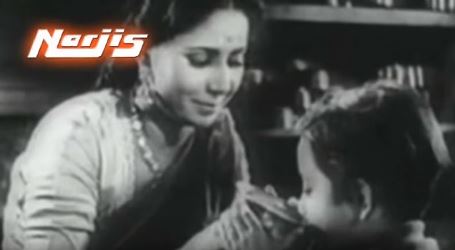
Geeta Bali and Babu in Ferry

Continue reading

Rangeen Raatein (1956)

The main reason I wanted to see this film was that it starred Shammi Kapoor and Geeta Bali—and her not in a mere item number, as in Mujrim, but in a much more substantial role.
Unfortunately, what I didn’t realise was that it’s Mala Sinha who’s paired with Shammi Kapoor in Rangeen Raatein, while Geeta Bali is in the role of a man [what was the director Kidar Sharma thinking of?!]

Continue reading

Albela (1951)

The last time I visited my parents, my father lent me a couple of DVDs—old Hindi films (whose pa is he anyway?!) which he particularly likes. One was Ratan, which I’ve yet to see; the other was this. “Bhagwaan is hard to accept as a hero,” my father said. “But the music is C Ramchandra at his best.” I agree, on both counts. Watch Albela for C Ramchandra’s score. And yes, also for Geeta Bali at her loveliest and brightest.

Continue reading

Mujrim (1958)

Right now, I’m on a five-day visit to my parents. They’re not Beiges, but I’d probably label them Greys—the salt far surpasses the pepper in their hair. We’ve been spending quality time together, eating the best chhola bhaturas in town, catching up on the latest gossip, and watching films. We started with Living it Up and Bells are Ringing, and then my father (who generally prefers Bollywood to Hollywood, unless it’s the Marx Brothers-Laurel and Hardy-Chaplin brands of comedy) put his foot down. Let’s see something Hindi, he said. So we settled on this one, because my father likes its music a lot, and Mummy and I like Shammi Kapoor a lot.

Continue reading