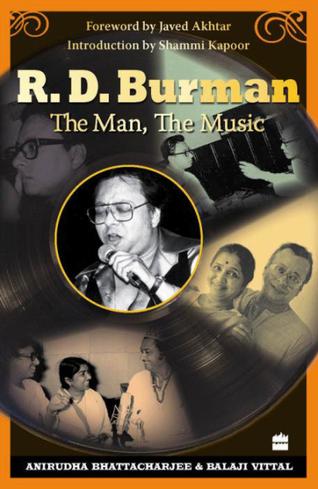
Book Review: Anirudha Bhattacharjee and Balaji Vittal’s ‘R.D. Burman: The Man, The Music’

People who know this blog focuses on pre-70s cinema would possibly be surprised to find a review here of a book about RD Burman—who, to most people, is more associated with Dum maaro dum and all those very peppy Rishi Kapoor songs of the 70s, than the music of the 60s. The fact, however, remains that RD Burman had actually made his debut as an independent composer (not merely as an assistant to his father, SD Burman) as far back as 1961, with the Mehmood production Chhote Nawab. And that he composed the chartbusting music for what is possibly my favourite Hindi suspense film (and one, too, which doesn’t have a single song I don’t like): Teesri Manzil.

This review, therefore, of a book about a man I knew little about except through his music—which has always appealed to me, not just because so much of it was there, all around me, playing on LPs in our house and blaring from radios wherever we went when I was growing up, but because it was so infectious, so full of life. (It was only later that an older, more informed me realized just how versatile RDB was, what softly melodious songs he could compose).

Anirudha Bhattacharjee and Balaji Vittal's 'RD Burman: The Man, The Music'

Continue reading

Book Review: Anirudha Bhattacharjee and Balaji Vittal’s Gaata Rahe Mera Dil: 50 Classic Hindi Film Songs

I know I’m a bit late to the party here; Anu had already written about Bhattacharjee and Vittal’s latest book over at her blog, and Harini reviewed it recently on her blog—but better late than never, I guess.

GaataRaheMeraDil

Bhattacharjee and Vittal’s book’s subtitle says it all: 50 Classic Hindi Film Songs. They define ‘classic’ too, in the prologue to the book, where they discuss what is for me truly a classic, the brilliant Baabul mora, by KL Saigal. A timeless song, a song as capable today as it was in the 30s of touching hearts, of making people catch their breath in sheer awe at the music, the lyrics, the rendition—and a song with a story behind it: the story of the exiled Nawab Wajid Ali Shah, ousted from his Awadh and sent away to Calcutta. A song rendered repeatedly by different singers, including some of the greatest voices. And the story, too, of its filming in Street Singer.

Continue reading

Ten Ganga songs from classic Hindi cinema

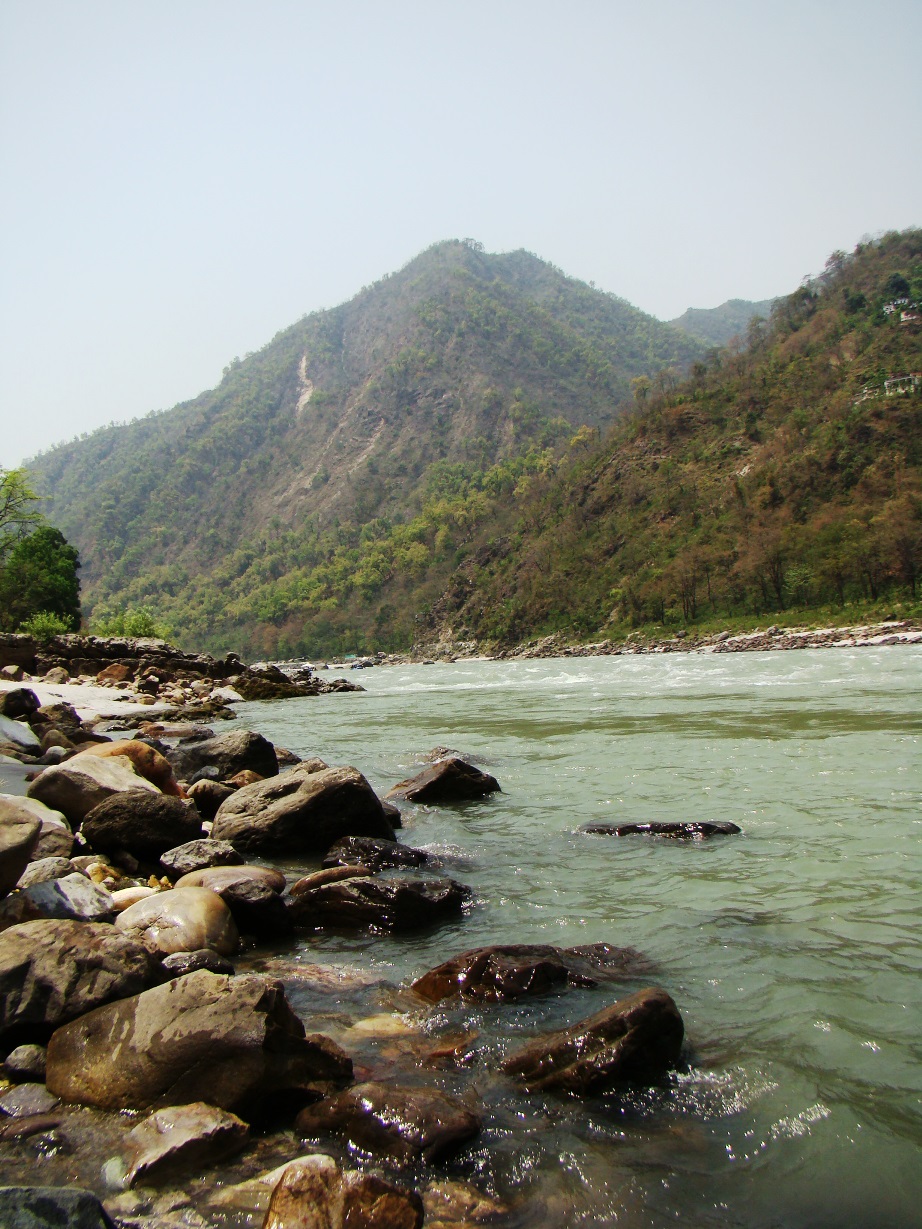
My husband and I are avid travelers. Give us a few days’ holiday and some funds, and we’re eager to race off somewhere. This past year, however, has been unbelievably hectic, what with one thing or another, and after an entire 365 days of not travelling anywhere, we were ready to crack. So we eventually took a holiday—to The Glasshouse on the Ganges, an idyllic little place we’ve visited before, just slightly above Rishikesh. Sitting there one evening, with my feet lapped by the cool waves of the Ganga, I was humming Ganga behti ho kyon (yes, I’m not making this up; I actually was doing that!) when it struck me: there are several songs in Hindi cinema about the Ganga. And that’s where the idea for this post originated.

The Ganga flows for a distance of 2,525 km, all the way from the Himalayas (it begins, officially, at the point—in Devprayag—where its two major tributaries, the Bhagirathi and the Alaknanda, join). Most devout Hindus consider Gomukh, at the foot of the Gangotri Glacier, where the Bhagirathi arises, as the birthplace of the Ganga. The fifth most polluted river in the world, this one is one of Earth’s major rivers (it even appears in classical Western art—the imposing ‘Fountain of the Four Rivers’ sculpture at Rome’s Piazza Navona includes the Ganges). Millions of people live alongside it, millions come from far and wide for a dip in the Ganga.

The river.

The river.

And Hindi cinema has embraced it wholeheartedly, all the way from the dozens of filmi children lost at the Kumbh, to Ganga ki Saugandh, Ganga Tera Paani Amrit, Jis Desh Mein Ganga Behti Hai, etc. Plus, the songs. Here are ten songs from pre-70s (mostly, with one minor exception from 1971) Hindi films which mention the Ganga. In different contexts, to different extents. All from films that I’ve seen.

Continue reading

Ten of my favourite cloud songs

The other day, thinking over the themes for song lists that I’ve posted over the years I’ve been writing this blog, two came forcibly to mind: rain songs (a list, in fact, which has proved very popular—I was even interviewed about it by a Canadian radio station); and wind songs.

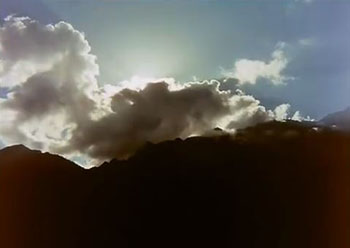
Rain. Wind. And what goes with that? Clouds. Clouds, which are so common in Hindi film songs. Clouds, as harbingers of rain. Clouds that thunder, clouds that pour. Clouds that symbolize everything from relief and coolness to bleak despair. Time, I decided, to do a list of cloud songs that I like a lot.

Cloud songs from Hindi cinema Continue reading

Ten of my favourite C Ramachandra songs

…specifically, songs which he composed, not just songs he sang (since C Ramachandra also lent his voice to some of his best songs).

Chitalkar Ramachandra was born 97 years ago—on January 12, 1918, in the town of Puntamba in Maharashtra. Although he’d studied music, it was as an actor that C Ramachandra joined the film industry—he debuted in a lead role in a film called Nagananda. This didn’t continue for long, though; he eventually shifted to composing songs, first for Tamil cinema, and then for Hindi. And he came like a breath of fresh air to Hindi film music: in a period dominated by classical tunes composed by the likes of Naushad, Anil Biswas and Pankaj Mullick, C Ramachandra had the guts to bring in music with distinctly Western rhythms, what with hits like Aana meri jaan Sunday ke Sunday and Mere piya gaye Rangoon. And he was brilliantly versatile: as the following selection will (hopefully) show, he could compose just about everything from peppy club songs to lullabies to ghazals (if one can expect a particular style of music for a ghazal) and lilting love songs.

Chitalkar Ramachandra, b January 12 Continue reading

Ten of my favourite Geeta Dutt duets

This was not the post I’d got planned for this week. But then, when so many people commenting on my Geeta Dutt solos post began writing about Geeta Dutt duets, I decided I may as well compile my list of the Geeta Dutt duets I love the most. After all, I knew I’d do this post, sooner or later. So why not now?

Geeta Dutt Continue reading

Ten of my favourite Geeta Dutt solos

Looking back at the six years this blog has been in existence, I find myself surprised that I’ve never done a post on Geeta Dutt. Geeta Dutt, née Geeta Ghosh Roy Chaudhury, the woman with that beautifully melodious, faintly nasal voice, who was known for singing bhajans and other songs with a classical or folk lilt to them—until SD Burman chose her to sing Tadbeer se bigdi hui taqdeer bana de, and opened up to millions of listeners across the years the astounding versatility of this glorious voice. Geeta Dutt, who could sing with equal finesse everything from club songs to wandering minstrel ones. Geeta, who sang some of the most achingly beautiful songs in Hindi cinema.

Geeta Dutt Continue reading

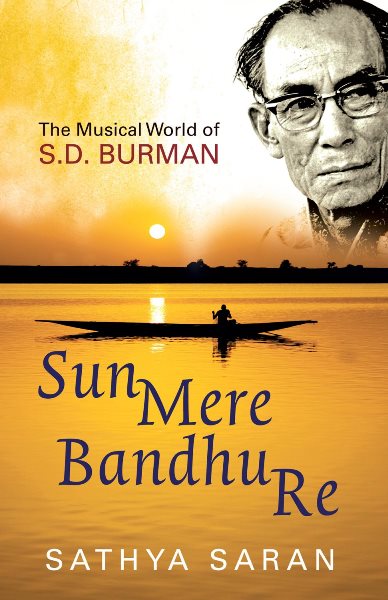
Book Review: Sathya Saran’s ‘Sun Mere Bandhu Re: The Musical World of SD Burman’

To say that I am fond of Sachin Dev Burman is to put it mildly. Along with OP Nayyar, SD Burman was one of the first music directors I heard of—thanks to my father, who is a devoted fan of the music of these two very different composers. It was my father who, when I was still a pre-teen, first drew my attention to the beauty of Thandi hawaayein lehraake aayein, Hum bekhudi mein tumko pukaare chale gaye, O re maajhi, Dekhi zamaane ki yaari, Yeh mahalon yeh takhton yeh taajon ki duniya, and dozens of other songs, each more wonderful than the last.

That love for SD Burman has, instead of abating, increased over the years. With that love has arisen a deep admiration for the sheer versatility and genius of this man, without whom the face (or should that be ‘sound’?) of Hindi film music might have been very different. And much, much the poorer.

Not a surprise, then, that I should get so excited when I discovered that a biography of SD Burman had been published: Sathya Saran’s Sun Mere Bandhu Re: The Musical Journey of SD Burman (Harper Collins Publishers India, P-ISBN: 978-93-5029-849-7, E-ISBN: 978-93-5029-850-3, Rs 499, 258 pages). I had read about and heard various anecdotes about SD Burman over the years: that he was a prince of Tripura, of his love for paan and football, and how he skilfully drew inspiration from just about every type of music: Baul, Bhatiali, Rabindra Sangeet… to actually read a biography of the man himself was something I looked forward to with great anticipation.

Sathya Saran's 'Sun Mere Bandhu Re: The Musical Journey of SD Burman Continue reading

Ten of my favourite S D Burman songs

Sachin Dev Burman was born on October 1, 1906, a scion of the royal family of Tripura—and a king in the world of Hindi film music. From his first major hit—Mera sundar sapna beet gaya (Do Bhai, 1947)—on, Burman made a name for himself with songs that ran the gamut from folk to Western, from hauntingly poignant to unbeatably seductive (remember Waqt ne kiya kya haseen sitam? Remember Kya ho phir jo din?) To celebrate Burman Da’s music, therefore, this post.
To narrow down my list of S D Burman favourites to a mere ten, I’ve had to resort to a few self-imposed restrictions. All of these songs are, as always, from the 50’s and 60’s, and from films that I’ve seen. In addition, they’re songs that don’t just sound good, but are wonderful in other ways too: songs that I value not just for the music, but also for the lyrics, the picturisation, the feel of the song. Enjoy!

Sachin Dev Burman stamp released by the Indian Postal Department

Continue reading

Ten of my favourite Manna Dey songs

Prabodh Chandra Dey—better known as Manna Dey—turns 90 years old on May 1, 2009. A long innings, and though with too little recognition (in fact, far less than a talent like his deserves), a superb one. In my opinion, Manna Dey’s was one of the most beautiful male voices to have ever sung playback for Hindi cinema: warm, sensuous, and with a glorious smoothness, throaty and full of feeling, that’s unparalleled. Listen to him sing a qawwali, a raag, a rock-and-roll number—all with equal ease, panache and conviction, and it’s easy to become a fan. Happy birthday, Mr Dey; may you and your songs live long!

Prabodh Chandra Dey, aka Manna Dey

Continue reading