Chitralekha (1964)

I have decided it’s high time I began rewatching some of the old Hindi films I last saw when in my teens (or, in some cases, even before that). Back then, all our film viewing used to happen on India’s sole television channel, Doordarshan, which would telecast Hindi films every weekend, and sometimes in between as well. Most of the films were old classics, and I have fond memories of first viewings of films which became firm favourites almost from the get-go: Junglee, Teesri Manzil, Nau Do Gyarah, Dekh Kabira Roya, Woh Kaun Thi?, Mera Saaya

There were also films that I watched (we watched everything, there was such a paucity of options for entertainment) but which I ended up not liking. Or, as in the case of Chitralekha, not really understanding. I guess this was a simple case of being too young, too immature, to grasp the niceties of a film that wasn’t the standard masala entertainer.

About time, I thought, I saw this one again.

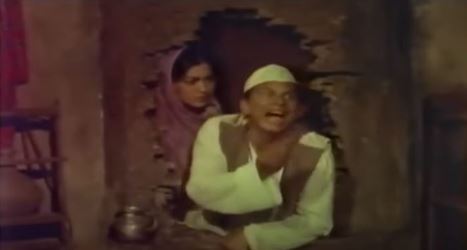
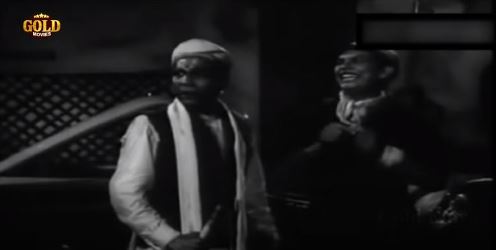
Kidar Sharma, who directed Chitralekha, had already made this film (based on a novel by Bhagwati Charan Verma) earlier as well. The 1941 Chitralekha starred Mehtab (who of course later married Sohrab Modi) and the juiciest bit of information about the film is that it featured a bathing scene (Cineplot used to have an article about this, an excerpt from Kidar Sharma’s autobiography, but since Cineplot now seems to be sadly defunct, that’s gone). Kidar Sharma did say, from what I recall of his autobiography, that the original Chitralekha was far superior to the 1964 remake.

But the 1941 film is, I think, gone—or at least not available for viewing online, though there are songs and stills galore. I may as well watch the 1964 Chitralekha, I decided, since that was the one I had hazy recollections of watching as a child.

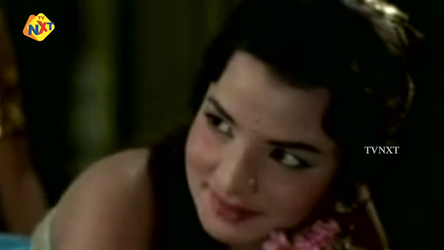
The story is set in Pataliputra during the heyday of the Gupta Empire. Aryaratan Samant Beejgupt (Pradeep Kumar), a high nobleman, has just returned to Pataliputra after a sojourn elsewhere. Beejgupt’s arrival in the city is greeted with anticipation: his fiancée Yashodhara (Shobhna) is shyly hopeful that this time he will marry her.
Continue reading

Kaagaz ke Phool (1959)

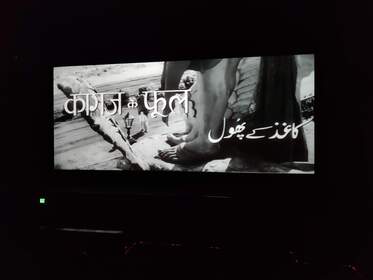
That first photo, because the space beyond the screen is so dark, may not be very obvious as regards context. But this is a photo from a full-sized film theatre, where I watched the re-released Kaagaz ke Phool on July 17th. The re-release was to mark the 65th anniversary of this film, a semi-autobiographical work that was a flop when it was first released, but has gained in popularity ever since. My niece had alerted me to the fact that PVR Inox would be showing Kaagaz ke Phool across its theatres, one show a day for a week, and I knew I couldn’t miss this one. If only for the fact that I get to see precious few old films on the big screen (Hum Dono was the last I saw).

I had thought I’d probably be one of a handful (ten, at the most?) of people in the theatre, because this, after all, is an old film; and this was an afternoon show on a weekday. But to my surprise, there were actually quite a few people, and—best of all—many of them were fairly young. Heartening.

But, to get to the film.

Continue reading

Naya Daur (1957)

Happy 100th birthday, Dilip Kumar!

It was on this day that Mohammad Yusuf Khan, who was to go on to become one of India’s most-loved and finest actors, was born in Peshawar’s Qissa Khwani Bazaar.

In a career spanning several decades, and some sixty-odd films, Dilip Kumar attained a status all his own. He was one of the first to win a Filmfare Award, and went on to win the most Best Actor Awards (until the record was equalled— though not yet surpassed). His scenes have been copied and re-done, his dialogues have become familiar to fans of cinema, his films and his acting closely dissected.

Continue reading

Bhoot Bungla (1965)

The last of the ‘silly Indian films’, at least for now.

I watched Bhoot Bungla for the first time as a child, when it was aired on Doordarshan. I remembered very little of it, except that RD Burman struck me as very funny (even funnier than Mehmood, who—back then—I had still not begun to think of as irritating). And that my mother, sitting beside me and watching Tanuja lip-sync to O mere pyaar aaja, remarked that she (Mummy) used to sing this song as a lullaby for my sister when she was a baby.

Then, when I reviewed Adhey Kangal some time back, a few blog readers observed that the plot was pretty similar to that of Bhoot Bungla.

Time, I decided, for a rewatch.

As the credits roll, an unidentified man screams “Lakshmi!” and having pulled a bloodied dagger out of his chest, proceeds to keel over, dead. A woman (Minoo Mumtaz), presumably Lakshmi, goes running out of the house, clutching a toddler to her, looking panicked.

Continue reading

Aakhri Dao (1958)

This was one film where I had a tough time making up my mind: should I review it? Should I not? It’s not a great film, but it’s not absolutely abysmal either. And it has a luminously lovely Nutan, plus some superb songs (courtesy Madan Mohan and Majrooh Sultanpuri) to compensate for other drawbacks in the film. It’s also a film about a murder (as macabre as that may sound, always something that catches my attention).

If for nothing else, as an example of a film that could have been pretty good but ends up a damp squib, this, I decided, was worth reviewing.

The story centres round Raj Kumar Saxena ‘Raju’ (Shekhar), a mechanic who works in a garage, and lives in a tiny room above the garage along with his friend and colleague Popat (Johnny Walker). Popat has been having a chat with a wealthy customer, Muthuswami Chetiyar (Mirajkar) and is keen on getting Muthuswami to invest in a garage for Popat. The incentive Popat offers is a match for Muthuswami’s daughter: Raju, he says, will be a fine bridegroom. Because he guesses Muthuswami will not be eager to marry his daughter to a mechanic, Popat takes care not to let on that the groom he has in mind is that figure hunched over a car at the other end of the garage…

Continue reading

Ten of my favourite Minoo Mumtaz Songs

The vivacious Minoo Mumtaz is gone. She passed away, at the age of 80, on October 23.

Minoo Mumtaz, who invariably got slotted in supporting actress roles, sometimes as the heroine’s friend (Akeli Mat Jaiyo), often as the vamp (Bank Manager, Mai Baap), but who was just as often to be seen only in a cameo as a dancer (Sahib Biwi aur Ghulam, Naya Daur, Jahanara). And who, to her credit, also appeared in leading roles (Black Cat is the one that comes most readily to mind, in which she was paired with no less than Balraj Sahni). It’s a pity that the news article I read started off (even in its headline) by referring to her as Mehmood’s sister; while Mehmood may be more well-known to the general populace, Minoo Mumtaz was not to be sneezed at—but you can read more about that at this wonderful little tribute  Richard posted over at his blog.

I will, instead, restrict myself to what the title of this blog post indicates: a list of ten songs that feature Minoo Mumtaz. Some are dances, some are not. Some have only her lip-syncing to the song, some have other people too joining in. But all feature, in ways that make me remember her, Minoo Mumtaz.

Continue reading

Zindagi ya Toofaan (1958)

After many years of telling myself I should read Mirza Hadi ‘Ruswa’s Umrao Jaan Ada, I finally got around to reading a Hindi translation a couple of weeks back. This turned out to be an underwhelming experience (more details here, on my Goodreads review of the book), but it impelled me to read a synopsis of Umrao Jaan Ada. I ended up reading, too, about the screen adaptations of the book (which is regarded by many as the first Urdu novel), and was surprised to discover that, besides the Rekha-starrer and the (much later) Aishwarya Rai-starrer, there were two other films, both released in 1958, based on Umrao Jaan Ada. One was Mehendi; the other was Zindagi ya Toofaan. I haven’t got around to watching Mehendi yet, but the fact that one of my favourite actresses of the 50s, Nutan, starred in Zindagi ya Toofaan, made me eager to watch this one.

Continue reading

Halaku (1956)

Bunny Reuben’s biography of Pran, as many Pran fans would know, is called …and Pran: A Biography, a nod to the hundreds of credit sequences in which Pran—invariably one of the most prominent artistes in whichever film he was in—was listed at the end of the credits. A nod, not just to the fact that his character was more often than not at odds with the hero and heroine and their parents/friends/well-wishers listed first in the credits, but also that Pran deserved to be credited separately. A sort of ‘leaving the best for the last’? I like to think so.

In this film, even though he plays the title role, it’s no different. And Pran as Halaku.

Pran in and as Halaku Continue reading

Mai Baap (1957)

Today is the 100th birth anniversary of one of my favourite Hindi film actors, the extremely talented, very versatile Balraj Sahni. Born on May 1, 1913 (an interesting coincidence, considering he went on to become the first president of the leftist All India Youth Federation), Balraj Sahni became a prominent writer—first in English, later in Punjabi—and, of course, a brilliant, much-respected actor, with a dignity and screen presence that made him stand apart in films as different as Do Bigha Zameen, Waqt, Kabuliwaala, Haqeeqat, Anuradha, and Sone ki Chidiya.

Balraj Sahni in Anuradha

Continue reading