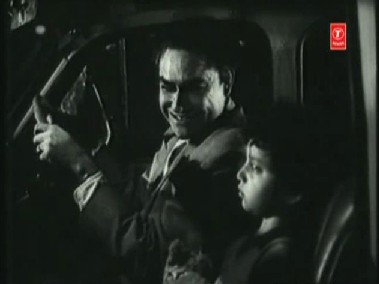
Insaan Jaag Utha (1959)

The main reason I rented this film was that the credits were so absolutely mouthwatering. A cast that included Sunil Dutt, Madhubala, Minoo Mumtaz, Madan Puri and Nishi Kohli. Music by S D Burman. Shakti Samanta as director. A winner, I’d have thought.

Alas, no. While it’s not a dud, Insaan Jaag Utha isn’t more than the sum of its otherwise stellar parts.  The story is a mishmash of tropes. It doesn’t seem to know where it’s going, the plot has a lot of holes, and  it’s not really too interesting.
Continue reading

Kashmir ki Kali (1964)

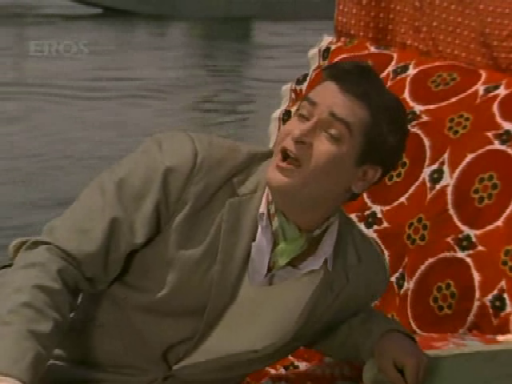
This particular Shammi Kapoor film has a very special place in my heart – because Yeh chaand sa roshan chehra was one of the first Hindi film songs I ever learnt to sing. I must’ve been about eight years old. I’d never seen the film; television was yet to make its way into our lives (it was just round the corner, though I didn’t get to see the song till much later). But I used to hear it now and then on radio, and sometimes on an LP my parents owned. I always did wonder who the heroine was, the woman who was praised for the fact that her ‘zulfon ka rang’ was sunehra, and who had jheel si neeli aankhein. Could she have been an Indian actress, I wondered? She sounded firang.

Continue reading

Dil Deke Dekho (1959)

Dil Deke Dekho isn’t quite the perfect film I’d like to make it out to be.
(a) The story isn’t exactly original (Nasir Hussain had already used it in Tumsa Nahin Dekha. He also went on to use it in Jab Pyaar Kisi se Hota Hai and Phir Wohi Dil Laaya Hoon, but that can’t be laid at the doorstep of Dil Deke Dekho).
(b) The plot is too complicated, relies too heavily on convenient coincidences, and has some unbelievable – and often unclear – motives.
(c) The lead actress, Asha Parekh (just 16 years old), though pretty as a picture, isn’t a terribly good actress at this stage of her career.

On the other hand: the film stars Shammi Kapoor.

Continue reading

Mere Sanam (1965)

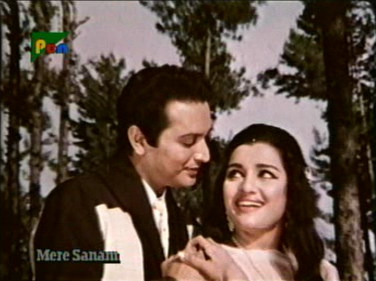
Nasir Hussain may have made his Tumsa Nahin Dekha story into four separate – and equally successful – films, but did that induce others to be original? On the contrary. Narinder Bedi, at least, probably seemed to think that what worked for Nasir Hussain might well work for him. Therefore, Mere Sanam, which has a storyline similar in many ways to Tumsa Nahin Dekha. (Both films also have fantastic music by OP Nayyar, by the way).

Continue reading

Tumsa Nahin Dekha (1957)

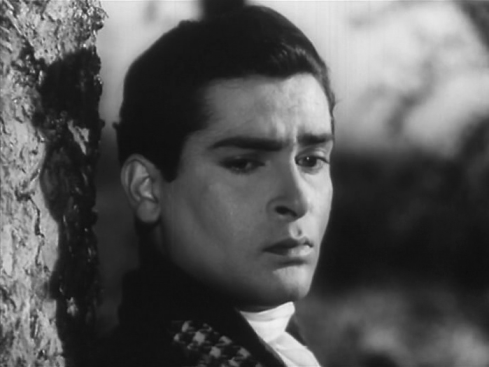
If Rajkumar is the trademark ‘Shammi Kapoor at his peak’ film, then Tumsa Nahin Dekha is an equally – if not more – important film, because this is the one that made Shammi Kapoor into the icon he was by the mid-60s. Till Nasir Hussain got Shammi Kapoor to shave off his moustache and act as the devil-may-care hero of this film, Shammi was (as my father puts it), “Just another actor with a thin moustache and the usual roles. Nothing exceptional.” Tumsa Nahin Dekha gave him the opportunity to transform from the half-hearted, unexceptional sort-of-hero into a Shammi Kapoor who became almost an institution in himself.

Continue reading

Shagoon (1964)

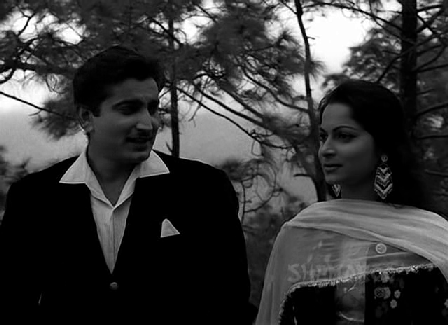
Dare I repeat myself by admitting that one of the reasons I wanted to see this film was the music? Shagoon (which I think should have been spelt Shagun) combines Sahir Ludhianvi’s lyrics with Khayyam’s music, to stunning effect. But my other reasons for watching this film were equally valid. It stars the matchless Waheeda Rehman in the only film where she co-starred with Kamaljit, later to be her husband. What chemistry there must be here, I thought. Plus the film featured some of the most dependable character actors of Hindi cinema: Nasir Hussain, Achla Sachdev, Pratima Devi, Chand Usmani. This one had to be worth seeing, I thought.

Continue reading

Munimji (1955)

It has been a sad year for us lovers of classic cinema. After the passing away of Spanish filmmaker Berlanga, I’d hoped December would pass in the usual round of festivities, punctuated perhaps with a couple of posts on some Christmas-themed old films, or a list of ten songs with which to usher in the New Year. Alas, instead, there have been two deaths. The first, on December 15, was director, producer and writer Blake Edwards, the man famous for having made the Pink Panther series starring Peter Sellers. The second, on December 24, was the beautiful and highly expressive Nalini Jaywant. I’ll do a review of a Blake Edward classic later; this post is dedicated to Ms Jaywant. RIP.

Continue reading

Jewel Thief (1967)

This is one of those films that have a very interesting—and unexpected—twist that can come totally as a bolt out of the blue if you’re watching it for the first time. Subsequent watchings, no matter how far apart, tend to dilute the suspense a good deal because (unless you have a really frightful memory) you know what’s coming. And somehow, unlike films like Teesri Manzil or Mera Saaya or Woh Kaun Thi?, Jewel Thief lacks other elements that could encourage repeated viewings.

Continue reading

Bombai ka Babu (1960)

Much as I do not like like Dev Anand in his post-60’s avatar (the too-black hair, the bandanna and the cap don’t make him look any younger; they just bash home the fact that he’s aging most disgracefully)—I do like him in a lot of the films he did in the 50’s and early 60’s. There are some great suspense films here (CID, Baat ek Raat ki, Kaala Paani, Jewel Thief) and some great drama/thriller/romance/whatever (Jaal, Hum Dono, Paying Guest, Solvaan Saal, Guide, the very unusual Ferry)—and this, a simple story of a thief who finds himself impersonating the long-lost son of a village zamindar.

Continue reading

Bandish (1955)

A consumptive is told by his doctor that his days are numbered. An orphan who doesn’t even know what his parents looked like, finds himself unwanted. A man who loves a dancer/singer is forbidden by his stern father to marry the girl—and she acquiesces. The man sinks into despondency, alcoholism and debauchery, ending up being blackmailed by a gold-digger with an eye on his wealth.
Meena Kumari. Ashok Kumar. Nasir Hussain.

Tragedy? I’m glad to say no!

Continue reading