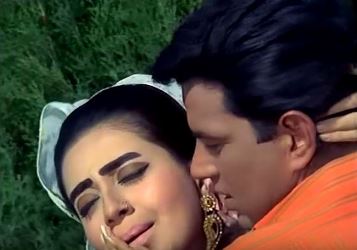
Anita (1967)

When, for May 31st this year (the 100th birth anniversary of film director Raj Khosla), I wanted to review one of his films, Anita was on my shortlist. Over the course of the years I’ve been writing this blog, I’ve reviewed several of Khosla’s films, including two of the three films (Woh Kaun Thi?, Mera Saaya and Anita) that comprise Khosla’s Sadhana suspense trilogy. Since Manoj Kumar had also passed away earlier this year, it seemed fitting to watch and review Anita, the last of the three films, and a film that starred Manoj Kumar opposite Sadhana.

For a tribute to Khosla, I ended up reviewing Kaala Paani instead. But I did watch Anita (a film that I’d last seen so long back, I remembered only the basics of it). And it seemed appropriate to review it too.

Therefore…

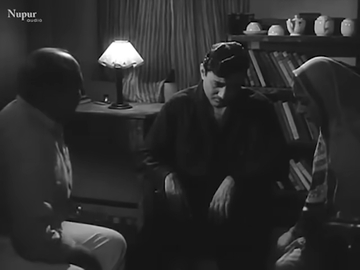
The film begins with a short, rather abrupt scene in which Seth Biharilal (Sajjan) visits a somewhat shady-looking pandit (Ulhas). Biharilal has brought along the horoscope of his 19-year-old daughter Anita for the pandit to have a look at, and to comment upon. The pandit has a peek, and says that this year is going to be really vile for Anita.

Continue reading

Kaala Paani (1958)

Today is the 100th birth anniversary of one of my favourite Hindi film directors, the suspense-specialist Raj Khosla (I hasten to add: I am well aware that that’s a generalization, since Khosla made a lot of films, too, that had nothing to do with the thriller/suspense genre: Mera Gaon Mera Desh, for example; Chirag, Main Tulsi Tere Aangan Ki, Do Badan, etc). But it is Khosla’s prowess with this particular genre that I especially admire, a skill and talent he showcased in classics of the genre such as Woh Kaun Thi? ((1964), Mera Saaya (1966), CID (1956) and Kaala Paani (1958). In each of these films, he managed to combine the classic elements of the Hindi masala film—a romance, a comedic side track, lots of fabulous songs—while making sure that the suspense remained (mostly) taut, the mystery a solid one.

To commemorate Khosla’s birth centenary, I wanted to review one of his suspense films. Several of these (CID, Mera Saaya, Ek Musaafir ek Haseena, Woh Kaun Thi?) I have already reviewed; I was torn between some of the others: Solva Saal, Kaala Paani, and Anita, all of which I have seen at some time or the other. I decided, eventually, that it was time to rewatch Kaala Paani, a film that I’ve watched several times, but too far back to have reviewed it on this blog.

The story begins on a night in Bombay, with a woman (Mumtaz Begum) hurrying through the streets to the home of a family friend, Mr Kapoor (?). She is in great distress, and confides in Kapoor: Karan has discovered the truth. What this truth is we discover when Kapoor hurries to Karan’s home to find Karan (Dev Anand) sitting, looking bereft. He has found out (how, we aren’t told) that his father Shankar Lal has, for the past fifteen years, been incarcerated in Hyderabad jail for the murder of a tawaif named Mala. Not, as Karan has been led to believe all these years, dead.

Continue reading

Ten Little Indians (1965)

I was reminded of this film the other day, because I was lecturing at a Delhi college on historical detective fiction, and ended up mentioning And Then There Were None/Ten Little Indians (no, it’s not historical detective fiction, but I wanted to check how many people in the audience had read this book). The novel, first published in 1939, is Agatha Christie’s most popular book (also, the world’s top-selling mystery book), and one which Christie described as being the most difficult one to write. It has been adapted to screen multiple times, in different languages (in Hindi, as Gumnaam, which sadly did not credit Christie even though the film was very obviously based on the book).

I have reviewed—many years ago—an earlier film adaptation, And Then There Were None (1945), directed by René Clair, and I’ve reviewed Gumnaam too, but decided it was high time I watched a later version. This one, directed by George Pollock.

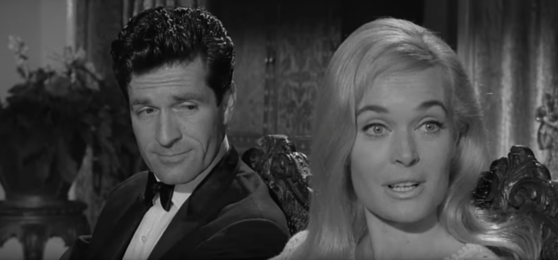
Ten Little Indians gets off to a flying start, the credits rolling as eight guests arrive by train at a snowy, deserted-looking railway station. They proceed, first by horse-drawn carts and then by cable car, up to a grand (but forbidding-looking) mansion situated high up on a rocky, lonely mountain. There, they are met by a couple of servants: Grohmann (Mario Adorf) and his wife (Marianne Hoppe).

The Grohmanns show the guests to their rooms. None of these guests have ever met each other, though from the curious looks some of them bestow on the others, it’s obvious they’re at least interested. The American Hugh Lombard (Hugh O’Brian) and the host’s newly-appointed secretary, Ann Clyde (Shirley Eaton) seem, for instance, to like what they see.

Continue reading

The Spiral Staircase (1946)

Years ago, when I first watched Wait Until Dark, I was blown away by the ingenuity of the idea: a blind woman trapped inside a house with a murderer on the loose. Audrey Hepburn was superb as the woman who must use all her wits to keep one step ahead of her pursuer, and if possible, to turn the tables on him.

That was the film I kept remembering when I was watching The Spiral Staircase, a story about a mute girl who is caught in a large mansion with a murderer coming after her.

The story begins, not at the mansion, but at a small hotel in the nearby town. On the ground floor of the hotel, a film (silent, shown with an accompanying pianist providing the music) is being projected. A small but engrossed audience is in attendance, and this includes Helen (Dorothy McGuire), who is mute.

Continue reading

Woh Kaun Thi? (1964)

I began this blog on November 4. 2008 (with a review of Vacation from Marriage), so this post marks the fifteenth birthday of Dusted Off. I dithered over how I might celebrate the occasion, and finally came to the conclusion that it would be good to mark it with a review of a film I’ve been meaning to review ever since I decided to start blogging about classic cinema. Woh Kaun Thi? is a film I enjoy a lot, and which I’ve seen in various avatars: first on Doordarshan, when I was a teenager. Then, when VHS tapes became available, multiple times on our VCR. Then, when CDs came along, this was one of the first VCDs I bought… then the DVD. Now YouTube.

The story begins on a stormy night. Dr Anand (Manoj Kumar) is driving down a pot-holed and lonely road when he sees a woman (Sadhana), clad in white and standing in the middle of the road. Anand tells her to move out of the way, but when she doesn’t respond, he is compelled to get out and talk to her. To all his questions—who is she, where is she going, isn’t she scared to be out here alone—she gives evasive, mysterious answers. Finally, however, she consents to let Anand give her a lift, but on one condition: he is not to ask any questions. [Given the way he’s been bombarding her with questions, I’m not surprised].

Continue reading

Sudden Fear (1952)

Last year, I read AJ Finn’s thriller suspense novel, The Woman in the Window, in which the protagonist spends most of her time drinking wine and spying on her neighbours. I didn’t like the book, but the protagonist, besides being an alcoholic and a voyeur, had one thing to recommend her: she was a lover of old suspense films. The book had plenty of references to classic noir cinema, and I got a kick out of seeing how many of those I’d watched. And making notes of the ones I hadn’t seen yet, but which I thought I should try to get hold of.

Sudden Fear was one of those I hadn’t seen before, and when I found a very good print on YouTube, I decided to give it a try.

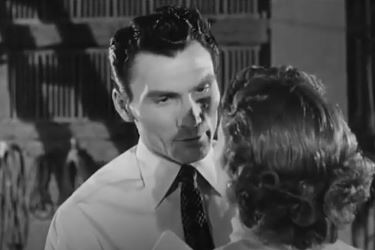
The story begins at a theatre company; rehearsals for a play are in progress, and the playwright Myra Hudson (Joan Crawford), a very wealthy heiress who insists on working for a living because she doesn’t want to live off all her inherited wealth, is sitting with a few other people. Onstage, the lead actor, Lester Blaine (Jack Palance) is speaking a romantic dialogue to his co-star.

Continue reading

Kannur Deluxe (1969)

I finally managed to get hold of a subtitled version of an old Malayalam film!

I should explain the reason for that exultation: one of the most frustrating aspects of my film-watching, film-reviewing career (or whatever) is that I find it so difficult to find subtitled versions of old Indian regional films. Every time a blog reader recommends a regional language film, I rush off searching the net for subtitled versions, but I usually end up disappointed. Unless the film happens to be a Bengali one (where chances of a subbed version are usually higher), I can pretty much expect a 0% chance of success.

No-one recommended Kannur Deluxe to me, but when I stumbled across it on Disney Hotstar, I looked up reviews and found it was a thriller, and possibly the first Malayalam road film. That was enough to make me want to watch it.

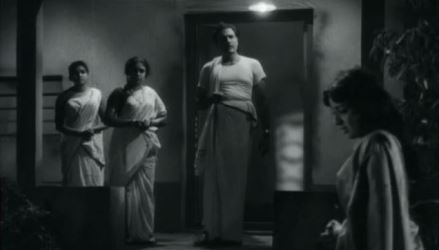
The film begins at night. Jayasree (Sheela), being chased by a couple of policemen, takes shelter in the garden of a Mr KB Pillai (GK Pillai). The Pillais, husband, wife, son Venu (KP Ummer) and their maid emerge, but since they’ve not seen any woman running by, the cops go their way. The Pillais are about to return to their beds when Jayasree emerges, weeping and nervous. She says she isn’t a thief, and on being encouraged, tells a tragic tale of her woes.

Continue reading

Julie (1956)

Most of the Hollywood films I’ve watched over the past few years have been suspense films. And, oddly enough, a disproportionate number of those have ended up following a similar pattern. A wealthy woman falls head over heels in love with a very attractive man and marries him. They’re blissfully happy—and then, the shattering truth emerges: he wants to kill her. In several of these films (Midnight Lace, Sudden Fear, Love From a Stranger), the man’s motive for wanting to kill his wife (and to marry her, in the first place) is to get at her money.

Not so in Julie, where Louis Jourdan’s character, playing the evil husband, is out to kill his wife for a very different reason.

Continue reading

The Big Clock (1948)

For someone who loves books with as much passion as she does old cinema, it’s hardly surprising, perhaps, that I get especially excited when I discover a screen adaptation of a book I like—or vice-versa.

Earlier this year, I stumbled upon Kenneth Fearing’s novel The Big Clock. I had never heard of it before, and the first couple of chapters of the book didn’t endear me to it: too dry, too full of journalistic jargon, too business-y. But I persevered, and suddenly, the story took a turn that caught me by surprise. And then it became such a gripping, unputdownable book that I ended up racing through it, eager to see where it would go.

… which was why, when I found it had been also made into a film, I approached the cinematic The Big Clock with some trepidation: would they have been able to do justice to it?

As it turned out, yes. More than justice.

The Big Clock centres round a mammoth publication company, named Janoth Publications, after its owner, Earl Janoth (Charles Laughton). Janoth Publications is housed in a multistory building, each floor being devoted to one publication churned out by the behemoth: Styleways, Sportways, Newsways, and so on—and, the publication which becomes the focus of this story, Crimeways. As its name suggests, Crimeways is devoted to crime reporting, and is headed by George Stroud (Ray Milland).

Continue reading

Kab? Kyon? Aur Kahaan? (1970)

If you’ve been reading this blog for a while, you’ve probably realized by now that I’m a sucker for suspense films. And that I have a soft spot for Dharmendra. And Helen. And Pran. Bring all of those together, and I’m pretty much willing to give it a try. Kab? Kyon? Aur Kahaan? is a film I’d watched many years ago, and liked, so I decided it was time for a rewatch [especially since I’d forgotten pretty much everything of it except for one very taut and tense section]. As it turned out, this was one of those films that make me realize how much more forgiving I was in my younger days. I’d forgotten, for instance, how Babita’s eyebrows managed to give Dharmendra’s a run for their money in the bushiness department.

Babita and Dharmendra in Kab? Kyon? Aur Kahaan?

Continue reading