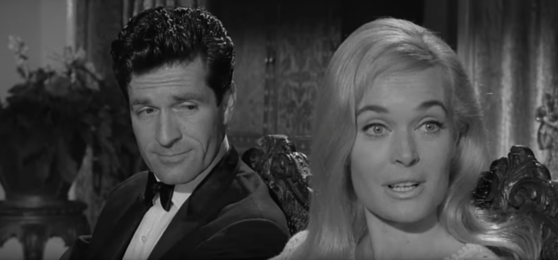
Ten of my favourite bhanwra songs

Late February and early March are, to me, the best season in the Delhi NCR area. Our (alas all too brief) spring is a lovely time: cool, the sunshine just right, the breeze pleasant—and flowers all round. In our housing society, spring is especially exuberant because the local Residents’ Welfare Association invests heavily in our society gardens: this time of the year, every path, every patch of grass, is lined with flowerbeds crowded with petunias, daisies, hollyhocks, stock, pansies, snapdragons… I could go on and on. It’s a riot of colour and fragrance.

And bhanwras. The carpenter bee, glossy and black and so easily visible, is everywhere right now, sipping at the hollyhocks and the dahlias in particular (in our society’s garden). Its size and its blackness makes the bhanwra look a little intimidating, but the males (which are aggressive) don’t have stingers and so cannot really harm you, and the females (which do have stingers) will generally sting only in retaliation if you disturb them. Usually, if all you’re doing is standing by and admiring one getting its nectar from a flower, they’ll leave you alone.

Continue reading

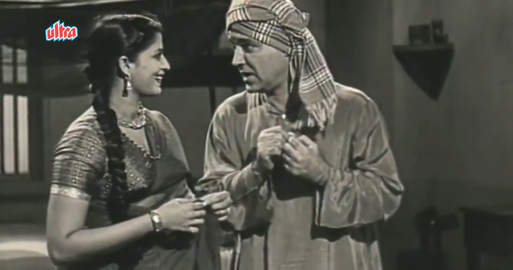
Matira Manisha (1966)

Aka ‘Man of the Soil’ (though in the film itself, the subtitle that appears below the title of the film is ‘Two Brothers’).

This is a first for my blog: an Odia film. I remain on the lookout for old films in regional languages, and I always, too, have at least some cinema-related books to read. Recently, I read an interesting book on the cinema of Mrinal Sen (review here), and—my interest piqued—went searching for some of the films mentioned in the book. To my surprise, I came upon this film, made in Odia (Sen had a penchant for making films in languages other than his native Bangla or Hindi: he even has, to his name, a Telugu film based on Munshi Premchand’s superb short story, Kafan).

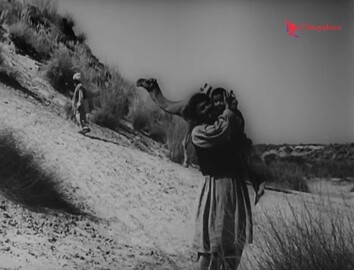
Matira Manisha, based on a classic novel by Odia writer Kalindi Charan Panigrahi, is set in a village in Odisha during World War II. The story focuses on the family of an old man named Pradhan (?), who lives with his family here, farming a small piece of land on which—like the rest of their village—they grow paddy.

Continue reading

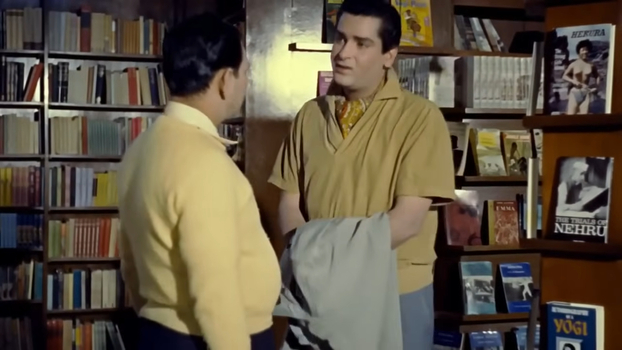
Ten of my favourite songs picturized at Mughal sites

This blog post was inspired by an Instagram post by one of my favourite handles of all the social media channels I follow: Mad Mughal Memes, an absolutely delightful account that manages to combine informativeness with fun and often totally loony humour (my type, in case you don’t know that yet). Some time back, Mad Mughal Memes did a post in which they listed, with screenshots, some ten or so songs from Hindi films that were picturized at the Taj Mahal. Unlike me, of course, they weren’t constrained by a time period, so they had songs from very recently as well. Some songs (a very few) I was familiar with; others I had never heard of.

But it provoked a thought: why not a post on songs picturized at Mughal monuments? After all, it’s not just the Taj (though that, I agree, is the Mughal monument to beat all others). There are also forts, mosques—and gardens. Many of them very scenic, a perfect setting for a song.

Continue reading

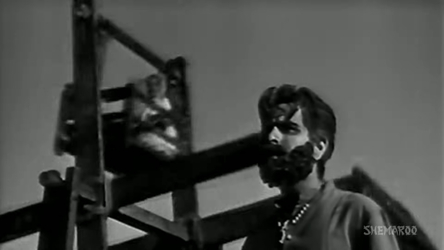
Chitralekha (1964)

I have decided it’s high time I began rewatching some of the old Hindi films I last saw when in my teens (or, in some cases, even before that). Back then, all our film viewing used to happen on India’s sole television channel, Doordarshan, which would telecast Hindi films every weekend, and sometimes in between as well. Most of the films were old classics, and I have fond memories of first viewings of films which became firm favourites almost from the get-go: Junglee, Teesri Manzil, Nau Do Gyarah, Dekh Kabira Roya, Woh Kaun Thi?, Mera Saaya

There were also films that I watched (we watched everything, there was such a paucity of options for entertainment) but which I ended up not liking. Or, as in the case of Chitralekha, not really understanding. I guess this was a simple case of being too young, too immature, to grasp the niceties of a film that wasn’t the standard masala entertainer.

About time, I thought, I saw this one again.

Kidar Sharma, who directed Chitralekha, had already made this film (based on a novel by Bhagwati Charan Verma) earlier as well. The 1941 Chitralekha starred Mehtab (who of course later married Sohrab Modi) and the juiciest bit of information about the film is that it featured a bathing scene (Cineplot used to have an article about this, an excerpt from Kidar Sharma’s autobiography, but since Cineplot now seems to be sadly defunct, that’s gone). Kidar Sharma did say, from what I recall of his autobiography, that the original Chitralekha was far superior to the 1964 remake.

But the 1941 film is, I think, gone—or at least not available for viewing online, though there are songs and stills galore. I may as well watch the 1964 Chitralekha, I decided, since that was the one I had hazy recollections of watching as a child.

The story is set in Pataliputra during the heyday of the Gupta Empire. Aryaratan Samant Beejgupt (Pradeep Kumar), a high nobleman, has just returned to Pataliputra after a sojourn elsewhere. Beejgupt’s arrival in the city is greeted with anticipation: his fiancée Yashodhara (Shobhna) is shyly hopeful that this time he will marry her.

Continue reading

Jaipur Beyond the Forts

(This is the third and final part of a three-part Rajasthan travelogue. The first post, about our trip to Sariska National Park, can be read here, and the second part, about four forts—Bhangarh (on the border of Sariska) and Jaigarh, Nahargarh and Amber, in Jaipur—is here).

The forts of Jaipur take up a major chunk of sightseeing time, not only because they sprawl, but because of the time involved in getting to them, and then (if you, like us, happen to be visiting in peak season) fighting the crowds at each fort.

While we admired the forts of Jaipur, it was, frankly, also with a certain amount of relief that we looked forward to seeing some of Jaipur’s less touristy spots.

In 1876, the Prince of Wales (later King Edward VII) visited Jaipur as part of a tour of India. In honour of him, the maharaja, Sawai Ram Singh II, had the city painted a deep salmon pink. The ‘pink city’, as Jaipur came to be known after that, is still the core part of Jaipur. Driving along these roads—the shops with uniform black-and-white signboards and matching façades, the occasional temple or gate or other interesting old building still fitting in perfectly with the look—was great fun, and since many of the shop signs are in Devnagari (and the LO loves reading signs), she got to practise her Hindi.

A street in the Pink City.
Continue reading

The LO Goes to Rajasthan, Part – 2: Four Forts

(The first part of this series of travelogues, about Sariska National Park, is to be found here).

On our last day in Sariska, we were scheduled to go on a morning safari, and had to wake up at an unearthly hour in order to get to the park booking office by 7 AM. The previous afternoon, we’d all got wet when it rained during our safari. In any case, it was freezing and we were tired. Was it a surprise, then, that we forgot to set an alarm, and overslept?

Frankly, none of us—not even the LO, who gets into a snit about things like this—were seriously disappointed. But this meant that we’d have the day completely free. I suggested we go to Bhangarh.

The 16th century Rajput hill fortress of Bhangarh is located on the edge of Sariska, about an hour and a half’s drive from where we were staying. It was built under the aegis of Maharaja Bhagwant Das of Amber (the father of Mirza Raja Man Singh, one of Akbar’s ‘nauratnas’). After his death, Bhangarh passed to his son Madho Singh. It’s a sprawling fortress, now alas mostly in ruins—and, according to all accounts, the most haunted place in India.

Bhangarh, supposedly the most haunted place in India.
Continue reading

The LO goes to Rajasthan, Part 1: Sariska

Given that we live in the National Capital Region, Rajasthan, rich in culture and natural beauty, would seem like the perfect destination for a holiday—but I guess here it’s a case of ghar ki murghi daal baraabar; familiarity breeds contempt. We invariably think of Rajasthan as a place we can always visit, after we’ve exhausted the places further away, the destinations more exciting and more exotic.

Also, I guess, because my husband and I, on multiple trips over the years before our daughter (the Little One, or LO) came into our lives, had visited a good bit of Rajasthan. We weren’t especially interested in revisiting the same places again and again.

But it has struck me recently that the LO really should get to see Rajasthan beyond Bharatpur—Keoladeo Ghana, Abhaneri’s Chand Baori, and the Neemrana Fort Palace, all of which she’s been to. All, by the way, before she turned three, so she has no recollection of any of these. Some more colourful culture, I thought, was in order. And more wildlife.

At Sariska: sambhar deer and peafowl
Continue reading

Ten of my favourite Pradeep Kumar songs

This post is ten days late. January 4, 2025 marked the 100th birth anniversary of an actor who, in an industry dominated by Punjabis, was one of just a handful of Bengali leading men. And, unlike—say, Biwasjit or Joy Mukherjee—to have a respectably long innings as an actor, playing lead roles right through the 50s and 60s, and then continuing as a character actor up to the last years of the 1900s. Impressive.

Continue reading

Announcing a New Book: For the Love of Apricots

Continue reading

Neither Here nor There: Rafi Sings for the In-Betweens

When, to celebrate the birth centenary (on December 24, 2024) of the one and only Mohammad Rafi, I compiled this list of my favourite Rafi songs for the top leading men of the 1950s and 60s, I was uncomfortably aware that I wasn’t doing justice to Rafi’s oeuvre. Even though I had tried my best to bung in mentions (and links) to many other songs Rafi had sung for these men. Because there were many other Rafi songs I could think of, which he had sung for actors absolutely opposite to these: extras, or actors who had woefully short-lived careers—in many cases men whose entire career might be said to hinge around one fantastic song that Rafi sang for them. A second Rafi list, arranged actor-wise, was therefore in order.

But in between the stars and the entities were a host of other actors who had the honour to lip-sync to Rafi’s voice. These were often character actors, or men who acted as villains. Even, in cases like Sanjay Khan, Premnath and Ajit, men who did appear in a fair number of films in leading roles, but cannot be said to have ever reached the heights of popularity or success of, say, a Dilip Kumar or Dev Anand, or even a Biswajit. They were the in betweens: not at all obscure, but not the Jubilee Kumar types.

Continue reading