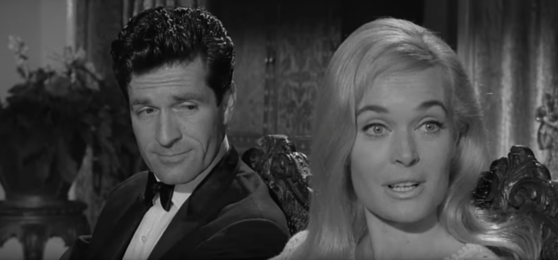
Ten of my favourite ‘record player’ songs

Many years ago, a blog reader with whom I had some differences, and who never seemed to be in agreement with me, parted ways with my blog. As she departed, it was with the scathing comment that I chose the most outlandish and weird of themes for my song lists. Unfortunately (or fortunately? I cannot decide) comments like that only serve to make me want to prove how unwarranted the remark is. In this case, by showing the reader that she “ain’t seen nothin’ yet”, as they say. If you thought I chose weird themes, you don’t known what a weird theme is. The weirdest is yet to come.

… and this is it. The germ of this idea was planted in my mind when I was doing research for another weirdly-themed list: my recording studio songs list. Several of the songs that feature people singing in recording studios also show the other side: people listening in, an audience tuned in to a radio or a television. As I’d watched song after song on my longlist and then my shortlist, I’d noticed that several songs weren’t just played on radios, but on record players, on gramophones. That had to be a separate list, I decided.

Continue reading

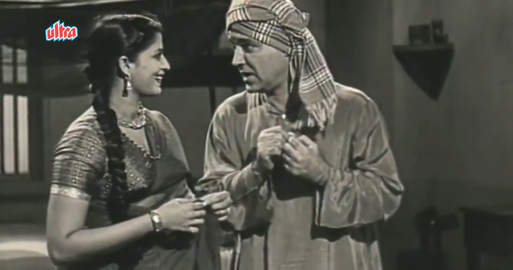
Charley’s Aunt (1941)

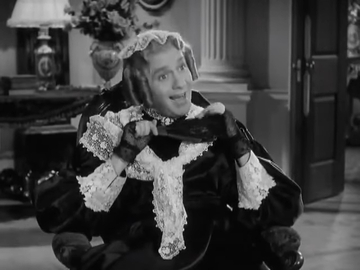
Two young men in Victorian England, eager to propose to their respective girlfriends, fix up a lunch date with the ladies, expecting that the aunt of one of the young men will oblige as a chaperone for the girls. However, the aunt, who has just arrived in England from Brazil, is called away elsewhere and sends a wire pleading her inability to come. Desperate, the young men seek a substitute as chaperone—and pick a friend of theirs, who then ends up spending the day juggling costumes, personas, and more.

That is the gist of Charley’s Aunt, a three-act play written by Brandon Thomas and first performed onstage in 1892. It’s a play I’d heard about often enough, but only got around to reading a couple of years back—and once I’d read it, I wanted to watch at least one cinematic adaptation of it (and yes, there are plenty of adaptations, including silent films as well as films in various languages, ranging from English to German to Arabic, the last-named in a couple of Egyptian versions of the film). Luckily enough, the best-known English adaptation of Charley’s Aunt, starring American comic actor Jack Benny in the lead role, is available even on YouTube (here).

Continue reading

Book Review: Manek Premchand’s ‘And the Music Lives On’

In the past couple of years, I’ve read two books by Manek Premchand—Director’s Chair, and his biography of Majrooh Sultanpuri—so when he offered to send me a copy of his latest book, And the Music Lives On, I leaped at the opportunity to read yet another Premchand.

The cover of this book gives a fair indication of what And the Music Lives On is all about: those stills from Mughal-e-Azam, Awara, Guide, Madhumati, Memsahib and Dilli ka Thug are a clear pointer to the films and the era Premchand writes about here, an era in Hindi cinema’s history that may be long past, but whose music lives on.

Continue reading

Meera (1947)

I am not a one for mythologicals or devotionals.

If you go through the list of Hindi films I’ve reviewed in the sixteen years this blog has been in existence, you’ll probably only find a handful of films that fit the bill (offhand, I can only think of Mahabharat, though in Telugu, I’ve also reviewed the excellent Maya Bazaar and in Tamil, Karnan). I have watched more than that, but nearly all I have found to be so ho-hum, I couldn’t be bothered to review them.

The story of Krishnabhakt Meera, wife of Bhojraj, was not one I expected to be any different. A woman, so completely devoted to the deity she has chosen to worship that she gives up everything, down to her husband and the kingdom of which she is queen, in order to go to Vrindavan to fall at Krishna’s feet… I was quite certain this film would be a hard slog. There was only one reason I wanted to watch it, and that was MS Subbulakshmi, who played Meera. I knew that Meera had originally been made in Tamil (in 1945), and was later (in 1947) dubbed in Hindi, with some scenes being reshot. MS Subbulakshmi, of course, given her stature as one of the greatest vocalists the Indian subcontinent has ever produced, sang all the songs.

Continue reading

Ten of my favourite bhanwra songs

Late February and early March are, to me, the best season in the Delhi NCR area. Our (alas all too brief) spring is a lovely time: cool, the sunshine just right, the breeze pleasant—and flowers all round. In our housing society, spring is especially exuberant because the local Residents’ Welfare Association invests heavily in our society gardens: this time of the year, every path, every patch of grass, is lined with flowerbeds crowded with petunias, daisies, hollyhocks, stock, pansies, snapdragons… I could go on and on. It’s a riot of colour and fragrance.

And bhanwras. The carpenter bee, glossy and black and so easily visible, is everywhere right now, sipping at the hollyhocks and the dahlias in particular (in our society’s garden). Its size and its blackness makes the bhanwra look a little intimidating, but the males (which are aggressive) don’t have stingers and so cannot really harm you, and the females (which do have stingers) will generally sting only in retaliation if you disturb them. Usually, if all you’re doing is standing by and admiring one getting its nectar from a flower, they’ll leave you alone.

Continue reading

Matira Manisha (1966)

Aka ‘Man of the Soil’ (though in the film itself, the subtitle that appears below the title of the film is ‘Two Brothers’).

This is a first for my blog: an Odia film. I remain on the lookout for old films in regional languages, and I always, too, have at least some cinema-related books to read. Recently, I read an interesting book on the cinema of Mrinal Sen (review here), and—my interest piqued—went searching for some of the films mentioned in the book. To my surprise, I came upon this film, made in Odia (Sen had a penchant for making films in languages other than his native Bangla or Hindi: he even has, to his name, a Telugu film based on Munshi Premchand’s superb short story, Kafan).

Matira Manisha, based on a classic novel by Odia writer Kalindi Charan Panigrahi, is set in a village in Odisha during World War II. The story focuses on the family of an old man named Pradhan (?), who lives with his family here, farming a small piece of land on which—like the rest of their village—they grow paddy.

Continue reading

Ten of my favourite songs picturized at Mughal sites

This blog post was inspired by an Instagram post by one of my favourite handles of all the social media channels I follow: Mad Mughal Memes, an absolutely delightful account that manages to combine informativeness with fun and often totally loony humour (my type, in case you don’t know that yet). Some time back, Mad Mughal Memes did a post in which they listed, with screenshots, some ten or so songs from Hindi films that were picturized at the Taj Mahal. Unlike me, of course, they weren’t constrained by a time period, so they had songs from very recently as well. Some songs (a very few) I was familiar with; others I had never heard of.

But it provoked a thought: why not a post on songs picturized at Mughal monuments? After all, it’s not just the Taj (though that, I agree, is the Mughal monument to beat all others). There are also forts, mosques—and gardens. Many of them very scenic, a perfect setting for a song.

Continue reading

Chitralekha (1964)

I have decided it’s high time I began rewatching some of the old Hindi films I last saw when in my teens (or, in some cases, even before that). Back then, all our film viewing used to happen on India’s sole television channel, Doordarshan, which would telecast Hindi films every weekend, and sometimes in between as well. Most of the films were old classics, and I have fond memories of first viewings of films which became firm favourites almost from the get-go: Junglee, Teesri Manzil, Nau Do Gyarah, Dekh Kabira Roya, Woh Kaun Thi?, Mera Saaya

There were also films that I watched (we watched everything, there was such a paucity of options for entertainment) but which I ended up not liking. Or, as in the case of Chitralekha, not really understanding. I guess this was a simple case of being too young, too immature, to grasp the niceties of a film that wasn’t the standard masala entertainer.

About time, I thought, I saw this one again.

Kidar Sharma, who directed Chitralekha, had already made this film (based on a novel by Bhagwati Charan Verma) earlier as well. The 1941 Chitralekha starred Mehtab (who of course later married Sohrab Modi) and the juiciest bit of information about the film is that it featured a bathing scene (Cineplot used to have an article about this, an excerpt from Kidar Sharma’s autobiography, but since Cineplot now seems to be sadly defunct, that’s gone). Kidar Sharma did say, from what I recall of his autobiography, that the original Chitralekha was far superior to the 1964 remake.

But the 1941 film is, I think, gone—or at least not available for viewing online, though there are songs and stills galore. I may as well watch the 1964 Chitralekha, I decided, since that was the one I had hazy recollections of watching as a child.

The story is set in Pataliputra during the heyday of the Gupta Empire. Aryaratan Samant Beejgupt (Pradeep Kumar), a high nobleman, has just returned to Pataliputra after a sojourn elsewhere. Beejgupt’s arrival in the city is greeted with anticipation: his fiancée Yashodhara (Shobhna) is shyly hopeful that this time he will marry her.

Continue reading

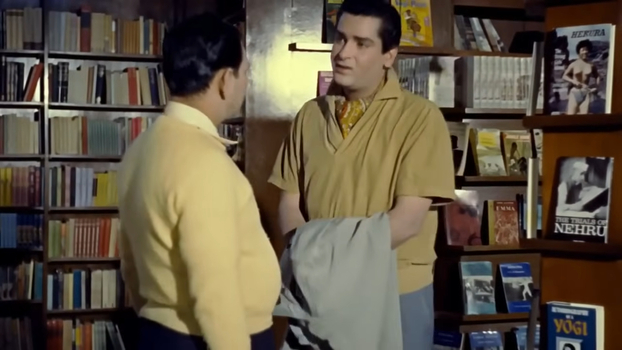
Ten of my favourite Pradeep Kumar songs

This post is ten days late. January 4, 2025 marked the 100th birth anniversary of an actor who, in an industry dominated by Punjabis, was one of just a handful of Bengali leading men. And, unlike—say, Biwasjit or Joy Mukherjee—to have a respectably long innings as an actor, playing lead roles right through the 50s and 60s, and then continuing as a character actor up to the last years of the 1900s. Impressive.

Continue reading

Neither Here nor There: Rafi Sings for the In-Betweens

When, to celebrate the birth centenary (on December 24, 2024) of the one and only Mohammad Rafi, I compiled this list of my favourite Rafi songs for the top leading men of the 1950s and 60s, I was uncomfortably aware that I wasn’t doing justice to Rafi’s oeuvre. Even though I had tried my best to bung in mentions (and links) to many other songs Rafi had sung for these men. Because there were many other Rafi songs I could think of, which he had sung for actors absolutely opposite to these: extras, or actors who had woefully short-lived careers—in many cases men whose entire career might be said to hinge around one fantastic song that Rafi sang for them. A second Rafi list, arranged actor-wise, was therefore in order.

But in between the stars and the entities were a host of other actors who had the honour to lip-sync to Rafi’s voice. These were often character actors, or men who acted as villains. Even, in cases like Sanjay Khan, Premnath and Ajit, men who did appear in a fair number of films in leading roles, but cannot be said to have ever reached the heights of popularity or success of, say, a Dilip Kumar or Dev Anand, or even a Biswajit. They were the in betweens: not at all obscure, but not the Jubilee Kumar types.

Continue reading