Pote tin Kyriaki (1960)

Or, in English, Never on Sunday.

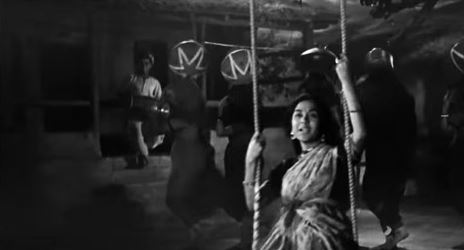
In one telling little scene in Pote tin Kyriaki, Greek prostitute Ilia (Melina Mercouri) tells earnest American Grecophile Homer Thrace (Jules Dassin, who also wrote and directed the film) that she is very, very fond of Greek tragedies. In fact, the next performance she’s eager to watch—of Medea—will be the fifteenth time she’ll be watching that particular play. Thrace is surprised, but impressed, too.

… until Ilia, on being invited by her innumerable male friends to tell them the story of Medea, launches forth on a version so garbled and wildly inaccurate that Thrace is left shocked. Not to worry, says a mutual friend, the Captain (Mitsos Ligizos). Ilia likes to be happy; so her interpretation of Medea is tailored to be a happy story, with everybody living happily ever after and going off to the seashore (which is Ilia’s concept of being happy).

Ilia tells the story of Medea

Continue reading

A Christmas Carol (1938)

Merry Christmas!
It’s that time of the year again—and time for a tradition I’ve kept up on this blog ever since its inception. Time for a Christmas movie.

This time, wondering which film I should review, I came across this one, and it appealed to me at once, because I remembered Dickens’s classic story of an asocial and curmudgeonly miser whose life changes one Christmas. I had seen an animated version of A Christmas Carol ages ago on TV, I’d just read the novella that Dickens wrote to help tide him over during a hard spell when money was short. High time (and appropriate time) to watch the film.

A Christmas Carol begins on Christmas Eve in London. As crowds hustle and bustle through streets covered in snow, people rushing briskly about from one gaily decorated shop to another, a young man (Barry Mackay) goes sliding merrily down a little slope of snow. In the process, he makes friends with Tim Cratchitt ‘Tiny Tim’ (Terry Kilburn), who can’t indulge in such treats because he’s lame—and so Fred happily takes Tiny Tim on his shoulders and allows him a taste of the joy of sliding down a slope.

Fred gives Tiny Tim a ride

Continue reading

Kab? Kyon? Aur Kahaan? (1970)

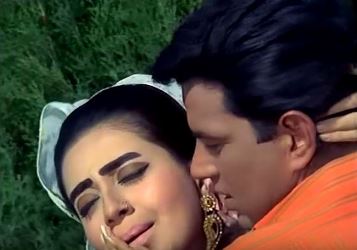
If you’ve been reading this blog for a while, you’ve probably realized by now that I’m a sucker for suspense films. And that I have a soft spot for Dharmendra. And Helen. And Pran. Bring all of those together, and I’m pretty much willing to give it a try. Kab? Kyon? Aur Kahaan? is a film I’d watched many years ago, and liked, so I decided it was time for a rewatch [especially since I’d forgotten pretty much everything of it except for one very taut and tense section]. As it turned out, this was one of those films that make me realize how much more forgiving I was in my younger days. I’d forgotten, for instance, how Babita’s eyebrows managed to give Dharmendra’s a run for their money in the bushiness department.

Babita and Dharmendra in Kab? Kyon? Aur Kahaan?

Continue reading

Trios, Quartets, and More: Ten of my favourite songs

When I was in school, all school functions—even, on special occasions, school assembly—would have one particularly talented child presenting a solo (the first time I heard Ae mere pyaare watan was in school assembly, sung brilliantly by a classmate of mine; her rendition made me want to listen to the original song because I guessed that if she sang it so well, what must the original be like?). For very special occasions, like the annual day, there would be a couple of solo performances. But the norm for school songs (most of which, by the way, were patriotic, with the occasional folk song here and there) was the group song. A choir, picked from those who could more or less hold a tune, had loud voices, and didn’t mind standing and singing Tu zinda hai toh zindagi ki jeet par yakeen kar while the rest of the school trooped slowly out of the assembly ground.

In contrast, ‘group songs’ in Hindi cinema tend to be relatively few and far between. Yes, choirs there are aplenty, singing for dancers, supporting actors, and so on—even, at times (Ajeeb daastaan hai yeh being a very good example) providing a certain magic to the song without which one now cannot imagine the song being complete. But the overwhelming bulk of Hindi film songs tends to consist of solos or duets. With, as I mentioned, a choir joining in now and then.

But how many good songs are there that have three (or more) well-established singers in them? Not ‘Rafi and Lata with chorus’, but ‘Rafi, Lata, Manna Dey, Asha Bhonsle’ (or along similar lines)?

Trios and quartets: 'Group songs' from Hindi cinema

Continue reading

Balgan Mahura (1964)

Or, in English, The Red Scarf.

Over the years, I’ve come to the conclusion that war films (and by that I mean those films which stay true to the genre and aren’t crossovers or about genre-bending) fall into three main categories. The first is the propaganda film, like the Robert Taylor starrer Bataan:  made, typically, during a war (Bataan was made in 1943), and aimed, mainly, at showing audiences how brave and self-sacrificing and patriotic their men in uniform are, thus (hopefully) spurring others on to enlist. There are more subtle propaganda films, too, the type that don’t outright yell the message out, but which show how glorious a death it can be to die for your country.

Then, there are the ‘grim reality’ films (and these feature some of the very best war films I’ve ever seen): films that strip war of the valour, the patriotic fervour, and all the other jingoistic claptrap used by political and military leaders to whip up support for whichever war they want their countrymen (and women) to die for. Films, like Paths of Glory or Battleground, which show the dirt, the pain, the agony of war. Not just for those who go into battle, but also for those who have to stay behind, the civilians.

Then there are the adventure films, the suspense-ridden, high-adrenaline films like Where Eagles Dare or The Enemy Below, which are rather more escapist—true, they don’t completely disguise the nature of war, but they make violence part of the adventure, instead of something that can wreck human life.

The South Korean film Balgan Mahura (The Red Scarf) falls pretty much in the ‘propaganda’ category, though it does have some surprises that set it a little apart from the more trite representations of that category.

A tale about war: Balgan Mahura, 'The Red Scarf'

Continue reading

Oonche Log (1965)

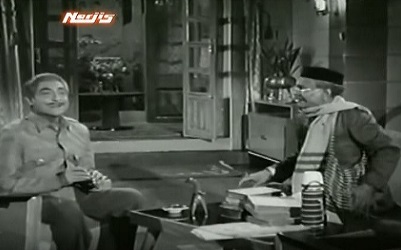
A scene near the beginning of Oonche Log is an interesting revelation of some of the themes that govern the film, and eventually have a bearing on its climax.

Major Chandrakant (Ashok Kumar) is a blind, widowed ex-officer of the Indian National Army. He now lives in Ooty. One evening, he receives at his home a friend, the school teacher Dhuni Chand (Kanhaiyyalal). There are more dissimilarities than similarities between the two men: Dhuni Chand is poor, barely managing to make ends meet on his salary and what he makes from the odd tuition, while the major is comfortably off, spending his time writing his memoirs.

Major Sahib receives DhunI Chand

Continue reading

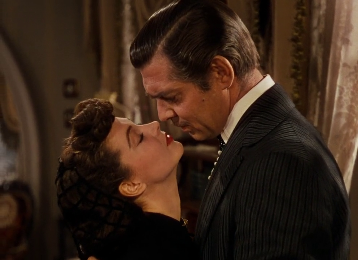
Gone with the Wind (1939)

I’ve been writing this blog for the last eight years now, and in all that time, while I’ve reviewed some really obscure films, I’ve steered clear of reviewing many of the great classics—mostly because of a fear that I won’t have anything new to say. So much has been written (by people infinitely more qualified than I can ever hope to be) about films like Pyaasa, Citizen Kane, etc that there’s really no reason why anybody would want to read my musings.

But. A couple of weeks back, after years of putting it off, I finally finished reading Gone with the Wind. I’d seen the film when I was in my early teens, and remembered little of it besides the basic story. I decided therefore that it was high time I rewatched the film. Since the book was so fresh in my mind, I couldn’t help but compare it to the film. And since the film is so beautiful (literally; every other frame looks like a painting), I ended up with a folder full of screenshots.

Vivien Leigh and Clark Gable in Gone With the Wind

Continue reading

Ten of my favourite ‘nazar’ songs

My blog posts come about in odd ways. Some are suggestions or recommendations from blog readers, or from friends. Some strike me as I go through life. Some are serendipitous—a video appearing on the sidebar in Youtube while I’m watching something else. And some are like this: an idea which strikes two people at almost the same time. Anu and I don’t always see eye to eye (pun intended), but more often than not, we look at things in exactly the same way.

Therefore, it came as no surprise that Anu’s ‘zulfein’ songs post gave me the idea for an ‘aankhen’ songs post (and, even less surprising, that Anu had already thought of an ‘aankhen’ songs post too). Or that, as I was publishing my post, I thought, “I should do a post on either nigaah or nazar next.” Or, that Anu should send me an e-mail later the same day, in which she wrote: “Perhaps I should do ‘Nigahein’ as a complementary post.”

Anyway, to cut a long story short: Anu and I decided we’d do twin (but not quite; look-alike, as in Hum Dono or Mujrim, might be a more appropriate description) posts. And then Anu suggested we ask our third soul sister, Bollyviewer, if she’d like to join the party as well: with a post about nayan/naina songs. Bollyviewer, good sport that she is, agreed. So here we are, with a trio of song lists. Head over to Anu’s blog to read her post on nigaahein songs, to Bollyviewer’s for her post on nayan/naina songs—and read on for my list of ‘nazar’ songs.

Aapki nazron ne samjhaa - nazar songs

Continue reading

Here Comes Mr Jordan (1941)

Considering I’d reviewed Jhuk Gaya Aasmaan last week, and that was based on Here Comes Mr Jordan, it seemed appropriate to follow up that review with this one. I hadn’t heard of Here Comes Mr Jordan before, though I have seen a later film (Ernest Lubitsch’s Heaven Can Wait) which was based on the same story—and which, interestingly, retained the name of the original story. Heaven Can Wait, as it turned out, is quite different from Here Comes Mr Jordan.

This story begins by introducing us to prizefighter Joe Pendleton (Robert Montgomery) as he trains somewhere out in the country while his manager and good friend Max Corkle (James Gleason) looks on. Joe is in fine form and is looking forward to an upcoming fight which can get him within arm’s reach of the world championship.

Pendleton and Max, after the sparring

Continue reading

Jhuk Gaya Aasmaan (1968)

Rajendra Kumar is one of those actors whom I’ve repeatedly mentioned as ‘not being one of my favourites’. Saira Banu, beyond her first few films (notably, Junglee and Shaadi), I find too shrill for my liking. Despite the fact that these two star in Jhuk Gaya Aasmaan, it remains one film I like a good deal—because it has such an unusual story.

A story to which there’s a brief nod in the first scene. Sanjay (Rajendra Kumar) and Priya (Saira Banu) meet in what looks like an obviously ‘indoor set’ representation of a cliff. There’s a little banter, she insisting that he’s irritating her with his wooing, he professing his love for her and asserting that he could do anything for her—even give up his life. Priya eggs him on: yes, please. Go ahead. Show us.

Priya begs Sanjay to jump off Continue reading