The Best Years of Our Lives (1946)

The very first English language film I remember watching was a war film (a farcical comedy called Our Miss Fred, which I’ve never managed to get hold of since). Over the years, and especially during my teens—thanks to a local VHS lending library which stocked mostly war films—I watched a lot more of this genre. I’ve watched violent war films, adventurous war films, propaganda-heavy films, war films that crossed genres and combined war with everything from crime and mystery to comedy, to romance. I’ve watched war films that showed the futility of war.

War seems to be a favourite subject with many film makers.

But who stops to think of what happens when war is over? The Spanish film Bienvenido, Mr Marshall! did explore this idea in a humorous way, but from the point of view of people who were mostly non-combatants in the war itself. What happens, however, to men who have spent a few years in battle, men who have actually been in combat, and that too on the other side of the world from where they usually live? What happens when men come back to their everyday lives, their families and friends, to find that their world has moved on? And that they, too, have changed?

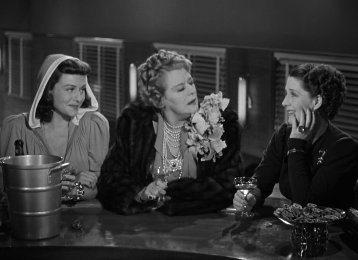
Fredric March as Al in The Best Years of Our Lives

Continue reading

Maengjinsadaek Gyeongsa (1962)

Some definitions that came to my mind, having—over the course of a little over thirty years—watched three versions of the same story:

Nostalgia. A feeling of deep, intense longing for a film you saw in your childhood, and of which you remember nothing except the vague outline of a story.

Serendipity. Searching for a film you know next to nothing about, and finding an earlier version that turns out to be even better than the one you recall seeing.

Double delight. Finding yet another version of a much-loved film, and discovering that this one is just as good as the other versions.

The point being that Shijibganeun Nal, about which I raved so ecstatically a couple of years back on this blog, turned out to have been only the earliest (as far as I know) cinematic adaptation of a comic play about a greedy country gentleman, a quiet and upright maidservant, and a young nobleman. I had originally seen the 1977 version of this film on Doordarshan three decades ago; I found and watched (with much enjoyment) the award-winning 1956 version some time back; and then, the other day, I came across this version (the name of which translates as ‘A Happy Day for Maeng Jinsa’) on Youtube. And how could I resist watching it all over again?

Choi Eun-Hee as Ip-Bun

Continue reading

Nartakee (1963)

I remember watching Padosan as a child, and I remember my sister saying, “How could someone so handsome consent to be made up as someone like Bhola? And to act so silly?” I already liked Sunil Dutt a good deal, but that comment made me sit up and respect him a lot more than I already did. In a period when there was a very definite idea of what a ‘hero’ should be like (and the 60s was a decade where heroes tended to be more cookie-cutter than in the 50s), Sunil Dutt did roles that ranged from a man having an affair with another man’s wife (Gumraah), a dacoit (Mujhe Jeene Do), a buffoon (Padosan), a cuckold (Yeh Raaste Hain Pyaar Ke)… and in a slew of everything from suspense films (Mera Saaya, Humraaz) to family melodramas (Milan, Meherbaan, Khaandaan, etc).

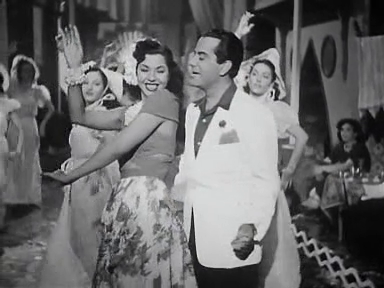
Versatile, unafraid of experimenting—and a man, too, who seems to have worked in several films that focused on social reform. In Nartakee, for instance, where his character is that of a college lecturer, Nirmal, who comes in contact with a reluctant nautch girl who would much rather learn how to read and write than dance and sing for patrons.

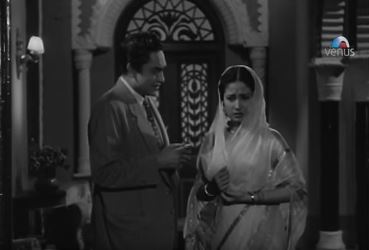
Sunil Dutt and Nanda in Nartakee

Continue reading

Ten of my favourite non-romantic male-female duets

Whew. That’s a long title for a song list.

But at least it covers the basics for what this list is all about.

I listen to a lot of old Hindi film music. Even when I’m not listening to one old song or another, one of them is running through my head. And the other day, remembering some old song, I realized just how uncommon it is to find a good song that’s a duet (male and female) that doesn’t have some shade of romance to it. When the song’s a solo, there seems to be no problem doing themes other than romance: the singer could philosophize, could sing of life or past childhood, of—well, just about everything. When the song’s a duet between two females or two males, it could run the gamut from friendship to rivalry on the dance floor, to devotion to a deity, to a general celebration of life.

But bring a man and a woman together, and it seems as if everything begins and ends at romantic love. They may be playful about denying their love; they may bemoan the faithlessness of a lover; they may try to wheedle and cajole a huffy beloved—but some element of romantic love always seems to creep in. Even when there’s no semblance of a romantic relationship between the two characters in question (for instance, in a performance on stage, or—in my favourite example of a very deceptive song, Manzil wohi hai pyaar ki)—they end up singing of romantic love.

So I set myself a challenge: to find ten good songs which are male-female duets, and which do not mention romantic love in any form, not even as part of a bhajan (the Radha-Krishna trope is one that comes to mind). Furthermore, I added one more rule for myself: that the actors should both be adults (because there are far too many songs which have a female playback singer singing for a child onscreen).

Hariyaala saawan dhol bajaata aaya, from Do Bigha Zameen

Continue reading

Meghe Dhaka Tara (1960)

There was a point, when I was watching Meghe Dhaka Tara, that I was reminded of another much-acclaimed Indian classic, Pyaasa. A man, an artiste (a singer, not a poet, as in Pyaasa) wanders along on a grassy patch of land, singing. Far beyond is the railway track; around him are shady trees, a path, solitude. Here is a man practising his art, being one with nature, without a care for the world around him.

Shankar does his riyaaz

Continue reading

Pote tin Kyriaki (1960)

Or, in English, Never on Sunday.

In one telling little scene in Pote tin Kyriaki, Greek prostitute Ilia (Melina Mercouri) tells earnest American Grecophile Homer Thrace (Jules Dassin, who also wrote and directed the film) that she is very, very fond of Greek tragedies. In fact, the next performance she’s eager to watch—of Medea—will be the fifteenth time she’ll be watching that particular play. Thrace is surprised, but impressed, too.

… until Ilia, on being invited by her innumerable male friends to tell them the story of Medea, launches forth on a version so garbled and wildly inaccurate that Thrace is left shocked. Not to worry, says a mutual friend, the Captain (Mitsos Ligizos). Ilia likes to be happy; so her interpretation of Medea is tailored to be a happy story, with everybody living happily ever after and going off to the seashore (which is Ilia’s concept of being happy).

Ilia tells the story of Medea

Continue reading

A Christmas Carol (1938)

Merry Christmas!
It’s that time of the year again—and time for a tradition I’ve kept up on this blog ever since its inception. Time for a Christmas movie.

This time, wondering which film I should review, I came across this one, and it appealed to me at once, because I remembered Dickens’s classic story of an asocial and curmudgeonly miser whose life changes one Christmas. I had seen an animated version of A Christmas Carol ages ago on TV, I’d just read the novella that Dickens wrote to help tide him over during a hard spell when money was short. High time (and appropriate time) to watch the film.

A Christmas Carol begins on Christmas Eve in London. As crowds hustle and bustle through streets covered in snow, people rushing briskly about from one gaily decorated shop to another, a young man (Barry Mackay) goes sliding merrily down a little slope of snow. In the process, he makes friends with Tim Cratchitt ‘Tiny Tim’ (Terry Kilburn), who can’t indulge in such treats because he’s lame—and so Fred happily takes Tiny Tim on his shoulders and allows him a taste of the joy of sliding down a slope.

Fred gives Tiny Tim a ride

Continue reading

Kab? Kyon? Aur Kahaan? (1970)

If you’ve been reading this blog for a while, you’ve probably realized by now that I’m a sucker for suspense films. And that I have a soft spot for Dharmendra. And Helen. And Pran. Bring all of those together, and I’m pretty much willing to give it a try. Kab? Kyon? Aur Kahaan? is a film I’d watched many years ago, and liked, so I decided it was time for a rewatch [especially since I’d forgotten pretty much everything of it except for one very taut and tense section]. As it turned out, this was one of those films that make me realize how much more forgiving I was in my younger days. I’d forgotten, for instance, how Babita’s eyebrows managed to give Dharmendra’s a run for their money in the bushiness department.

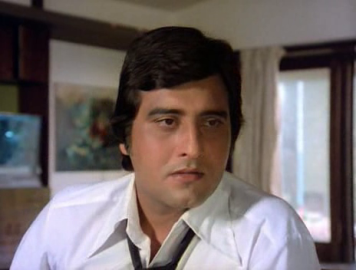
Babita and Dharmendra in Kab? Kyon? Aur Kahaan?

Continue reading

Trios, Quartets, and More: Ten of my favourite songs

When I was in school, all school functions—even, on special occasions, school assembly—would have one particularly talented child presenting a solo (the first time I heard Ae mere pyaare watan was in school assembly, sung brilliantly by a classmate of mine; her rendition made me want to listen to the original song because I guessed that if she sang it so well, what must the original be like?). For very special occasions, like the annual day, there would be a couple of solo performances. But the norm for school songs (most of which, by the way, were patriotic, with the occasional folk song here and there) was the group song. A choir, picked from those who could more or less hold a tune, had loud voices, and didn’t mind standing and singing Tu zinda hai toh zindagi ki jeet par yakeen kar while the rest of the school trooped slowly out of the assembly ground.

In contrast, ‘group songs’ in Hindi cinema tend to be relatively few and far between. Yes, choirs there are aplenty, singing for dancers, supporting actors, and so on—even, at times (Ajeeb daastaan hai yeh being a very good example) providing a certain magic to the song without which one now cannot imagine the song being complete. But the overwhelming bulk of Hindi film songs tends to consist of solos or duets. With, as I mentioned, a choir joining in now and then.

But how many good songs are there that have three (or more) well-established singers in them? Not ‘Rafi and Lata with chorus’, but ‘Rafi, Lata, Manna Dey, Asha Bhonsle’ (or along similar lines)?

Trios and quartets: 'Group songs' from Hindi cinema

Continue reading

Balgan Mahura (1964)

Or, in English, The Red Scarf.

Over the years, I’ve come to the conclusion that war films (and by that I mean those films which stay true to the genre and aren’t crossovers or about genre-bending) fall into three main categories. The first is the propaganda film, like the Robert Taylor starrer Bataan:  made, typically, during a war (Bataan was made in 1943), and aimed, mainly, at showing audiences how brave and self-sacrificing and patriotic their men in uniform are, thus (hopefully) spurring others on to enlist. There are more subtle propaganda films, too, the type that don’t outright yell the message out, but which show how glorious a death it can be to die for your country.

Then, there are the ‘grim reality’ films (and these feature some of the very best war films I’ve ever seen): films that strip war of the valour, the patriotic fervour, and all the other jingoistic claptrap used by political and military leaders to whip up support for whichever war they want their countrymen (and women) to die for. Films, like Paths of Glory or Battleground, which show the dirt, the pain, the agony of war. Not just for those who go into battle, but also for those who have to stay behind, the civilians.

Then there are the adventure films, the suspense-ridden, high-adrenaline films like Where Eagles Dare or The Enemy Below, which are rather more escapist—true, they don’t completely disguise the nature of war, but they make violence part of the adventure, instead of something that can wreck human life.

The South Korean film Balgan Mahura (The Red Scarf) falls pretty much in the ‘propaganda’ category, though it does have some surprises that set it a little apart from the more trite representations of that category.

A tale about war: Balgan Mahura, 'The Red Scarf'

Continue reading