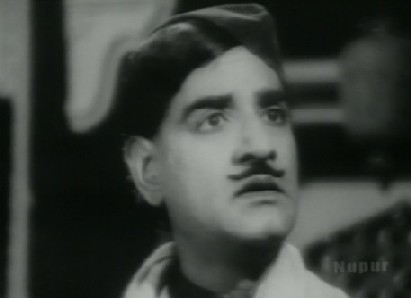
And besides that ‘one snake charmer, one bandit’ (and not a single snake, mind you)—there’s also one pretty lady, a nasty patricidal king, a ghost (who appears for all of one very short scene) and a trio of comic courtiers who go bananas trying to differentiate between their crown prince and an impostor. There’s also, to add to the fun, a variety of disguises. And a decent enough score by Usha Khanna, including the depressing hit song Hum tumse judaa hoke.
Shaheed (1965)
One thing that has long puzzled me is Bollywood’s reluctance to do real life stories. Where Hollywood has created films on the lives of people ranging from Napoleon’s one-time fiancée to an obscure British missionary in China, we have, to show for years of fascinating history… Shahjehan and Changez Khan, both so badly warped that they bear little resemblance to fact. Dr Kotnis ki Amar Kahani is a refreshingly unusual film in being relatively accurate, as well as entertaining—but a flash in the pan.
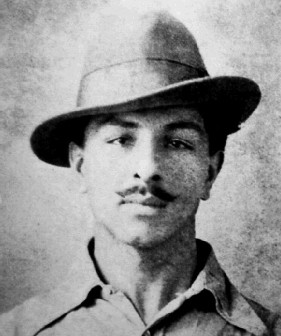
Our generally avid enthusiasm for the freedom movement and its exponents gave me hope that Shaheed, the story of Bhagat Singh, might be worth a watch. This, after all, was the young man who inspired an entire slew of films, beginning with (or so Wikipedia would have us believe) a film in 1954, followed by a 1963 film starring Shammi Kapoor, and this one: the first of Manoj Kumar’s many patriotic films. There have been later films—2002, for instance, saw two films, one a superb one starring Ajay Devgan and the other with Bobby Deol as Bhagat Singh—but Shaheed was the first major Bhagat Singh story.
The Shop Around the Corner (1940)
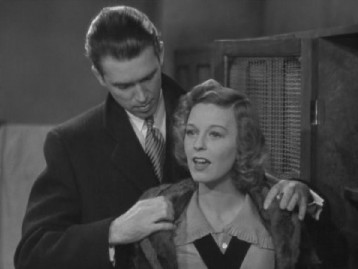
What is it that tempts film-makers to say “Ah! Let’s do a remake of this one!”? A conviction that a script that’s worked once will work again? Also perhaps a somewhat egoistic belief that they will be able to make a better adaptation than whoever made the original film? This story, a classic Ernst Lubitsch romantic comedy, certainly had a lot going for it: sweetness, dewy-eyed romance, and a heart-warming wholesomeness set against a backdrop of wartime Budapest. No wonder, a mere 9 years after it was made, The Shop Around the Corner was remade as In The Good Old Summertime.
But which is better? And how do they compare?
In the Good Old Summertime (1949)
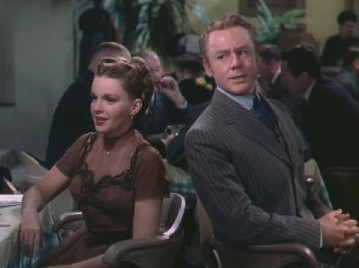
Like Love Affair/An Affair to Remember, In the Good Old Summertime is also one of those romances that’s proved very popular across time and space. This is a cheery little love story, of a man and a woman who begin corresponding with each other, fall in love through their correspondence (all without even knowing the name of the other person), and when they eventually meet, become instant enemies. Sounds familiar? Yes, that’s The Shop Around the Corner. Also You’ve Got Mail. And Sirf Tum. It’s also this film, a sweet musical remake of the original The Shop Around the Corner.
Jaagte Raho (1956)
As I’d mentioned in my last post, I’m not much of a Raj Kapoor fan. I have seen most of his films, but I like very few of them. Jaagte Raho, a flop when it was first released (even though it won an award at Karlovy Vary) is one of the exceptions: an RK film that I found engrossing and worth the watch. Part of it probably is the fact that it features a veritable who’s who of 50’s Hindi cinema character actors. Part of it is due to Salil Choudhary’s superb music. And more than that, it’s because this is a well-scripted story, socially relevant in a tongue-in-cheek way.
Ten of my favourite Mukesh songs
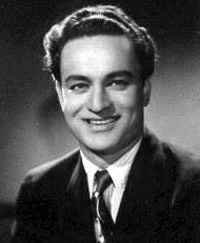
Of all the male singers who ruled the 50’s and 60’s, the one I’ve usually tended to ignore is Mukesh—and for what I must admit is a somewhat prejudiced reason: the most recognisable Mukesh songs, at least for me, are the ones he sang for Raj Kapoor, and nearly all of them just don’t appeal to me. Is it the fact that they’re picturised on RK (whom I, being the iconoclast I am, don’t much like)? Who knows?
But for Mukesh’s birth anniversary (he was born on July 23, 1923), I decided to explore Mukesh’s songs in greater detail—and realised that a lot of songs I really, really like are in his voice.
Shahjehan (1946)
After a longish hiatus, I’ve begun working on my next novel. Like my first book, The Englishman’s Cameo, this one too features the Mughal detective Muzaffar Jang, and is set during the final years of Shahjahan’s reign. I’ve been doing other bits of writing—very little of it related to history—and decided I needed something to help build up atmosphere and get me back in the mood. A historic film, set in Shahjahan’s time? Shahjehan? With Naushad’s hit score, and the chance to hear (and see) K L Saigal singing some of his best-known songs?
Alas. Alas, alas, alas. Or, to put it more bluntly: &$%@##%@!!!
Pillow Talk (1959)
Doris Day, Rock Hudson and Tony Randall acted together in three films: Pillow Talk, Lover Come Back, and Send Me No Flowers. Since I’d already reviewed the other two, I decided it was time to complete the trio with a re-view and a review of Pillow Talk, the first of the Day-Hudson-Randall films.
Bhai Bahen (1959)
My sister and I were discussing, with much fondness, my father’s love for classic Hindi cinema. When my parents bought a DVD player, I offered to look out for old films that I could buy for them. “Any particular favourites you’d like me to buy you?” I asked. Papa’s list included Sangdil, Daag, Anari, Ratan, Andaaz, Albela, Sone ki Chidiya and a bunch of other films—all of them selected mainly because they had superb music.
And I am very much my Papa’s daughter. It takes just one good song for me to rent a film (I may not go so far as to buy it, though). I’ve done it with Akashdeep, and I’ve done it again with Bhai Bahen. Here, fortunately, I was a little luckier. Even though the best thing about it is the lovely Saare jahaan se achha, Bhai Bahen is, overall, an interesting and rather offbeat little film.
I Soliti Ignoti (1958)
When I think of I Soliti Ignoti (literally, The Usual Unknown Thieves, though the English title of the film is Big Deal on Madonna Street), this is one of the scenes that comes to mind: one evening, a pawnshop is about to close for the day. A thief’s decided to hold up the pawnshop and steal all the jewellery in the safe. He arrives at the shop with a pistol in his hand, a newspaper draped over it.
When the last customer at the counter has gone, the thief steps up to the counter, points the gun at the man behind the counter and says, “Do you know it?”—indicating the gun.
The man behind the counter reaches over, grabs the gun, and has a quick look at it before saying, “Sure I know it. It’s a small calibre Beretta, in very poor condition. One thousand lira.”
When the thief stands there, gaping, the man adds, impatiently: “Well?!”
The thief snatches his gun back and leaves the pawnshop, too disgruntled to bother holding it up.