Book Review: Manek Premchand’s ‘Director’s Chair: Hindi Cinema’s Golden Age’

Amongst all the many books on Hindi cinema I’ve read over the years, most have been about actors, or (rather more occasionally) composers, singers, or even lyricists. Biographies, autobiographies, analytical insights into their work. Meena Kumari, Balraj Sahni, Asha Bhonsle, Rajesh Khanna, Ashok Kumar, SD Burman, Majrooh Sultanpuri, Sahir Ludhianvi, Helen, Lata Mangeshkar, Dev Anand, and many others. By contrast with these, I can count on the tips of my fingers the number of books I’ve read about directors. Hrishikesh Mukherjee (by Jai Arjun Singh), Basu Chatterji (by Anirudha Bhattacharjee) and Nasir Hussain (by Akshay Manwani); even an autobiography by Kidar Sharma. But other than that?  Not too many. Or none that I’ve read (though, I will admit, I am yet to read both Nasreen Munni Kabir’s and Sathya Saran’s books on Guru Dutt).

I was keen, therefore, to read Manek Premchand’s ‘Director’s Chair: Hindi Cinema’s Golden Age’ when its publisher, Blue Pencil Publishing, offered to send me a complimentary copy. I am of the firm belief that a director plays a huge role in making a film what it is: yes, everybody plays their part, but how so many disparate elements are brought together, how the sum becomes greater than its parts, is up to the director.

Continue reading

Talat Mahmood: Ten Solos, Ten Composers

Today is the birth centenary of the ‘King of the Ghazal’, the inimitable Talat Mahmood. Talat was born on February 24, 1924 in Lucknow, and it was in Lucknow itself that he obtained his initial training in music: at the Marris College of Music, where he learnt classical Hindustani music from Pandit SCR Bhatt. By the age of sixteen, Talat was singing the ghazals of Urdu’s foremost poets for All India Radio Lucknow, and was soon taken on by HMV as well. His first introduction to cinema came through the film industry in Calcutta, where he not only sang songs (under the name ‘Tapan Kumar’), but also acted in several films. In 1949, at the age of twenty-five, Talat moved to Bombay, and the rest, of course, is history: he went on to become one of Hindi cinema’s most distinctive voices, and his songs—romantic, filled with pathos, tender, soulful—still live on.

Continue reading

Rififi (1955)

Fact 1: In the 1956 Hindi film CID, there was a song (composed by OP Nayyar, lyrics by Majrooh Sultanpuri) which went Jaata kahaan hai deewaane… kuchh tere dil mein fiffi, kuchh mere dil mein fiffi. The censor board pounced on the song, accusing that ‘fiffi’ word of being obscene. Sultanpuri, Nayyar, and the director Raj Khosla insisted that it was a meaningless word, just put in as a filler to help marry the tune to the lyrics. The censor board refused to change its stance, and the song remained out of the film. In the 2015 film Bombay Velvet, the song was resurrected and sung by Suman Sridhar.

Fact 2: In the 1955 French film (note the year: 1955, a year before CID) Rififi, there’s the title song, sung (and performed onscreen too) by Magali Noël. Though the French word rififi (which is military slang) can be roughly translated as ‘rough and tumble’, referring mostly to the macho strutting of toughs of the like of this film’s main characters, the song’s lyrics give it a differently nuanced spin. Innuendo, through and through.

Continue reading

Yaadein (1964)

In its category for Fewest actors in a narrative film, the Guinness Book of World Records begins the list with this:

“Excluding monologues, the only narrative films with a single cast member have been Yaadein (India, 1964), written, directed and produced by Sunil Dutt (India), who was also its only actor….”

(Only two other films are listed in this category; one is the 2002 French-American production Lettre; the other is the 2004 Kannada film Shanthi).

I have known about Yaadein for a long time now; it was aired on Doordarshan when I was a child, and I remember my parents watching it. I wasn’t allowed, because this is one of those rare Hindi films from that era which had an A certificate. I do recall, though, my parents telling me that it was a unique film, with only Sunil Dutt in it.

Continue reading

The LO Goes to the Little Rann of Kutch

We ushered in the New Year this time in Ahmedabad (see my blog posts, on Historic Ahmedabad and on more around Ahmedabad). But Ahmedabad, really, was just on the way—for a place I’d been looking forward to visiting for a while now: the Little Rann of Kutch, which is home to the Wild Ass Sanctuary, India’s largest wildlife sanctuary.

The Little Rann of Kutch is just about 95 km from Ahmedabad along a very good highway, so it can take less than two hours to cover the distance. We had booked a cottage at a resort (in the village of Dasada) named Rann Riders by Kaafila, and had arranged for them to have us picked up from Ahmedabad. Given that we are interested in history, we opted to take a longer route to get to Dasada: through Patan and Modhera, which are home to some of Gujarat’s most iconic historical structures.

Rani ni Vaav, Patan
Section of carvings at Rani ni Vaav
Continue reading

The LO Goes to Gujarat, Part 2: More Ahmedabad

(Part 1 of this travelogue, Historic Ahmedabad, can be read here).

Our sojourn in Ahmedabad stretched across most of four days: a day and a half after we landed in Ahmedabad from Delhi, and another just-over-two days before we left again for home. In between, we did a memorable trip to the Little Rann of Kutch (about which I’ll be posting in next week’s blog post, the last of these travelogues).

Ahmedabad is a city of extremes. On the hand, there are parts of it which, frankly, looked far more upscale and posh than even Delhi: wide boulevards, stylish malls and boutiques, fancy restaurants serving global cuisines.

Ahmedabad, high street at night.
Continue reading

The LO Goes to Gujarat, Part 1: Historic Ahmedabad

A couple of years ago, my husband and I took our daughter (whom I refer to as the ‘LO’: the ‘Little One’, though given that she’s now ten and no longer little, she suggests that that now be ‘Loved One’) to Corbett National Park. The LO had been on wildlife safari before, but this one was special: she was deep in the jungle, she was old enough to appreciate it all and to retain memories of it. We decided we had to notch up more wildlife adventures. ‘Visit one Indian wildlife sanctuary or national park every year,’: that was a goal we set for ourselves.

This time, I decided to do something different: not a jungle, not a place we might see a tiger. Instead, I suggested we visit the Little Rann of Kutch. And since all of us are very interested in history, we figured it would be good to combine that with a stopover at Ahmedabad: the historic walled city of Ahmedabad is on the UNESCO’s list of World Heritage Cities, and its list of stunning old monuments seemed too good to pass up.

Our flight from Delhi to Ahmedabad arrived early enough for us to be able to get to our hotel (the Taj Skyline) by noon. Since this was just a week after Christmas, the lobby was still all decked up for Christmas, with a tree, a gingerbread house, and more. The LO was in seventh heaven.

Christmas decorations at Taj Skyline
Continue reading

Howrah Bridge (1958)

Aaiye meherbaan baithiye jaan-e-jaan, and Mera naam Chin Chin Choo. Two great actresses, two iconic songs.

When I was doing the Helen tributes last month, I was reminded of Mera naam Chin Chin Choo all over again—and remembered, too, that I had never reviewed Howrah Bridge on this blog. It has also been many years since I last watched the film (before I launched Dusted Off), so I decided it was high time I revisited this.

Howrah Bridge begins very far from the bridge, and in fact from Kolkata: in Rangoon, where Prem Kumar (Ashok Kumar) finds his father (Brahm Bhardwaj) in a flap. Daddy is distraught because Prem’s elder brother Madan (Chaman Puri, in a cameo role) has run off from home, taking with him an invaluable family heirloom, a dragon which has been in the family for generations. We later discover that the dragon was crafted in China many centuries ago, and from there came to be owned by the king of Burma, after which it passed into the possession of Prem’s family.

Continue reading

Sleeping Car to Trieste (1948)

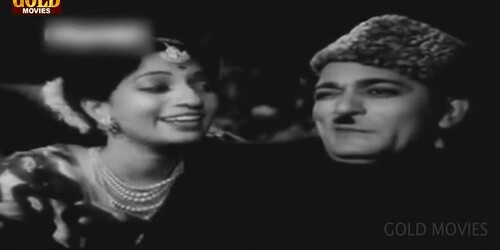
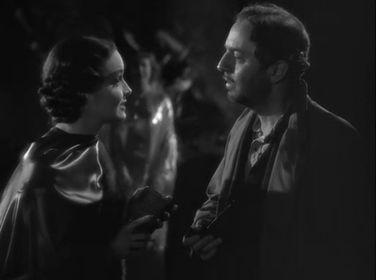
This little-known British film was recommended to me by YouTube, and given that I am a fan of train films (The Lady Vanishes is a favourite, as are Murder on the Orient Express and North-West Frontier), I decided I had to watch.

The story starts off with a bang (actually, almost literally: there’s a fatal gunshot in the very first scene). In an unnamed embassy in Paris, a party is in progress, when one of the guests, a Captain Zurta (Albert Lieven) slips out of the ballroom, makes his way to one of the more secluded rooms in the embassy, and having broken into a safe there, purloins a diary. He is caught red-handed by a footman who enters just then.

Continue reading

Ten of my favourite flower songs

Over the years, I’ve done several songs that focus on my love—and, it would seem, the love of some film-makers and lyricists, too—for nature. I have done lists of nature songs; tree songs; and bird songs. Over the years, too, I’ve several times been told I should do a list on flower songs. I’ve always ducked that one, because Harvey, years ago, did a superb post on flower songs, and how I could I possibly hope to even match, let alone excel, a botanist writing about flower songs?!

But over the past couple of years, my interest in flowers has grown exponentially, and while I may not know a hundredth of what Harvey knows, at least I can depend upon my enthusiasm to steer me through. So here goes.

Flowers are, to put it bluntly, the sexual part of a plant. Contained in them are the female and male reproductive organs, plus (often) nectar, to entice pollinators such as bees, butterflies, bats, other insects, small birds, and so on.

Flowers are beautiful, flowers are useful (there would be no fruit without flowers), and human beings have admired and used flowers in a myriad ways since time immemorial. We’ve decorated with them, we’ve used their designs to fashion everything from jewellery to embroidery. We’ve painted and carved them, we’ve celebrated them in literature and in song.

Continue reading