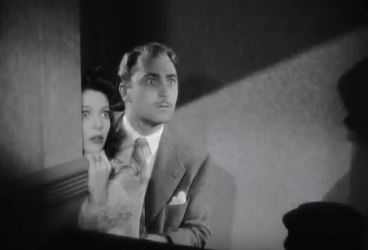
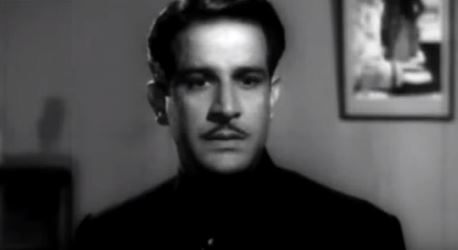
Raaz (1967)

For many years now, I’ve been fascinated by what I call the ‘supernatural’ subgenre of Indian suspense films. Offhand, I can’t recall too many [any?] non-Indian films that used a supposedly supernatural theme to veil what was a definitely corporeal, criminal deed. Yeh Raat Phir Na Aayegi, Mahal, Woh Kaun Thi?, Bees Saal Baad, Poonam ki Raat, Anita—all of these (and plenty more) used tropes such as spooky songs, ‘ghosts’ (invariably women in white), mysteriously creaking doors, swinging lampshades and seemingly haunted havelis, all forming part of a grand plan to convince someone that they were surrounded by bhoots when in reality they were surrounded by crooks.

Raaz is one of those films. And yet not.

Continue reading

The War of the Worlds (1953)

There are some books that have become such a part of me that I sometimes forget if I have actually read the original or not. Great Expectations, A Tale of Two Cities, Oliver Twist, Jane Eyre: all I began by reading in an abridged form. I encountered them again, over the years, in various cinematic adaptations, on television and otherwise.

It has been the same for HG Wells’s classic tale of alien invasion, The War of the Worlds. I’ve been so familiar with this book for so long that I couldn’t remember whether I’ve ever read the full-length book or whether all my recollections of it were based on the film version I’ve seen and excerpts I’ve read. I decided finally to read the original recently (I liked it)—and then, naturally, I had to check out the cinematic adaptations of the book. One of these I had watched, and more than once: the 2005 Steven Spielberg one. But there was another, considered the most iconic version, which dated back to 1953 and which I figured I had to watch ASAP.

The War of the Worlds starts with a voiceover that talks about how, on Mars, a highly technically advanced civilization realized that its planet was dying and that it was time to look elsewhere for habitation. So it began the search among the other planets of the solar system: considering one and discarding it, one after the other, this one too cold, this too hot. Until its gaze turned on Earth, so serene and beautiful, so conducive to life.

Continue reading

Hampi in a day and a half

Many years ago, a colleague who had been to Hampi told me about it. I already knew a little about Hampi: the capital of the mighty Vijayanagar Empire, a UNESCO World Heritage Site, and a fine example of an entire city’s worth of ruins. I’d seen photos. What I hadn’t known was the nitty-gritty: how to get there, what to see, how much time to allocate for the trip.

Three days, she told me. Four or five days, said another seasoned traveller.

And guess what I got? A day and a half (or less, considering I spent part of that half day sitting at the foot of a hill and chatting with a couple of fellow writers). And yet, though I didn’t get to see all there is to Hampi, when I left, I was pretty much sated with temples and monoliths and boulders. I didn’t yearn to stay on for another day or two. Perhaps I will go back someday and see all there is to Hampi. Perhaps this was enough.

Outside the Hazaar Rama Temple.

Continue reading

At work and play in Vidyanagar

I’ve received a couple of e-mails over the past ten days: am I well? Is everything all right? (These from fellow bloggers whose blogs I frequent). I had to tell them: I was travelling and the net connection was somewhat dodgy. Besides, I was very busy. I often got only about half an hour to check my e-mail and catch up with what was going on at my blog.

To explain: I was at a writer’s conclave. The JSW Group, in partnership with The Hindu, played host to nine writers, including yours truly, for ten days, for a conclave named The Spaces Between Words.

We stayed at JSW’s very own guest house, Hampi House, at Vidyanagar, one of the townships that JSW has built around its steel plant in Karnataka’s Bellary district. Most of our writing was done at the nearby Kaladham, a lovely space just five minutes’ leisurely stroll from Hampi House.

Kaladham.

Continue reading

A Night to Remember (1942)

Last May, my husband, my daughter and I shifted house. We’ve shifted house before (though never with a toddler in tow), but this time was rather more harrowing than every previous experience. The movers and packers we’d hired turned out to be a thoroughly inefficient and poorly trained lot, requiring constant supervision. They left debris—newspaper, scraps of cardboard and more—littered all across our new home, and the dumped al my books, each one of my precious books, in one untidy pile on the floor.

Then, on the second day in the new house, an insect flew into my eye and caused an infection that didn’t go for a month. Within the first week, the RO conked out; the kitchen tap suddenly started spewing black water; and we discovered that one of the pipes was so badly choked with plaster left behind by the repair-and-renovation gang that it had to be torn up and redone.

But at least we didn’t have people getting murdered in our backyard.

Continue reading

Around the World in Ten Songs

This song post has been on my to-do list for a long time. Then, when AK (over at Songs of Yore) did his brilliant twin posts on Bharat Darshan—small-town India, and metropolis India, through songs—I decided it was high time I did get this done. Songs about towns and cities abroad.

Continue reading

Yasmin (1955)

Fellow blogger and soul sister Anu, at Conversations Over Chai, watched Bahaar for two reasons: one, that it starred Vyjyanthimala; two, that it featured the delightful Saiyyaan dil mein aana re. As it happened (and both Anu and I agreed this was nothing new) she—as I have been, countless times—found herself a victim of the somewhat irrational logic that good music + an actor we like = good film.

But, to get down to this week’s post. A film I watched because, one, it stars Vyjyanthimala; and two, because it has great music. I had steeled myself for something pretty irritating, so perhaps the fact that I began this film with low expectations had much to do with my eventual enjoyment of it. Yasmin isn’t  a masterpiece, but I still liked it, predictability and all.

Continue reading

Patanga (1949)

Of Mere piya gaye Rangoon fame.

Mere piya gaye Rangoon—and some of the other songs of Patanga—were the main reason I began watching this film. Then, when the credits started to roll and I discovered this film also starred Shyam, I sat up a bit and began watching with a bit more interest. Shyam (1920-51, born Shyam Sundar Chadha) grew up in Rawalpindi and, when he was just 22 years old, debuted in a Punjabi film named Gawandi. He went on to work in several films, including Samadhi, Dillagi, and Shabistan—the last-named was also to be Shyam’s last film: in the course of the shooting, he fell off a horse and died.

I’ve seen precious little of Shyam (Samadhi is the only film of his I remember watching), but he intrigues me in the same way that his older contemporary Chandramohan does: they make me wonder if the honour roll of Hindi cinema would have been somewhat different if these men had lived. Shyam, with that handsome face and that impressive height and build, was definite star material. Plus, he was not a bad actor, either. Had he lived well into the 50s, would his presence have perhaps altered the careers of actors like Dev Anand and Shammi Kapoor?

Continue reading

Pendekar Bujang Lapok (1959)

This blog reminds me sometimes of a sort of railway platform—the type from the Sunil Dutt-Nalini Jaywant starrer, where a bunch of people end up spending several days in each other’s company, and then go their separate ways. Because, while there are some loyal friends who stick to this blog (and have done so over the years), the majority of people who comment on it are those who stay for a few months, a few weeks, maybe even just a few days, commenting like mad, and then vanish, never to be seen again.

One such person was a Malaysian, of Indian origin but settled in Australia, who haunted my blog several years ago. After some very hectic commenting on just about every post I published (and that included multiple comments, and involved conversations), she asked me for some Agony Aunt-ish advice offline, and having received both that as well as a shoulder to cry on, went off. I haven’t heard from her ever since.

But one thing she did manage to do while she was frequenting this blog: she told me enough about Malaysian cinema of the 50s and 60s to make me want to watch it. Something, I realized soon enough, that wasn’t going to be easy, because there didn’t seem to be too many Malaysian films of that era that were available with English subtitles.

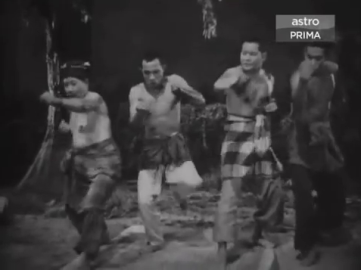
I’ve persevered, though, and sometime back I found time one. Pendekar Bujang Lapok (The Three Bachelor Warriors) is the second in a highly successful series of films made by iconic film-maker and actor P Ramlee. It has been called one of the five best Malaysian films to be shot in Singapore, and considering I’ve just returned from a trip to Singapore, I figured it was time to watch this.
Continue reading