I’m feeling a sense of elation right now, because I’ve submitted the manuscript of the next Muzaffar Jang book. It will probably be about a year before the book’s published, but getting this done and out of the way has … Continue reading

I’m feeling a sense of elation right now, because I’ve submitted the manuscript of the next Muzaffar Jang book. It will probably be about a year before the book’s published, but getting this done and out of the way has … Continue reading
If the title of this post stumps you, let me explain.
Anybody who’s seen Hindi films (especially from the 1940s onward, when playback singing became widespread) knows that most actors and actresses onscreen weren’t singing for themselves. Occasionally, as in the case of artistes like Suraiya, KL Saigal, Noorjehan or Kishore Kumar, they did sing for themselves, but more often than not, the recording was done off-screen, and the actor lip-synched to the song onscreen. So we have all our favourite actors, warbling blithely (or not, as the case may be) in the voices of our greatest singers.
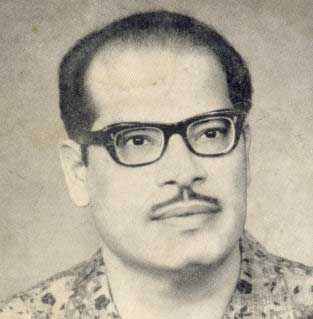
And just now and then, while the song may reach the heights of popularity, the person on whom it is filmed may be, to most people, a non-entity. Sidharth Bhatia, author of Cinema Modern: The Navketan Story (as well as a book on Amar Akbar Anthony, which I’m looking forward to reading) pointed this out to me the other day, with a couple of examples in support of his point. Jaan-pehchaan ho, and Tum apna ranj-o-gham. Sidharth made a request: would I compile a list of songs of this type? Famous songs, but lip-synched by not so famous faces?
So here it. And, Sidharth: thank you. This was challenging, and fun.

World Heritage Week is observed globally from November 19th through 25th. In India, one major plus point about it is that the Archaeological Survey of India, for the duration of this week, cuts all entry fees to protected monuments. So … Continue reading
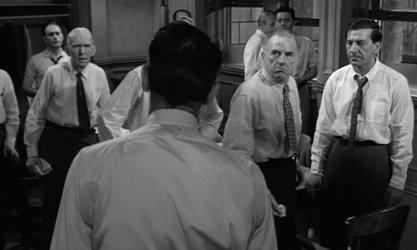
I’ve lost track of the number of people who’ve recommended this film to me. Sabrina Mathew’s blog was where I first read a review of 12 Angry Men (and a comparison to Ek Ruka Hua Faisla, which I’d seen ages back). Anu reviewed this film on her blog, too, and blog reader oldfilmbuff recommended it to me. So: Sabrina, Anu, oldfilmbuff: this one’s for you. Thank you for telling me about this one.
When I reviewed Les Quatre Cents Coups a couple of weeks back, I was mentally riffling through the list of good films with child protagonists that I’d seen. I couldn’t, sadly, think of many. There were some—The Night of the Hunter, Bhai-Bahen, Bandish, Do Kaliyaan, for instance—in which children played an important part. But these were either not really films about children, or they were films about stylized children: little adults, really, or oversized toddlers.
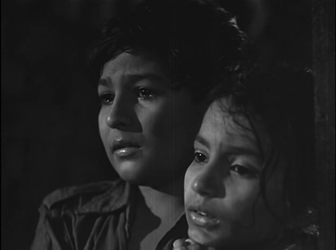
Then I saw Kaphal – Wild Berries, made by blog reader, fellow blogger and film maker Batul Mukhtiar (aka Banno), and thought: yes, this is what a good film about children should be like. (Here, on my website, is a review of Kaphal). I also remembered, then, that Banno had once recommended a film about children. The Raj Kapoor production, Boot Polish, which she’d reviewed on her blog, and which I’d never got around to watching. If someone who could make such a lovely film about children could recommend a film, that film would be worth watching.
So here we are. And, thank you, Banno.

I have a soft spot for well-crafted stories about children. Not stories necessarily for children, but stories in which children are the main focus. Children, seen through adult eyes, can often be the sadly one-dimensional sort that act like miniature … Continue reading
Yes. The first post on Dusted Off was published on November 4, 2008.
It wasn’t as if I’d woken up suddenly one day with an epiphany and decided I had to create a blog. It just so happened that everything began to come together for me in 2008. I’d just quit the corporate world after 14 years of hard slogging—years which had left me with almost no time to call my own. I read books in fits and starts. I wrote in fits and starts. I didn’t have time to watch TV, and only very few films, and those too mostly in bits and pieces: half an hour here, half an hour there.
But, in March 2008, having given up my job so I could focus on my writing (I’d just signed a contract for The Englishman’s Cameo, and was busy writing its sequel), I began to spend a little more time doing the things that really appealed to me. Like watching cinema. And seeing what others had to say about the films I enjoyed watching.
 Continue reading
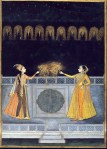
Happy Diwali! With Diwali around the corner, it seemed appropriate to post a little ‘did you know’ about the festival, since the Mughals celebrated this festival with a good deal of enthusiasm.
Railway Platform begins, not on a platform, but in a train.
It starts with a song, Basti-basti parbat-parbat gaata jaaye banjaara, lip-synched by a philosopher and poet (Manmohan Krishna) as he rides in a crowded train compartment. This man, only referred to as ‘kavi’ (poet) throughout the film, acts as a sort of sutradhar. Not strictly the holder of the puppet strings, not always a narrator, but a voice of reason, of conscience, of dissent. His favourite saying is that “Two and two do not always make four; they sometimes make twenty-two.”

I am listening to Poochho na kaise maine rain bitaayi as I write this. I am hearing Manna Dey’s voice, bringing so much emotion, so much frustrated longing into “Ut jale deepak, it mann mera; phir bhi na jaaye mere mann ka andhera”. And I am remembering all the other songs of Manna Dey that I’ve loved over the years. Songs that I grew up with (and, more often than not back then, didn’t know who sang them). Songs that I loved from the very first moment I heard them. Songs that have grown on me. Songs that make Manna Dey immortal, even though he’s no more.