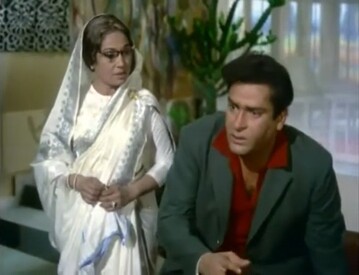
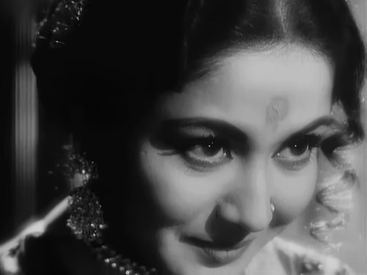
Himalaya ki God Mein (1965)

I realized the other day that there are umpteen well-known old films that I have seen but have never got around to reviewing on this blog—invariably because I had watched them before I started Dustedoff, and because there were so many ‘new’ old films to watch and write about, I never got around to rewatching stuff. It’s time to amend that, and revisit some films that perhaps should be talked about.

To begin with, Himalaya ki God Mein. Directed by Vijay Bhatt, Himalaya ki God Mein beat Haqeeqat and Waqt to win the Filmfare Best Film Award, and was a superhit. I had watched this donkey’s years ago, when it was telecast on Doordarshan. I remembered almost nothing of it except the fact that Manoj Kumar played a city doctor who relocated to the mountains to treat villagers and ended up falling in love with a village girl played by Mala Sinha. That was it. Time for a rewatch, I decided.

The film begins at night, on an aeroplane where Dr Sunil (Manoj Kumar) and his fiancée, also a doctor, Neeta (Shashikala) are travelling. Another passenger on the plane suddenly clutches his chest; Sunil examines him, diagnoses a heart problem, and asks that the plane land immediately.

Continue reading

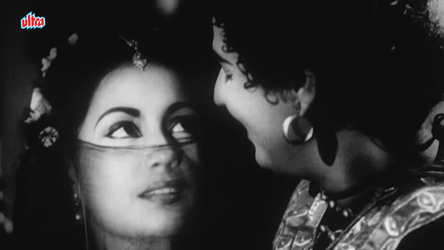
Aladdin aur Jaadui Chiraagh (1952)

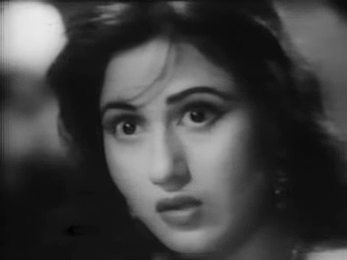
Some weeks back, when I reviewed Police (1958), the thought that had stayed in my mind regarding Madhubala’s character—and her acting—in that film and otherwise, in the larger context of her career, was that she got sadly stereotyped. Too many people, film-makers most of all, ended up slotting her as the ravishingly beautiful woman who need only be cast for the fact that she could light up a screen like few others could. Her acting ability (which was actually very good) got overlooked far too often.

Something similar, though in a different way, happened to Meena Kumari. In Meena Kumari’s case, the ‘Tragedy Queen’ label got affixed fairly early in the actress’s career and branded her forever as the Main Chup Rahoongi type: the weepy, self-sacrificing, stoic Bhartiya naari. Despite films like Kohinoor, Azaad, Majhli Didi, Tamasha and Bandish, most people today associate Meena Kumari with ‘serious’ roles.

So, this film, which starred Meena Kumari in one of her lighter roles.

Continue reading

Ten of my favourite cosmetics songs

This song list actually had its genesis many years ago, when I posted my list of jewellery songs. Back then, it had occurred to me that there were also songs that celebrated other ways (less expensive ways!) of adorning oneself. Cosmetics, most of them the ‘traditional’ ones, rather than those that came to us, along with their names, from the West, are not all that uncommon in Hindi film songs. And with reason: after all, romance plays a major part in old Hindi cinema, and where there is romance, there is shringaar ras: the very essence of attraction. A woman (mostly, though there are instances of men too) is often praised for her beauty, and that beauty is accentuated by cosmetics: by kaajal (kohl) in the eyes, mehendi on the hands, sindoor in the parting of the hair, and so on.

Continue reading

Police (1958)

If you’ve been reading this blog some years, you probably know by now that I am a fan of Madhubala’s. I’ve watched most of her films (several of which I have not got around to reviewing on this blog), I’ve done lists of my favourite songs of hers, and I have waxed eloquent every now and then about how much I like her.

One of the things I dislike about much of the online (at least) raving about Madhubala is that the praise is invariably just about her beauty. How gorgeous, how exquisite. Yes, indeed; but Madhubala’s beauty, I think, often comes in the way of people appreciating what a good actress she was, too. Watch her performances in films like Mughal-e-Azam and Amar, for instance, and if you can look past her face, you will see how well she holds her own against heavyweight thespians like Dilip Kumar and Prithviraj Kapoor.

And she was a fantastic comedienne too. The madcap way she matches Kishore Kumar in Chalti ka Naam Gaadi, for example. Or her airhead character in Mr & Mrs 55. Interestingly, Madhubala is often compared to Marilyn Monroe, almost entirely on the basis of their beauty and popularity; but I think the two stars had one more thing in common: both could portray the ditzy beauty very well. This, in fact, is just the type of woman Manju, of Police, is: nutty, silly, a clown. But so endearing too (and, it goes without saying, so gorgeous).

Continue reading

What’s named after Dara Singh?

A reblog of an old post, from when my blog was only a couple of months old.

Reblogged, because there’s an addition to this list.

After many years of thinking I knew all the obscure (and not) ways in which popular actors are immortalised in everyday objects, I had a moment of serendipity—an unexpected addition to this all-too-short list.

The other day, our gardener turned up, bringing with him a rather nice-looking plant with glossy striped green leaves. Would we like to keep it, he asked my husband. It’s a good indoor plant. We really don’t need any more indoor plants (we have plenty as it is), so we declined, but my husband asked him, out of curiosity, what it was called.

Dara Singh ka paudha,” he said. Dara Singh’s plant.
Why on earth?
Bahut shaktishaali hai,” he explained. “Marta nahin hai.” It’s very hardy, doesn’t die.

Later, when I had some time, I checked the plant out on Google Lens, and the penny dropped. This, to give it its botanical name, is Dracaena fragrans. Dra-caena, which has a similar set of syllables to ‘Dara Singh’, barring that g at the end. In a country where we have gardeners mangling names of plants left, right and centre (a friend has ‘begum bailiya’ flowering profusely in her home, another looks forward to pansotia at Christmastime), this is hardly unexpected.

Anyway, so we’ve said no to Dara Singh’s plant. But I’ve learnt something new in the process.

Paigham (1959)

This is a film that’s been on my radar for a while now. Dilip Kumar, Vyjyanthimala. A cast also boasting of Motilal and Johnny Walker. Some good songs. Paigham, I thought, might be worth a watch.

I will admit, though, that my heart sank a bit when I saw the opening credits and discovered that this is a Gemini Studios release. Like AVM, I now approach Gemini with trepidation: while their films often had great casts and excellent music, they were invariably just too melodramatic for my liking.

But I persevered.

Paigham begins by introducing us to Manju (Vyjyanthimala) who, along with her best friend Malti (B Saroja Devi), has just finished college: Manju at the top of her class, Malti at the bottom. Malti isn’t fazed by this; she’s a wealthy girl, her father Seth Sewakram (Motilal) a prosperous cotton mill-owner. Malti, in fact, has promised Manju that she will ask her father to give Manju (who’s done a course in shorthand and secretarial work) a job at the cotton mill, which is in a town named Rangpur.  

Continue reading

Hindi film characters with books, Part 2

Just last month, on the occasion of World Book Day (in Britain and some other parts of the world), I published a post on characters in English-language cinema who are readers. This post had been inspired by a much earlier post, from some years back, where I had listed characters from Hindi cinema who are shown with books. This time, for the English books post, a blog reader suggested I do a sequel to the post on books in Hindi cinema.

And why not, I thought. After all, books aren’t all that uncommon in Hindi films. True, Life magazine or newspapers do seem to rule the roost when it comes to people reading, but there are books to be seen now and then.

Today, April 23, is the day designated by UNESCO as World Book Day. And here is the sequel to that long-ago post on characters in Hindi cinema with books: another instalment of screenshots of Hindi film characters with books; and not just characters with books in the background, such as this:

Continue reading

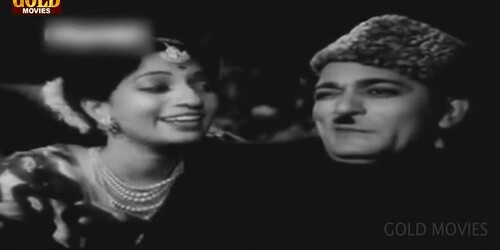
Lal-e-Yaman (1933)

Aka Parviz-Parizaad.

I had heard of Lal-e-Yaman (literally, ‘Rubies of Yemen’, though why it’s so named, I couldn’t tell) before, but it wasn’t until I read Manek Premchand’s Director’s Chair: Hindi Cinema’s Golden Age some weeks back that I was reminded of it: it appeared in JBH Wadia’s filmography, being the first film he produced and directed, along with his brother Homi Wadia. Premchand described Lal-e-Yaman as an ‘Arabian Nights kind of adventure’, and that piqued my interest.

The story is not explicitly set in Yemen, though it’s probably someplace in the Middle East. The King (Jal Khambatta) of a kingdom has recently remarried after having been widowed. He has a ten-year old son, Parviz (?) from his first wife; now the second wife (Mohini) is sitting beside him when a dervish arrives. This man prophesies that the new queen will wreak havoc, that the king will be much plagued because of her.

Continue reading

Jhansi ki Rani (1953)

Given my penchant for history, it’s hardly surprising that I would, sooner or later, end up watching this film. It’s been on my radar for a while, though it was only last month that I was reminded of Jhansi ki Rani, because it showed up in my list of YouTube’s suggested videos. Oddly enough, what YouTube suggested wasn’t exactly this film but its English-language counterpart, The Tiger and the Flame, which was released in 1956. Sohrab Modi, who produced and directed (besides acting in) both versions of the film, went all out on creating a spectacular production, bringing in technicians and other crew from Hollywood, including Oscar-winning cinematographer Ernest Haller, who was responsible for the cinematography of Gone with the Wind.

This film was not just made in two languages, but with other differences between them too. The Tiger and the Flame is in Technicolor (the first India-made film in Technicolor) while Jhansi ki Rani is in black and white. Jhansi ki Rani has songs (composed by Vasant Desai with lyrics by Pandit Radheshyam), The Tiger and the Flame is minus the songs. Other than that, though, the films were much the same: the same cast, the same script.

Continue reading

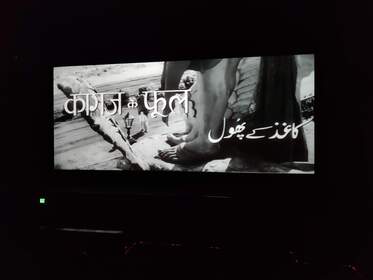
Book Review: Manek Premchand’s ‘Director’s Chair: Hindi Cinema’s Golden Age’

Amongst all the many books on Hindi cinema I’ve read over the years, most have been about actors, or (rather more occasionally) composers, singers, or even lyricists. Biographies, autobiographies, analytical insights into their work. Meena Kumari, Balraj Sahni, Asha Bhonsle, Rajesh Khanna, Ashok Kumar, SD Burman, Majrooh Sultanpuri, Sahir Ludhianvi, Helen, Lata Mangeshkar, Dev Anand, and many others. By contrast with these, I can count on the tips of my fingers the number of books I’ve read about directors. Hrishikesh Mukherjee (by Jai Arjun Singh), Basu Chatterji (by Anirudha Bhattacharjee) and Nasir Hussain (by Akshay Manwani); even an autobiography by Kidar Sharma. But other than that?  Not too many. Or none that I’ve read (though, I will admit, I am yet to read both Nasreen Munni Kabir’s and Sathya Saran’s books on Guru Dutt).

I was keen, therefore, to read Manek Premchand’s ‘Director’s Chair: Hindi Cinema’s Golden Age’ when its publisher, Blue Pencil Publishing, offered to send me a complimentary copy. I am of the firm belief that a director plays a huge role in making a film what it is: yes, everybody plays their part, but how so many disparate elements are brought together, how the sum becomes greater than its parts, is up to the director.

Continue reading