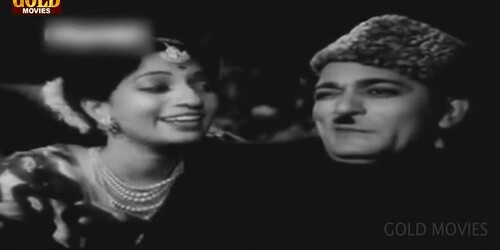
Ekti Raat (1956)

This, actually, was not the film review I was intending to post this week. But then, over the weekend gone by, I met Moon Moon Sen, and I was reminded (of course I would be!) of her mother, Suchitra Sen.

I was in Dehradun on October 11 and 12, attending an arts and literature festival. The guest of honour was Moon Moon Sen, still beautiful, and with a serene calmness to her that was—as someone mentioned—very ‘peaceful’ (to which Ms Sen replied that she has a horrible temper!) Moon Moon Sen was mostly involved in graciously felicitating those who participated in panel discussions and so on; I was thrilled to have her place a scarf around my neck. But the last session of the festival was a conversation with her, and it was very interesting. She answered questions about herself, of course, but also about her mother (“always, ‘Madam’, never ‘Mrs Sen’ or ‘Suchitra’” she recalled). Not just a star, but a mother (“I only knew her as Mummy”), and one whom young Moon Moon was obviously very protective about: she said she shielded her mother when Suchitra Sen had to make her way through a crowd. She had no qualms even about punching anyone who tried to get fresh with her Mummy.

I remembered, then, that I had a Suchitra Sen film review ready to be published. Here it is, a light-hearted comedy, directed by Chitta Bose, based on a story by Balaichand Mukherjee ‘Banaphool’ and with a screenplay by Nipendrakrishna Chatterjee.

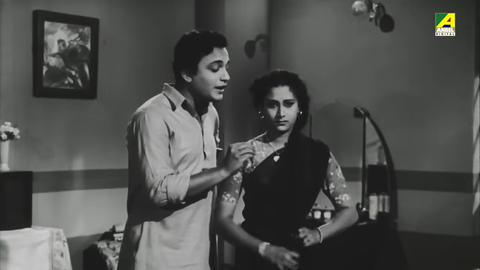
The story begins in the Calcutta home of Shushubhon Dutta (Uttam Kumar) and his wife Anita (Sabita Chatterjee), who have been married a few months. The two are constantly bickering, and we see them in the middle of an argument even as the film starts. Anita is hot-tempered, Shushubhon likes to needle her.
Continue reading

Charley’s Aunt (1941)

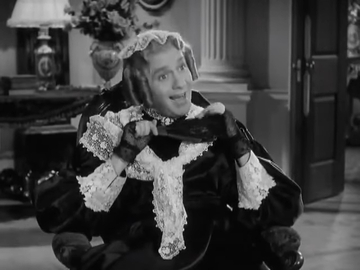
Two young men in Victorian England, eager to propose to their respective girlfriends, fix up a lunch date with the ladies, expecting that the aunt of one of the young men will oblige as a chaperone for the girls. However, the aunt, who has just arrived in England from Brazil, is called away elsewhere and sends a wire pleading her inability to come. Desperate, the young men seek a substitute as chaperone—and pick a friend of theirs, who then ends up spending the day juggling costumes, personas, and more.

That is the gist of Charley’s Aunt, a three-act play written by Brandon Thomas and first performed onstage in 1892. It’s a play I’d heard about often enough, but only got around to reading a couple of years back—and once I’d read it, I wanted to watch at least one cinematic adaptation of it (and yes, there are plenty of adaptations, including silent films as well as films in various languages, ranging from English to German to Arabic, the last-named in a couple of Egyptian versions of the film). Luckily enough, the best-known English adaptation of Charley’s Aunt, starring American comic actor Jack Benny in the lead role, is available even on YouTube (here).

Continue reading

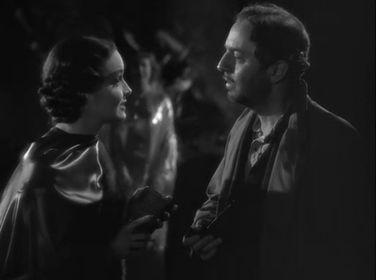
It Happened One Night (1934)

Last week, to commemorate the 100th birth anniversary of Raj Kapoor, I reviewed my favourite film of his as an actor: Chori Chori, which was a remake (uncredited) of It Happened One Night. I had seen Chori Chori before; I had also seen It Happened One Night before, though in both cases, I had not reviewed the film in question.

Since I’ve finally reviewed Chori Chori, it seemed to me about time I reviewed It Happened One Night as well (which is why there’s also a comparison with Chori Chori further along in this post). Directed and co-produced by Frank Capra, this film was based on a short story, Night Bus, by Samuel Hopkins Adams. It is generally regarded as the first ever screwball comedy, having pretty much invented the genre; it was also the first of only three films so far to have won all five major Oscars: Best Picture, Best Actress, Best Actor, Best Director and Best Adapted Screenplay.

But, to start at the beginning: on a private yacht moored off the coast at Miami, where Ellen ‘Ellie’ Andrews (Claudette Colbert) has been confined by her banker father (Walter Connolly). Mr Andrews disapproves, unreservedly, of Ellie’s having gotten married to a man named King Westley (Jameson Thomas), whom he (Mr Andrews) is convinced is a rotter: only interested in Ellie’s wealth, nothing else.  

Continue reading

Chori Chori (1956)

Happy 100th birthday to one of India’s greatest film makers, Raj Kapoor!

RK was born in Peshawar on December 14th, 1924. What can I say about him that hasn’t already been said or written, and by people much more erudite, well-informed, and more fond of RK’s cinema than I am? Yes; I will admit that I am not the greatest of Raj Kapoor’s fans, but let us keep the whys and the wherefores of that, the debates and the discussions, for another time. As Anu Warrier (of Conversations over Chai, not just a fellow blogger I admire hugely, but also an RK fan) said “I know there are RK films you like!”: and for RK’s birth centenary, I decided it was high time I finally reviewed an RK film that I particularly like.

I have watched Chori Chori several times, and always with great satisfaction. Even though it starred Raj Kapoor (opposite Nargis, moreover), the film is not at all the sort of film RK was known for: this was the light-hearted romp that younger brother Shammi was to go on to make his own. A road trip, a pampered heiress, a romance. Lots of songs, great chemistry.

Continue reading

Sanjog (1943)

I came to this film quite by chance. Back in April, when I reviewed Jhansi ki Rani, blog reader Maitreyee Mishra, commenting on that review, asked if I’d watched any other films featuring its lead actress, Mehtab. I had had to admit that I hadn’t; in fact, it seemed that most of Mehtab’s films were nowhere to be found—at least not online. I did find one film, though: AR Kardar’s Sanjog (1943), which starred, alongside Mehtab, Noor Mohammad ‘Charlie’.

Continue reading

My Man Godfrey (1936)

And also, to some extent, My Man Godfrey (1957).

My Man Godfrey—the original one, starring William Powell—is one film that I’ve been meaning to watch for a long time now, mostly because so many people have told me what a lot of fun it is, and how it seems to have shades of PG Wodehouse in it (an author in whose pursuit I have watched several films, not always with the most satisfying of results).

It did seem to me, within the first few minutes of My Man Godfrey, that there were shades of a Wodehousian sense of humour here.

The film begins at a riverside dump, where a rather ragged, unshaven and tattered Godfrey (William Powell) is among several homeless men standing about when a fashionable high society lady, Cornelia Bullock (Gail Patrick) comes flouncing along, with a formally-dressed man in tow. Cornelia takes one look at Godfrey and tries to get him to come with her. She’s participating in a ‘scavenger hunt’ at a posh hotel, and the first person to bring along a ‘forgotten man’ to the hunt stands to win the prize.

Continue reading

The General (1926)

I have a confession to make: I’ve never actually got around to watching, as far as I can remember, any of Buster Keaton’s films. The great American comedian, a contemporary of Charlie Chaplin’s, is often regarded on par with (if not better than) Chaplin. His The General, about an engine driver who accidentally becomes a Civil War hero, is considered by many to be a masterpiece, with Orson Welles calling it the ‘greatest comedy ever made’ (and ‘possibly the greatest movie ever made’).

It was about time I watched The General. Especially since it’s easily available (it’s in the public domain, you can even watch it on YouTube, here).

The story begins in Marietta, Georgia, in 1861. Engine driver Johnnie Gray (Buster Keaton) has just come into town, driving his beloved engine, which is named The General. The General is Johnnie’s great love, along with the pretty Annabelle Lee (Marion Mack). Johnnie attends to his beloved engine, then goes off to meet Annabelle.

Continue reading

The Ladykillers (1955)

Long-time readers of this blog probably know by now that I have a soft spot for suspense films, heist films, comedies, and—where these genres sometimes meet—films about bumbling crooks. The funny heist film, so to say, where everything goes wrong. Some months back, when I watched Gambit (which I enjoyed very much), a subsequent search for funny heist films threw up another suggestion that I’d heard of before: The Ladykillers. Like Gambit, this too starred Herbert Lom, an actor I like, and because I was fresh from watching Gambit, I thought why not give this one a try too.

The Ladykillers begins with the lady in question: sweet, somewhat scatter-brained old lady Mrs Wilberforce (Katie Johnson), who emerges from her house at the end of a lane and walks down the street nearby. Everybody around seems to know and like Mrs Wilberforce: people greet her, and when she reaches her destination—the local police station—the cops are indulgent. Mrs Wilberforce has come to clarify that her friend, another elderly lady who had informed the police station about spotting a spaceship, was actually misinformed… Mrs Wilberforce’s explanation is detailed and apologetic, and her earnestness shines through bright and clear.

Continue reading

Spring in Park Lane (1948)

PG Wodehouse is one of my top favourite writers. I’ve read most of his books, and I’ve explored some of his intersections with cinema: the films he was involved in, and the films that were based on his books. Of the latter, I’ve realized again and again, there seem to be very few that do anything close to justice to Wodehouse’s inimitable blend of humour. Some of the shorter TV films (like Heavy Weather, starring Peter O’Toole as the eccentric Lord Emsworth) or TV series like Jeeves and Bertie are good (though Jeeves and Bertie, after a few good episodes, went off the rails).

But now and then I come across a film that has nothing to do with Wodehouse, but seems somewhat like a homage. With the same light-hearted charm of the master, the same frothy humour that never fails to appeal to me.

As in Spring in Park Lane

The film begins with Judy Howard (Anna Neagle) ringing the doorbell of her home in London, only to have the door opened by a complete stranger (Michael Wilding). Judy is surprised, and the conversation that ensues has both her and the man quite baffled. It’s only with a little perseverance, and some help from the butler Perkins (GH Mulcaster), who comes rushing up from below stairs, for the fog to clear. This man, Richard, is the new footman.

Continue reading

Operation Y and Shurik’s Other Adventures (1965)

Or, to give it its original Russian title, Operatsiya Y I Drugie Priklyuchenia Shurik.

And, before you get intimidated by that rather ponderous title, a little carrot that I will dangle: this is a movie that’s recommended for those times when you’re feeling drained and overworked and your brain needs time off. It happens to me every now and then, when trying to relax by watching a film is not enough; the film too has to be something that I don’t need to think about: a film that I can just sit back and enjoy. This is that film.

Operation Y (which is how I will refer to it; the entire title is just too long) is about the eponymous Shurik (Aleksandr Demyanenko), a young college student at a polytechnic institute. In his spare time, Shurik works at a construction site; otherwise he’s a nerdy, earnest student, so focused on his studies that he mostly cannot see beyond his books…

Continue reading