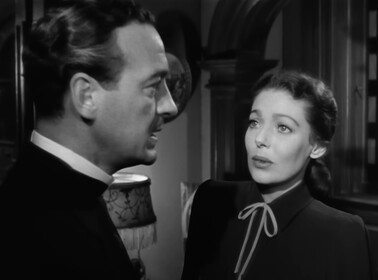
Aaye Din Bahaar Ke (1966)

(Coincidentally enough, I watched Aaye Din Bahaar Ke some weeks back, just after I’d posted my review of Phool aur Patthar. Back then I’d not known that we would be mourning the passing of Dharmendra so soon after. Consider this a tribute).

When I watched Phool aur Patthar some weeks back, I was reminded of the many fairly entertaining films Dharmendra worked in through the mid- and late-1960s. Not all of them were good (some, like Chandan ka Palna, were terrible), but quite a lot of them had at least good songs, a fair deal of entertainment value, and an undeniably handsome male lead to make them worth at least a one-time watch. Some of these (like Aankhen, arguably my favourite Dharmendra film) I’ve reviewed already; there are several others.

Here’s one. I last watched Aaye Din Bahaar Ke perhaps about 20-odd years ago, and actually remembered a fair bit of it. That I didn’t mind watching it again, even though the film is far from perfect, says a lot for it.

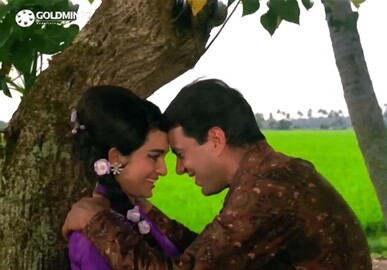
The story begins in Darjeeling, where Ravi (Dharmendra) lives with his widowed mother (Sulochana Latkar). Ravi is devoted to his mother: so much so that when Ma is doing her pooja, he tells her, “You may worship your gods, but I will worship only you.” She has devoted her life to looking after Ravi, educating him, etc, which is why this somewhat OTT sentiment.

Continue reading

Shaheed (1948)

RIP, Kamini Kaushal. Ms Kaushal, probably the oldest of Hindi cinema stars still living, passed away at the age of 98 on November 14, 2025.

Over the years I’ve been blogging, I’ve seen one after the other of some of my favourite stars pass out of our lives: Shammi Kapoor, Sadhana, Dilip Kumar, Kumkum… but with Kamini Kaushal, I have to admit to a somewhat pronounced sense of loss. Not because she was a particular favourite of mine (though I admitted to being quite impressed with her acting when I watched Biraj Bahu some months back). But because with her passing, the door seems to have shut firmly on those who heralded the start of the Golden Age in Hindi cinema.

Anyhow, a tribute seemed in order. A tribute to Kamini Kaushal, and to a film that I’ve been meaning to watch for a while now.

Continue reading

The Spy Who Came in From the Cold (1965)

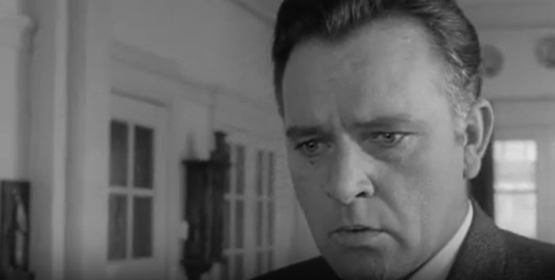
I can safely say that Richard Burton was the first English actor I could identify (Charlie Chaplin excluded: that man’s facial hair and other distinct elements of style made him impossible to mistake for anyone else, at least as far as onscreen appearances went; even a ten-year-old me knew that was Charlie Chaplin).

But Burton. Burton I first saw in Where Eagles Dare, and though at first viewing a callow me pegged Clint Eastwood as the star worth crushing on, I eventually ended up acknowledging the impressive presence of Richard Burton as Major Smith. He who, unlike other people [who have a sixth sense] … ‘has a sixth, a seventh, and an eighth.’ Who can be suave and sleek enough to play the double agent convincingly enough, yet whistles Lorelei perfectly. And has the most brilliant repartee in his dialogues with Lt Schaeffer.

Oddly enough, though I liked Burton a lot, Where Eagles Dare remained, for a long time, the only film in which I’d seen him. It was only much later, over several decades, that I saw Cleopatra; The Taming of the Shrew; Zulu; The Longest Day; Hamlet… and I realized just what a powerhouse of a talent was Burton’s.

Continue reading

Subarnarekha (1965)

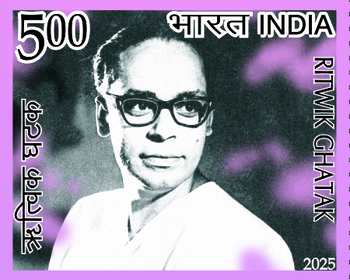
Today is the 100th birth anniversary of one of India’s greatest film directors, Ritwik Ghatak: he was born in Dhaka on November 4, 1925.

I have to confess I’ve not seen very much of Ghatak’s work, mostly from an innate tendency to shrink from ‘sad movies’. I did watch Meghe Dhaka Taara some years back (and admired it, though it was, as expected, tragic). For his birth centenary, I wanted to review another of his films, and this one popped up in the searches. It immediately drew my attention, for several reasons. For one, it stars Madhabi Mukherjee, one of my favourite actresses. For another, it also starred Abhi Bhattacharya, a familiar face from Hindi cinema, and one I’ve always liked. At least, I reasoned, if I had to watch a sad film (at a time when I’m so busy and stressed, I’d rather watch mindless fluff)… at least there would be people onscreen I enjoy watching.

Continue reading

Phool aur Patthar (1966)

A couple of years back, I watched (and later reviewed) the Meena Kumari-Dharmendra starrer, Bahaaron ki Manzil. A good suspense thriller, it put me in mind of another film starring these two: Phool aur Patthar. I had seen the film many years ago, as a child (implication: this would have been in the early 80s, when Doordarshan’s sole TV channel was our only entertainment besides books and radio, which meant we watched anything that was aired, no matter how mediocre). I remembered nothing of it except that Dharmendra played a thief who ends up being cared for by Meena Kumari, playing a widow.

Continue reading

Ekti Raat (1956)

This, actually, was not the film review I was intending to post this week. But then, over the weekend gone by, I met Moon Moon Sen, and I was reminded (of course I would be!) of her mother, Suchitra Sen.

I was in Dehradun on October 11 and 12, attending an arts and literature festival. The guest of honour was Moon Moon Sen, still beautiful, and with a serene calmness to her that was—as someone mentioned—very ‘peaceful’ (to which Ms Sen replied that she has a horrible temper!) Moon Moon Sen was mostly involved in graciously felicitating those who participated in panel discussions and so on; I was thrilled to have her place a scarf around my neck. But the last session of the festival was a conversation with her, and it was very interesting. She answered questions about herself, of course, but also about her mother (“always, ‘Madam’, never ‘Mrs Sen’ or ‘Suchitra’” she recalled). Not just a star, but a mother (“I only knew her as Mummy”), and one whom young Moon Moon was obviously very protective about: she said she shielded her mother when Suchitra Sen had to make her way through a crowd. She had no qualms even about punching anyone who tried to get fresh with her Mummy.

I remembered, then, that I had a Suchitra Sen film review ready to be published. Here it is, a light-hearted comedy, directed by Chitta Bose, based on a story by Balaichand Mukherjee ‘Banaphool’ and with a screenplay by Nipendrakrishna Chatterjee.

The story begins in the Calcutta home of Shushubhon Dutta (Uttam Kumar) and his wife Anita (Sabita Chatterjee), who have been married a few months. The two are constantly bickering, and we see them in the middle of an argument even as the film starts. Anita is hot-tempered, Shushubhon likes to needle her.

Continue reading

Biraj Bahu (1954)

I have to admit I have never watched this film in all my years of watching and blogging about old Hindi cinema. Part of the reason is, I suppose, that this film—directed by Bimal Roy—somehow always tends to get sidelined in all the praise that’s showered on his better-known works: Do Bigha Zameen, Bandini, Devdas, Parakh, Sujata, Madhumati… then, too, there’s the fact that Kamini Kaushal has never been one of my favourite actresses. I’ve always found her a little affected, her diction and expressions too exaggeratedly innocent.

Continue reading

Il Giorno della Civetta (The Day of the Owl), 1968

AKA Mafia, the singularly apt title of this Franco-Italian film for its release in America. Based on a novel by Leonardo Sciascia, the film was directed by Damiano Damiani and starred Claudia Cardinale, Franco Nero, and Lee J Cobb.

Claudia Cardinale was the reason I watched this film: she passed away on September 23, 2025. I had just paid tribute then to Robert Redford, and coming on the heels of his death, Cardinale’s death was even more saddening. Two greats of Golden Age cinema, one after the other. Two people who were contemporaries (though they didn’t co-star in any films). Two people who left a mark.

Claudia Cardinale was born in Tunisia and made her debut in 1958 opposite Omar Sharif in the French-Tunisian film Goha. She went on to act in several Italian films, and then moved to Hollywood—for a few years, after which she returned to Europe and resumed work in French and Italian films.

Continue reading

Butch Cassidy and the Sundance Kid (1969)

RIP, Robert Redford.

I will not pretend that Robert Redford was my favourite actor. In fact, offhand, I’d be hard put to remember how many (or, embarrassingly, how few) of his films I’ve watched. All the President’s Men, yes; A Bridge Too Far, yes. A few others, none of them (like Captain America: Winter Soldier) films for which he’s known.

Mea culpa. It isn’t a reflection on Redford, but on me, because most of my life has been spent watching Hollywood from the 30s to the 50s; my favourite era in Hollywood was over by the time Redford burst upon the scene. But it says a lot for him that despite that, I liked him in the few films of his that I watched. A great actor (and so handsome!). Deeply committed to the cause of environmental conservation, and by all accounts, a genuine, warm-hearted person.

Continue reading

Anita (1967)

When, for May 31st this year (the 100th birth anniversary of film director Raj Khosla), I wanted to review one of his films, Anita was on my shortlist. Over the course of the years I’ve been writing this blog, I’ve reviewed several of Khosla’s films, including two of the three films (Woh Kaun Thi?, Mera Saaya and Anita) that comprise Khosla’s Sadhana suspense trilogy. Since Manoj Kumar had also passed away earlier this year, it seemed fitting to watch and review Anita, the last of the three films, and a film that starred Manoj Kumar opposite Sadhana.

For a tribute to Khosla, I ended up reviewing Kaala Paani instead. But I did watch Anita (a film that I’d last seen so long back, I remembered only the basics of it). And it seemed appropriate to review it too.

Therefore…

The film begins with a short, rather abrupt scene in which Seth Biharilal (Sajjan) visits a somewhat shady-looking pandit (Ulhas). Biharilal has brought along the horoscope of his 19-year-old daughter Anita for the pandit to have a look at, and to comment upon. The pandit has a peek, and says that this year is going to be really vile for Anita.

Continue reading