Die-Trapp Familie (1956)

Over the years I’ve been writing this blog, I’ve seen many films that were remakes of others—and, like pretty much every homage that’s paid to an existing work, there’s no telling what the remake will be like in comparison to the original, even when the budget, the cast and the crew of the remake would appear to make it have all the odds stacked in its favour.

Too many remakes (Ben Hur is an especially grotty example) are an embarrassing example of someone setting out to remake a landmark blockbuster, and ending up creating something utterly forgettable. At the other other end of the spectrum are films that take an established classic, make a very good version of it, but are rarely remembered—The Outrage, an exceptionally faithful copy of Kurosawa’s famous Rashōmon—is one example. There are those, like The Talented Mr Ripley (a remake of Plein Soleil), Ek Ruka Hua Faisla (a remake of Twelve Angry Men), and The Magnificent Seven (originally, Seven Samurai) which are, to some extent or the other, well-loved and accomplished works in both versions.

And there is this, an instance of a good film which few people seem to know of (at least, few English-speaking, Hollywood-watching people), but the remake of which became such a cult classic that even now, more than five decades later, little children (my daughter included) are taught songs from it in school, and the city where it was set—Salzburg—has, as some of its prime tourist attractions, the places where it was shot.

Continue reading

Kiiroi Karasu (1957)

Literally, Yellow Crow, though this poignant little film is also known in English as Behold Thy Son.

It’s been a long time since I reviewed a non-Indian, non-English language film. I have several bookmarked on Youtube, and after some trial and error (a couple of minutes of this, ten minutes of that) settled on this one. Kiiroi Karasu was directed by Gosho Heinosuke, the man who directed Japan’s first talkie (and who was, for a while, the President of the Directors’ Guild of Japan).

I began watching this film with few expectations. In fact, I didn’t even read a synopsis of the film, so I had no idea what I was getting into, not even what genre.

Kiiroi Karasu begins at a Buddhist shrine. In front of a massive monolithic Buddha sit a bunch of school children, sketching and colouring for all they’re worth.

Continue reading

Pyaar ki Baatein (1951)

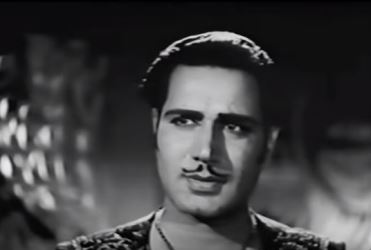
I came across this film while I was doing research for my post on Khayyam (who composed two songs for Pyaar ki Baatein) and I was immediately intrigued. Because this film starred somebody whose career I’ve always been a bit baffled by. Trilok Kapoor, younger brother of the stalwart Prithviraj Kapoor, and uncle of three immensely popular leading men—Raj Kapoor, Shammi Kapoor and Shashi Kapoor—had the looks and the talent to make it big (not to mention the family connections, so important in the Hindi film industry), but why did his career veer away into the realms of mythologicals? Why did a man who starred opposite famous actresses like Noorjehan and Nargis (in Mirza Sahiban and Pyaar ki Baatein respectively) end up playing Shiv (or other mythological characters) in one film after another?

I still don’t know, and watching Pyaar ki Baatein only befuddled me further on this count. Because it’s exactly the sort of film, I think, that should have led Trilok Kapoor to star in more of the raja-rani type of films that so many (in my opinion, less attractive) actors, like P Jairaj and Mahipal, made their own.

Continue reading

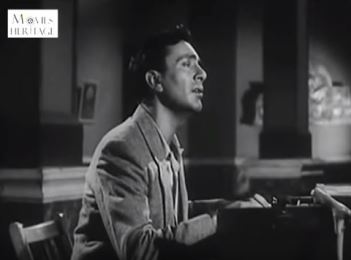
Sitaaron Se Aage (1958)

When I was reading Balaji Vitthal and Anirudha Bhattacharjee’s The Prince Musician, I came across a mention of this film, which I had never heard of. But the songs listed as being part of Sitaaron Se Aage were familiar to me, and both leads—Ashok Kumar and Vyjyanthimala—are among my favourites. Recently, reading HQ Chowdhury’s Incomparable Sachin Dev Burman, I was reminded again of Sitaaron Se Aage, and decided it was high time I watched it.

And what a showcase of SD Burman’s music this film is—right from the start. It begins with Sambhalke yeh duniya hai nagar hoshiyaaron ka, with Lattu (Johnny Walker) and his cronies, the pickpockets Bajjarbattu and Nikhattu, going about relieving passersby of their belongings. The three end up outside a theatre, where the superstar actor Rajesh (Ashok Kumar) has just completed yet another highly-acclaimed performance.

Continue reading

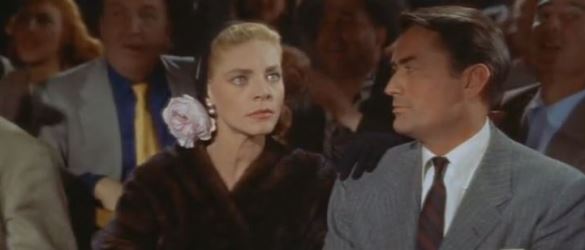
The Bitter Tea of General Yen (1932)

Frank Capra is one of those directors I thought I pretty much knew when it came to style. The everyday American, the humour, the gentle wisdom, the often feel-good charm of films like It Happened One Night, It’s a Wonderful Life, Mr Deeds Goes to Town, and (this is one of my favourites, the ultimate in whacky humour) Arsenic and Old Lace.

If I hadn’t known Frank Capra had also directed (well before any of these films I’ve named) the unusual and erotic The Bitter Tea of General Yen, I don’t think I’d have billed this as a Capra film. There is a sensuality about it, a boldness and an air of exotica that is uncharacteristic of Capra’s more popular works. Of course, part of that is due to the fact that the Hays Code, while it had been introduced in 1930, was not yet being strictly enforced (that was to kick in only around 1934), but even otherwise, there is something about this film that struck me as unlike Capra.

But, to start at the beginning. The Bitter Tea of General Yen begins in Shanghai, during a civil war. It’s pouring rain outside, refugees are streaming into Shanghai, and a group of missionaries have gathered at the home of one of them to celebrate a wedding. One of their group, Robert ‘Bob’ Strike (Gavin Gordon) is about to marry his childhood sweetheart, Megan Davis (Barbara Stanwyck). Bob and Megan haven’t met for the past three years, but Megan is on her way now from America, about to arrive in Shanghai so that she can marry Bob.

Continue reading

Aurat (1940)

In 1957, Mehboob Khan produced and directed a film that has achieved almost iconic status in the history of Indian cinema. Mother India was the first Indian film to receive a nomination for an Academy Award for Best Foreign Language Film, and won several Filmfare Awards, including Best Film and Best Actress.

Mother India is a fine example of the importance of perseverance. If you don’t get it right the first time, try again. Sometime along the way, somewhere and somehow, you will get to your goal. Also, if you did something well once, chances are you’ll do it better the next time round. Practice makes perfect.

I’m not talking about how Radha, the female lead character of Mother India (and of Aurat) manages to surmount all the obstacles in her path and emerge strong. I’m talking about Mehboob Khan himself, who was the director not just of Mother India, but of the film, Aurat, of which Mother India was a remake. Based on a story by Babubhai Mehta (and supposedly partly inspired too by Pearl S Buck’s The Good Earth) and with dialogue by Wajahat Mirza, Aurat was a film Mehboob Khan only directed. Seventeen years later, now a producer in his own right, he remade the film, both producing and directing it. And how well he proved that if you do something well the first time round, there’s a good chance you’ll do it well, and even better, the second time round.

Continue reading

Samskara (1970)

RIP Girish Karnad.

Yes, this is a belated tribute, but since I was about to leave on a summer vacation when the veteran actor, playwright and director passed away, I decided I would wait. Because, though the bulk of Girish Karnad’s career was after the timeline of this blog—his first film was in 1970, which pretty much marks the outer extent of Dustedoff—I had to pay my respects.

Continue reading

The Perfect Furlough (1958)

There was a time, some years back, when I watched a lot of Tony Curtis films (I didn’t get around to reviewing all that I watched, though I did some, such as Some Like it Hot, The Vikings, and Who Was That Lady?).  I haven’t watched a Tony Curtis film in years, but when blog reader Hurdy Gurdy Man sent me a mail informing me of a bunch of old classics that he’d discovered—good prints, too—on Youtube, I found that one of them was a Tony Curtis-Janet Leigh rom-com named The Perfect Furlough.

So I decided it was time to return from that furlough away from Curtis. And with a film that had him opposite Janet Leigh too! That seemed to bode well.

The Perfect Furlough begins in the Pentagon office of Col Leland (Les Tremayne), where a group of military psychologists have been summoned by the general to address a very specific and very troubling problem the US Army’s facing.

Continue reading

Ghar Sansar (1958)

Balraj Sahni ranks as one of my favourite actors. He brought a sense of dignity to pretty much every role he essayed, and there were very few roles which he could not pull off convincingly. That said, there was a certain type of film that he very often got slotted in: the family drama. These films, often made by production houses like AVM Productions, equally often followed a fairly predictable pattern.

A close-knit joint family (with Balraj Sahni as its head, usually as elder brother) lives in one home, each member of the family devoted to the other, each going out of their way and being self-sacrificing to smoothen the way for the others. Then, as the result of a wedding (usually of a younger male relative, often a character who’s the younger brother of Balraj Sahni’s character), a somewhat headstrong chhoti bahu enters the household. She is warmly welcomed and is inclined to be as sweet to others as others are to her [after all, the hero has fallen in love with her; she cannot be out-and-out bad]. But, someone evil and self-serving or just plain old malicious lurks in the vicinity. A neighbour, a close relative (often a step-relative, step-brother, step-sister, etc, of the bahu—since, again, blood relations can’t be all bad) or other person who despises the family for its saccharine sanctimoniousness, decides to throw a spanner in the works.

With the result that poor Balraj Sahni’s character gets the short end of the stick. He and his long-suffering spouse lose their home, their child (or children) fall ill, someone goes blind, they are nearly [not definitely, since they have so much self-respect] reduced to begging in the streets.

Continue reading

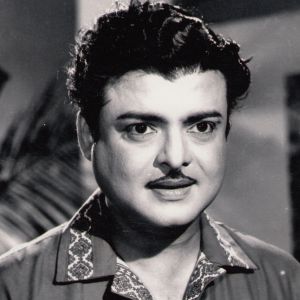
Maya Bazaar (1957)

When I did a post on food songs as part of Food and Food Movie Month on Dustedoff last year, blog reader magi posted a link to a very interesting song Vivaaha bhojanambu and told me about the film it was from. Maya Bazaar, which several others also praised as being a very entertaining mythological.

Continue reading