The War of the Worlds (1953)

There are some books that have become such a part of me that I sometimes forget if I have actually read the original or not. Great Expectations, A Tale of Two Cities, Oliver Twist, Jane Eyre: all I began by reading in an abridged form. I encountered them again, over the years, in various cinematic adaptations, on television and otherwise.

It has been the same for HG Wells’s classic tale of alien invasion, The War of the Worlds. I’ve been so familiar with this book for so long that I couldn’t remember whether I’ve ever read the full-length book or whether all my recollections of it were based on the film version I’ve seen and excerpts I’ve read. I decided finally to read the original recently (I liked it)—and then, naturally, I had to check out the cinematic adaptations of the book. One of these I had watched, and more than once: the 2005 Steven Spielberg one. But there was another, considered the most iconic version, which dated back to 1953 and which I figured I had to watch ASAP.

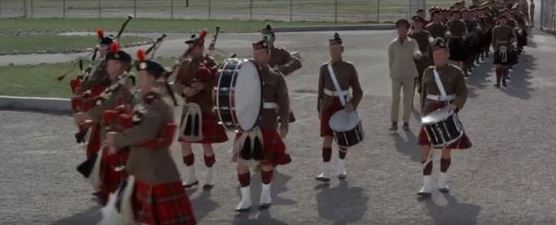
The War of the Worlds starts with a voiceover that talks about how, on Mars, a highly technically advanced civilization realized that its planet was dying and that it was time to look elsewhere for habitation. So it began the search among the other planets of the solar system: considering one and discarding it, one after the other, this one too cold, this too hot. Until its gaze turned on Earth, so serene and beautiful, so conducive to life.

Continue reading

A Night to Remember (1942)

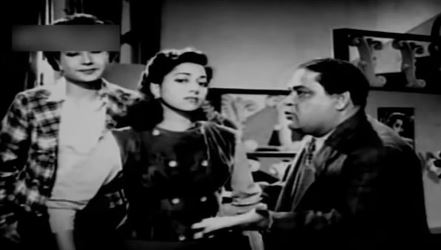
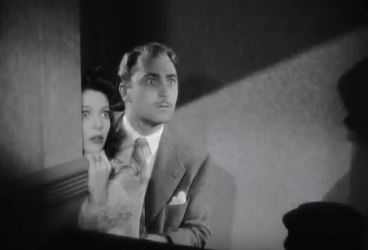
Last May, my husband, my daughter and I shifted house. We’ve shifted house before (though never with a toddler in tow), but this time was rather more harrowing than every previous experience. The movers and packers we’d hired turned out to be a thoroughly inefficient and poorly trained lot, requiring constant supervision. They left debris—newspaper, scraps of cardboard and more—littered all across our new home, and the dumped al my books, each one of my precious books, in one untidy pile on the floor.

Then, on the second day in the new house, an insect flew into my eye and caused an infection that didn’t go for a month. Within the first week, the RO conked out; the kitchen tap suddenly started spewing black water; and we discovered that one of the pipes was so badly choked with plaster left behind by the repair-and-renovation gang that it had to be torn up and redone.

But at least we didn’t have people getting murdered in our backyard.

Continue reading

Yasmin (1955)

Fellow blogger and soul sister Anu, at Conversations Over Chai, watched Bahaar for two reasons: one, that it starred Vyjyanthimala; two, that it featured the delightful Saiyyaan dil mein aana re. As it happened (and both Anu and I agreed this was nothing new) she—as I have been, countless times—found herself a victim of the somewhat irrational logic that good music + an actor we like = good film.

But, to get down to this week’s post. A film I watched because, one, it stars Vyjyanthimala; and two, because it has great music. I had steeled myself for something pretty irritating, so perhaps the fact that I began this film with low expectations had much to do with my eventual enjoyment of it. Yasmin isn’t  a masterpiece, but I still liked it, predictability and all.

Continue reading

Patanga (1949)

Of Mere piya gaye Rangoon fame.

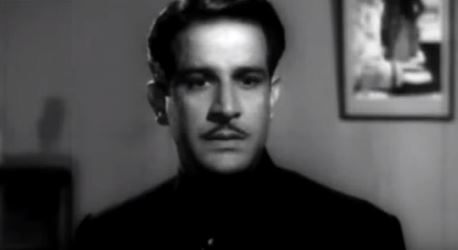
Mere piya gaye Rangoon—and some of the other songs of Patanga—were the main reason I began watching this film. Then, when the credits started to roll and I discovered this film also starred Shyam, I sat up a bit and began watching with a bit more interest. Shyam (1920-51, born Shyam Sundar Chadha) grew up in Rawalpindi and, when he was just 22 years old, debuted in a Punjabi film named Gawandi. He went on to work in several films, including Samadhi, Dillagi, and Shabistan—the last-named was also to be Shyam’s last film: in the course of the shooting, he fell off a horse and died.

I’ve seen precious little of Shyam (Samadhi is the only film of his I remember watching), but he intrigues me in the same way that his older contemporary Chandramohan does: they make me wonder if the honour roll of Hindi cinema would have been somewhat different if these men had lived. Shyam, with that handsome face and that impressive height and build, was definite star material. Plus, he was not a bad actor, either. Had he lived well into the 50s, would his presence have perhaps altered the careers of actors like Dev Anand and Shammi Kapoor?

Continue reading

Baradari (1955)

When I did my post on ‘unusual  singers’—actors and actresses who are familiar to movie-watchers, but have very few songs to which they’ve lip-synced—a couple of people suggested Ajit as a possible candidate for the list.  For those who associate Ajit only with the leering villain of films like Yaadon ki Baaraat, the man of classic (not to mention corny) dialogues like “Lily, don’t be silly” and “Ise liquid oxygen mein daal do. Liquid ise jeene nahin dega aur oxygen ise marne nahin dega”—all delivered, of course, in classic Ajit style—the idea of Ajit ‘singing’ was novel enough.

But the Ajit I first knew in cinema was the Ajit of the old black-and-white Hindi films: the hot-headed rival -and-friend of Dilip Kumar’s character in Naya Daur. The embittered cynic in Nastik. The quiet, handsome and very dependable Durjan Singh of Mughal-e-Azam. Meena Shorey’s friend-enemy-accomplice from the hilarious Dholak. Yes, before he slipped into middle age and the villain roles, Ajit acted the hero in plenty of films (and, more to the point when it came to the ‘unusual singers’ post, lip-synced to many songs, including some big hits).

Continue reading

A Matter of Innocence (1967)

Aka Pretty Polly.

I had had no intention of watching this film—in fact, to be honest, I had forgotten all about it until someone mentioned it when I posted a review to mark the passing of one of my favourite Hindi film actors, Shashi Kapoor. I was well aware of the fact that besides acting in Hindi cinema, Shashi had acted in several English-language films (in particular, Merchant-Ivory productions like The Householder and Bombay Talkie, but I’d forgotten this one (which, by the way, isn’t Merchant-Ivory). A sweet, sometimes comic, sometimes poignant coming-of-age film about an innocent young miss who falls in love while in Singapore.

Continue reading

Rajkumari (1970)

Here is the answer to the question I set a couple of days back. What do Aapke kamre mein koi rehta hai, Yeh jawaani hai deewaani, Pyaar deewaana hota hai and Yeh kya hua have in common, I had asked (besides the obvious: that Kishore had sung all four, and RD Burman had composed all four). Some people got the answer correct, and some came close to guessing. Yes, these songs were all copied by Burman from tunes he had composed for one film. That was a Bengali film named Rajkumari, released in 1970.

Rajkumari, starring Tanuja as the eponymous princess, is a film I came across thanks to friend and erstwhile fellow blogger, Harvey. Some weeks back, Harvey shared a link to one of the songs of Rajkumari (more about these songs, later). I liked it so much that I made up my mind I had to see it. And it turned out to be quite entertaining.

Continue reading

Shart (1969)

Some weeks back, I and a blog reader were reminiscing about the good old days of Doordarshan, and ended up agreeing that Doordarshan and its penchant for old Hindi cinema had an important part to play in our love for this period of cinema. For me, at least, Doordarshan was the introduction to the cinema of the 50s and 60s: by the time I was old enough to be able to really make sense of cinema, my father had been posted to Srinagar, and the sole movie hall there was too dangerous to visit: it stood in Laal Chowk, in the heart of town, where every other day there was violence of some sort or the other.

So we stayed at home and watched just about everything Doordarshan cared to show. And a lot of it was old cinema.

Shart was one of those films I first began watching on Doordarshan. Barely a few minutes into the film, the electricity went kaput, but by then something sufficiently intriguing had happened for me to want to watch it again. I remember waiting for years before this film appeared again—this time on one of those many channels that had emerged sometime during the early 90s.

I liked the film back then, but over the years I’d forgotten much of it. Time for a rewatch, I decided, if only to see whether it merited a rewatch.

Shart is aptly named, because it centres around Raj (Sanjay Khan), who is always eager to bet on just about anything. He goes about with a bunch of friends, one of whom, Kailash, is always on the lookout for opportunities to have a wager with Raj [Kailash keeps losing, so I cannot see why he continues to bet]. For instance, when the film starts, Kailash bets that Raj won’t be able to walk up to a passing girl and hug her without getting slapped in return.

Continue reading

Suspicion (1941)

Just a little over a week back, I was paying tribute to a cinema personality who played a major role in defining Hindi film music in the 1950s and 60s: Roshan. 1917 was the year Roshan was born, and in the same year, also in Asia (in Tokyo), a few months later, was born a girl who was to go on to become one of the most prominent stars of British cinema as well as Hollywood. Joan Fontaine, award-winning actress, sister to Olivia de Havilland, licensed pilot, Cordon Bleu chef, rider, champion balloonist, licensed interior designer—and scorer of 160 on an infant IQ test.

Most importantly, though, a fine very actress, and one who starred in some memorable films, in memorable roles: Rebecca, Suspicion, Jane Eyre, Ivanhoe, This Above All… her characters were often, in keeping with Ms Fontaine’s features, women of genteel fragility. Sometimes, that fragility teetered over the edge into terror (Mrs de Winter’s character in Rebecca is a fine example of this) before pulling herself together and showing the steel in her.

Rebecca I have already reviewed on this blog, but to celebrate the 100th birth anniversary of an actress I have liked since I was quite young, I decided to review another Joan Fontaine film directed by Alfred Hitchcock. Like Rebecca, this one too is about a naïve young woman who ends up married to a man who is perhaps not all he had seemed to be at first glance. Joan Fontaine’s portrayal of Lina McLaidlaw won her her only Academy Award for Best Actress.

Continue reading

Chakrapani (1954)

Every few months, I go on a rampage, looking for old regional language films with English subtitles.

One of the saddest facts I’ve realized over the past few years—since I became interested in films in languages other than Hindi and English—is that while a considerable number of good foreign language films can be found with subtitles, the same cannot be said for Indian cinema. More modern films can be found subbed (though the quality of subbing is often questionable); but old cinema? Not much hope. About the only Indian language, other than Hindi, for which I have often been able to find English-subbed films, is Bengali. Perhaps the fact that stalwarts like Satyajit Ray and Ritwik Ghatak are so popular outside India has had a ripple effect on films by other directors of the same era as well.

Anyway, without further ado: my latest find. A few weeks back, trawling Youtube for subbed films, I came across the Telugu comedy Chakrapani. I’d never heard of this before, but comedy is a genre I am always eager to dive into (perhaps because Hindi cinema itself was so short of outright comedies?). And guess what? This was quite an entertainer.

Continue reading