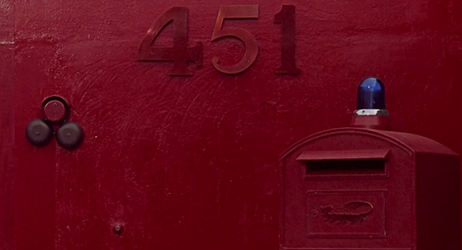
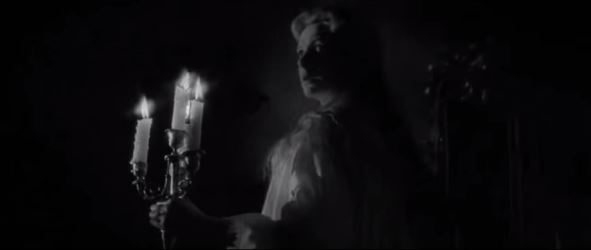
I’ve just finished reading what’s considered to be the finest work by one of science fiction’s greatest writers: Ray Bradbury’s Fahrenheit 451. Set in a dystopian future where literature is outlawed, this is a classic novel of tyranny, insecurity, and yet defiance and hope. In 1966, more than a decade after Bradbury wrote his novel, Francois Truffaut adapted it for the screen.
Tag Archives: film review
Hamlet (1954)
Today, April 23, 2016, marks the 400th death anniversary of one of English literature’s greatest writers, a man who had a huge hand in making English what it is today. Though William Shakespeare’s date of birth is unknown, he died on this day, nearly 52 years after he was baptized. In less than half a century, he created a corpus of work that has endured—and continues to spawn adaptations by the dozen in popular culture—ever since.
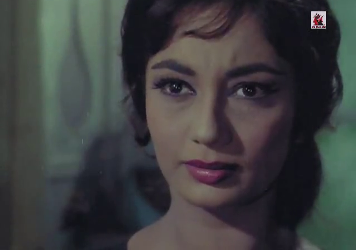
Abhilasha (1968)
A lot of my memories of 50s and 60s cinema date back to the 1980s, when almost all the films I watched were those shown on Doordarshan. In the early years, with Doordarshan being the sole channel, my sister and I (our parents were rather more discerning) watched every single Hindi film that was telecast, down to painful stuff like Jai Santoshi Ma and the thoroughly obscure Fauji, with Joginder Singh (who, if I remember correctly, also produced and directed it) in the lead role.
But, to get around to the topic of this post: Abhilasha, not a very well-known film but one which made an impression on me because of two songs I liked a lot. And because it depicted a mother-son relationship that was a little different from the usual.
Dil Hi Toh Hai (1963)
Some months back, I watched two relatively new Muslim socials: Daawat-e-Ishq and Bobby Jasoos. Both were an interesting reflection on the way the Muslim social has changed over the years (after close to disappearing during the 90s). The Muslim social of the 1950s was, more often than not, a film that, even when set amongst the wealthy upper class—the nawabs and their kin—came heavily burdened with all the stereotypical trappings of what was perceived as ‘Muslim’: the qawwalis and mushairas, the shararas and sherwanis. (I’ll write about all of those, and more, in a post to follow).
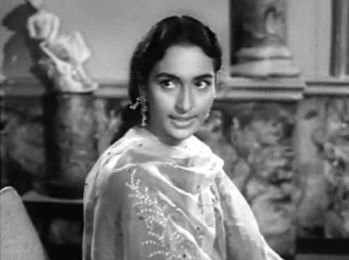
Bobby Jasoos and Daawat-e-Ishq had shed those to quite an extent. But that process had begun in earlier films, even as far back as the 60s. In Neend Hamaari Khwaab Tumhaare, for example, where Nanda’s character—the daughter of a nawab, no less—doesn’t merely have a Western education, but spends most of her time in skirts and dresses. And this film, where Nutan’s Jameela is a firebrand, giving as good as she gets, and by no means the simpering and demure Muslim girl exemplified by her contemporaries in films like Mere Mehboob, Mere Huzoor, and Chandni Chowk.
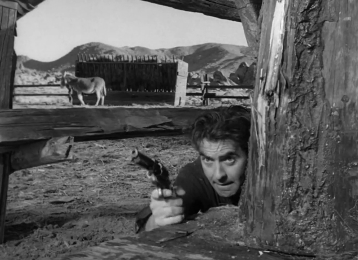
Rawhide (1951)
The other day, a blog reader, Dr Pradeep Prahlad, commented on one of my reviews of a Tyrone Power film, Witness for the Prosecution. It reminded me that a few years back, I went through a longish spell of complete and utter Power fandom. I watched, over the space of a few months, just about every Tyrone Power film I could lay my hands on. Some were good, some were forgettable. Some I reviewed. Some I thought I’d review—and then forgot about them.
So here is one film that I liked, but ended up not having the time to review back then. I rewatched Rawhide a couple of weeks back, saw flaws in it I hadn’t noticed the first time round, and decided it merited a review. Even if only to keep the Power love alive, and even if only to draw attention to a Western that generally tends to get overlooked.
Biwi aur Makaan (1966)
I’m reading Jai Arjun Singh’s The World of Hrishikesh Mukherjee: The Filmmaker Everyone Loves these days (yes; a review will be posted sometime this month). A few pages into the book, and I came across a mention—followed by more interesting stuff—about a film I’d run into once, about ten years back. Biwi aur Makaan, of which I’d happened to find a VCD and had happily bought, guessing (from the synopsis on the VCD cover) that this might be fun.
That VCD turned out a dud: the first disc was fine, the second refused to play. So I set Biwi aur Makaan aside (regretfully), and ended up forgetting about it. Until earlier this week, when, reading Jai’s book, I was reminded of it, and on a whim, decided to see if I could find it on YouTube. Sure enough, there it was. And here is my review.
Pathlaag (1964)
Some years back, a comments thread on a blog post sparked off a discussion, the net result of which was that I learnt about Pathlaag, the Marathi original of Mera Saaya.
Suspense is one of my favourite genres, and when it comes to 60’s Hindi cinema, Mera Saaya remains one of my favourite suspense films. And I am always eager to see the originals or the remakes—even in different languages—of films I particularly like. So I quickly put Pathlaag on my list, and set about trying to find a subtitled version. Some hectic trying, and I realized just how difficult this was going to be. I found VCDs aplenty; I even found a version—uploaded in five parts—on Youtube. None had subtitles. Then, Pathlaag again cropped up in conversations when I posted my review of Mera Saaya, I decided to give it another try. This time, I found an English subtitles file of Pathlaag. With much jugglery and some tech work, I managed to fit film to subs, and watch it.
Appropriate, perhaps, considering—as Harvey and Milind’s discussion indicated—‘pathlaag’ can mean ‘chase’ or ‘follow’. I really had to chase this film down.
Mera Saaya (1966)
Permit me one last Sadhana-related post before I put aside my unexpected (even to me) sadness at her untimely death. I know I’ve already been through two tribute posts, but even as I was writing those posts, I couldn’t help but think of the Sadhana films I haven’t reviewed on this blog (and there are several of them, including all the ones she made with Rajendra Kumar). When I think of Sadhana, I always think of her in Raj Khosla’s suspense films. Three of them, two opposite Manoj Kumar (Woh Kaun Thi? and Anita), and this one, opposite Sunil Dutt, with whom Sadhana also starred in Gaban and Waqt.
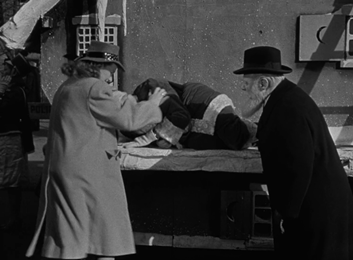
Miracle on 34th Street (1947)
I am a creature of habit. And a lot of habits of mine kick in around Christmastime every year. One is the daily posting, on Facebook, of a favourite Christmas carol. Another is this: the reviewing of a film that centres round Christmas. Over the years this blog has been in existence (I began it in November 2008), I’ve reviewed several films, some well-known, others not. This one, according to several polls, is listed as one of the very top Christmas films ever made.
It begins at Thanksgiving in New York City. The huge department store, Macy’s, at 34th Street, is holding its annual Thanksgiving Day Parade, and the employee in charge of managing much of the parade is Mrs Doris Walker (Maureen O’Hara). Doris is very harassed, what with the large number of people she has to juggle and instruct; thus, when she discovers that her Santa Claus has been drinking and is now tipsy, she nearly loses it.
The Innocents (1961)
My mother grew up in a family ruled by the iron hand of her grandfather, a strict disciplinarian who thought dining out, nightlife, and cinema were a waste of time. Not to mention immoral. As a result, while he was alive, about the only films the family went to watch were The Ten Commandments, Ben Hur, and Kismet.
Mummy once told me that the first film she happened to watch after the old gentleman (and his controlling ways) had passed on was The Innocents. And that she liked it. When I discovered that it starred Deborah Kerr—a favourite of mine—I was curious. I watched this film shortly after I began blogging, but decided I’d postpone a review (and a rewatch) for after I’d read the story on which this film was based: Henry James’s famous The Turn of the Screw.